Sunday, August 31, 2008

Visiting Ant

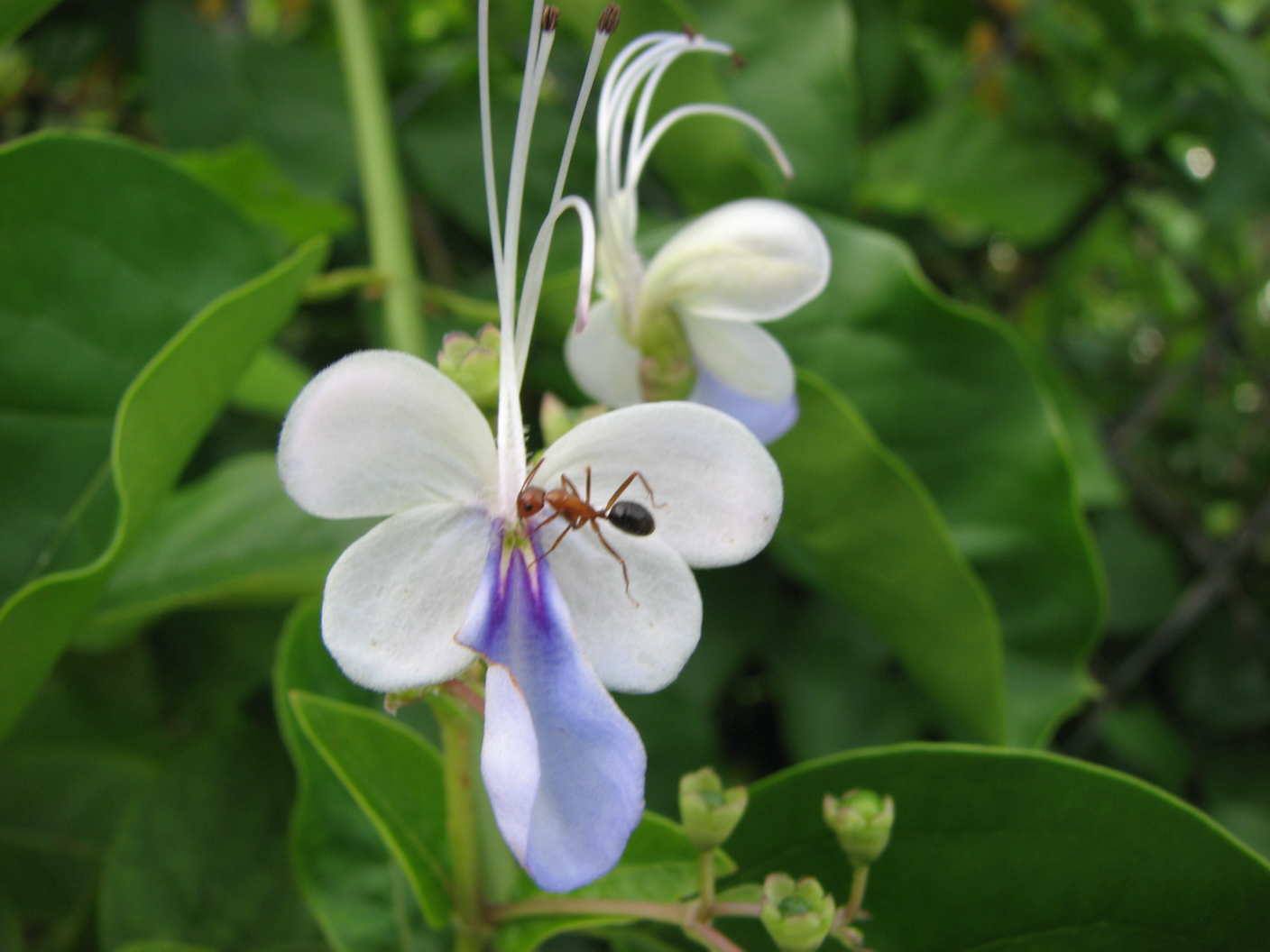
Clerodendron ugandense, the Blue Butterfly vine is an evergreen climber native to subtropical Asia and tropical Africa, in particular, in Kenya and Uganda in East Africa. This vine blooms all year. There are more than 400 species of Clerodendrum which include evergreen and deciduous trees, shrubs, vines and herbaceous plants.The genus name comes from the Greek: dendron, meaning "tree;" and kleros, meaning "chance," a reference to the varied medicinal properties purported for some members of the genus. C. trichotomum, from China, has been shown to lower high blood pressure, and is prescribed in Chinese herbal medicine for a variety of ailments.

If this ant can pollinate this flower, it will become a small black berry.
Blue Butterflies

Saturday, August 30, 2008

Woodlawn Park Cemetery

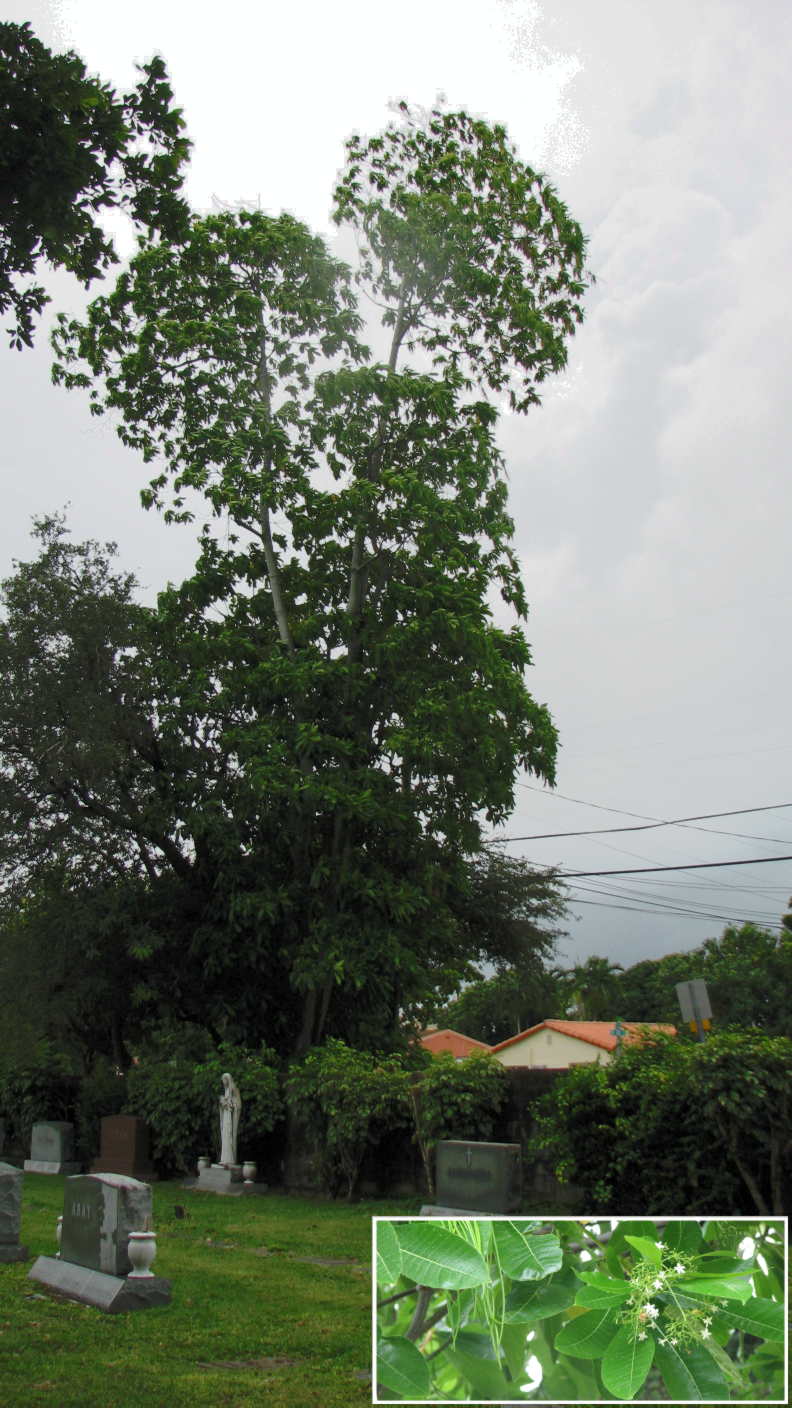
Little Havana (Spanish: La Pequeña Habana) is a neighborhood in the city of Miami, with many Cuban immigrant residents. It is situated NorthEast of the City of Coral Gables. Woodlawn Park cemetery is in the Little Havana neighborhood and is a fascinating place to stop by to check out its spooky architectural tombs and grave markers, especially on a gloomy day of Miami like today due to hurricane Gustav nearby. This cemetery looks impressive (to me) especially in this perfectly spooky cloudy day. It has a large number of gothic statues, angels, madonnas and other religious figures.

I was also looking for a tree for some time and learned from a botanical professor of the Florida International University in Miami (Thank You!) that it can be found in this neighborhood. Sure enough, it's the tall tree you see in this photo taken from lot #3 of this cemetery, at the corner of SW 33rd Avenue and 10th Street. The tree is an Alstonia Scholaris, also known as the "Devil Tree" of India. Extract from the bark of this tree (Ditamine bark) is used in India to treat malarial fever, dysentery; and its light wood is used for coffins in Ceylon. So it's fitting and I am happy to find this tree here.

But I am attracted to this tree so that I can learn about the scent of its flowers. The insert shows the flowers on this tree today, many of the tiny 1cm size star-shaped milky white flowers (that's its name in Vietnamese: Milk Flower) have dropped and can be collected from the ground; and I have got a handful of them. It's very hard to discern any scent out of them so I'll have to return another time to catch this tree at its peak flowering time. May be I should knock on the front door of the house with the red roof and ask them to let me know when the best time is.

Alstonia Scholaris

Friday, August 29, 2008

Condos R Us

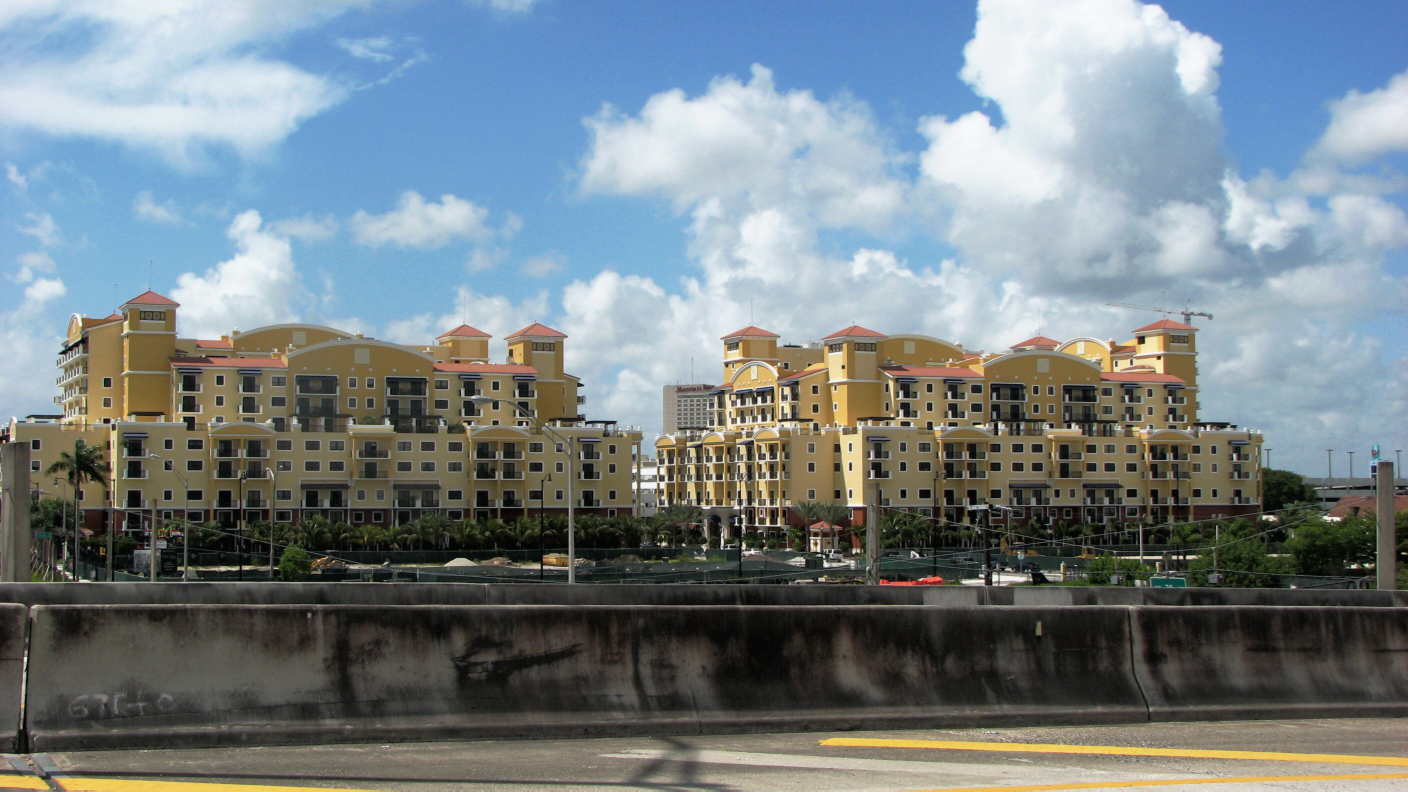
Park Towers Colonnade, a cluster of 247 condominiums in four 10 story buildings, is located in the heart of the new downtown Dadeland. This is what it looks like as seen from the Snapper Creek Expressway (Hwy. 878) The units are priced at US $300K - $650K with a monthly maintenance cost of about US $.34/sq. ft., but you know what? It depends on who does the measurement of the square footage and how the square footage is defined so it'll cost you more than you think. These people love and know how to play this game, and they can get away with murder.

Condominiums

Thursday, August 28, 2008

Money Money

Students at the Miami Dade College Kendall Campus must pay their tuition before they are officially admitted to their scholar programs for the new Fall semester that begun on August 25th. It is always painful and you can see long lines at the financial aid windows. It hurts just to think that education is dauntingly expensive, but one does need it in life.

Bursar-Cashier

Wednesday, August 27, 2008

There's No Business...

It is a slow day in Dadeland Mall. The kids are back at school, a long holiday weekend is arriving together with a hurricane (Gustav) menacing in the Carribbean make shopping a secondary necessity. The Sharper Image store has been a victim of tough times and has closed its doors. It was a high price store for custom gadgets that could not survive the merciless economy. Back to K-Mart days!

Doldrum

Tuesday, August 26, 2008

Go Away!

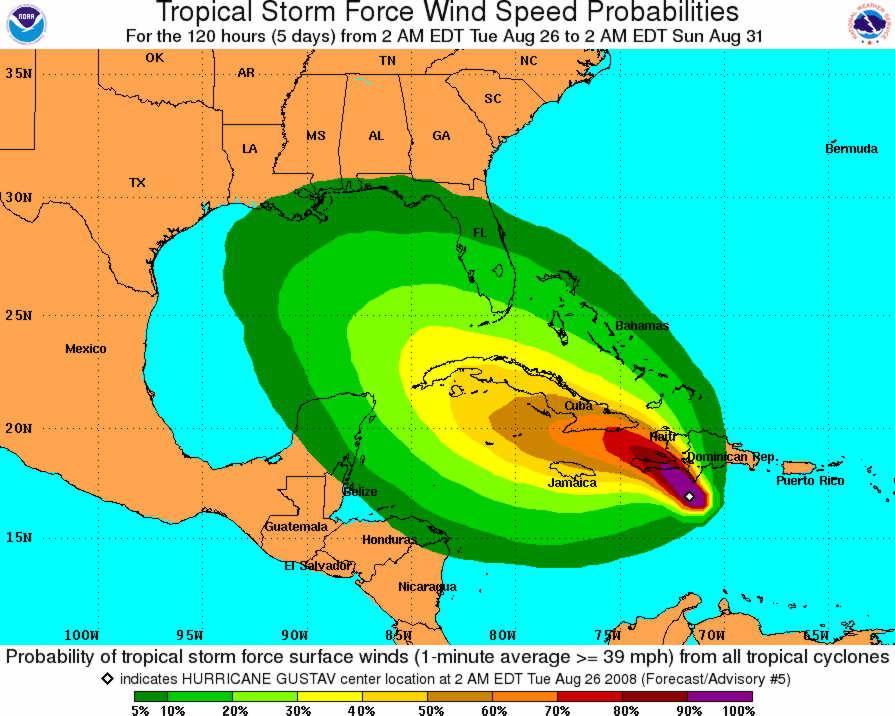
Now it's Gustav, the first hurricane of this season that may threaten populated areas. By Sunday, this guy should be at the NorthWestern tip of Cuba, between the Yucatan peninsula and the Florida Keys. Models predict that Miami may have up to 30% probability to experience tropical storm force winds for the entire 5 day period to extend to this weekend. It is quite certain we will have a stormy weekend this week. Isn't life grand?

Gustav

Monday, August 25, 2008

Hot Chocolate

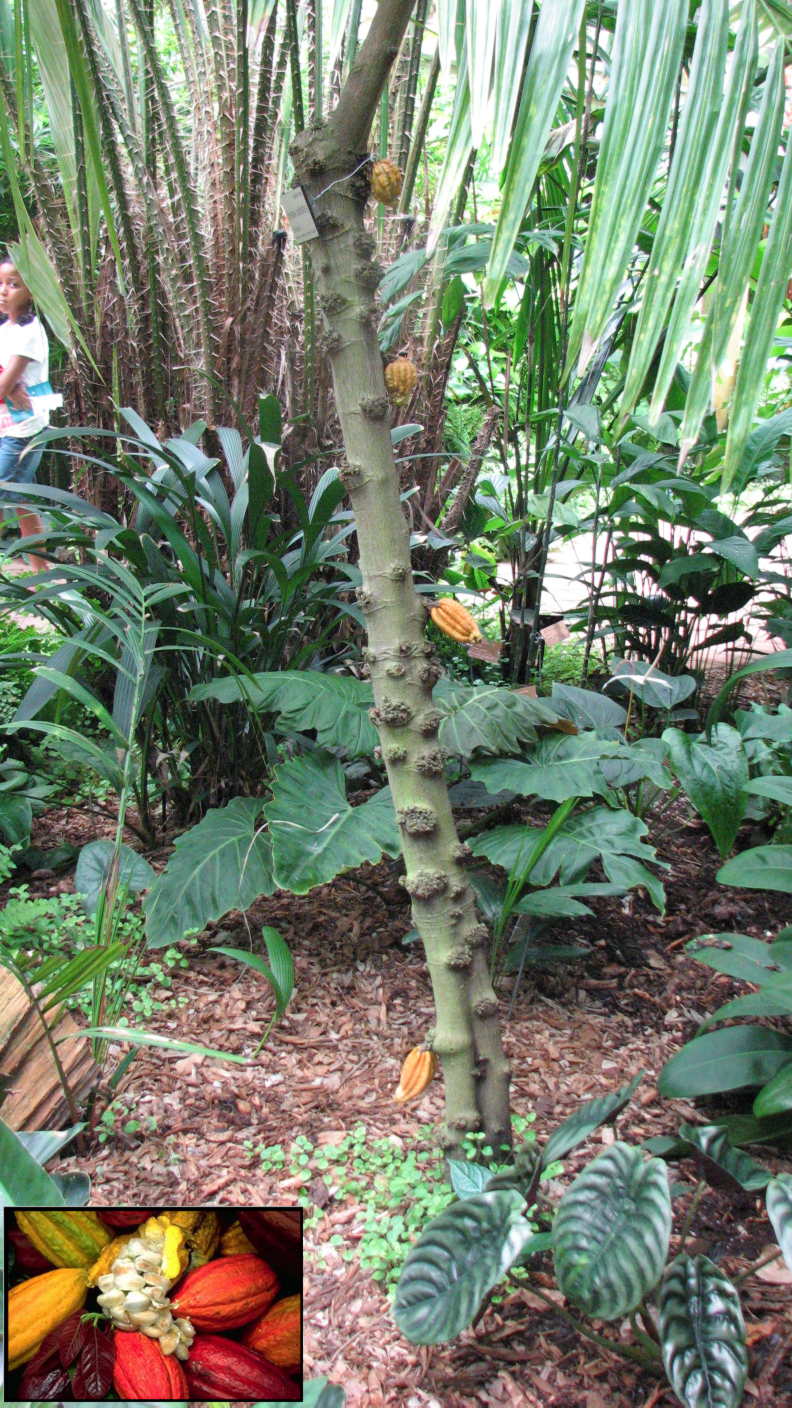
The cacao tree (Theobroma cacao) is an evergreen tree in the family Sterculiaceae (alternatively Malvaceae.) The scientific name Theobroma means "food of the gods".

It takes five years to grow into a tree that produces fruits. When cacao leaves fall, they mix with the leaves of other plants and decay on the floor. In the decaying leaves breed midges in the order Diptera. These little flies pollinate the cacao flowers. The small flowers are produced in clusters directly on the trunk and older branches and they fruit three to four times a year. The hard, coarse shell changes from green to yellow, and then to a reddish brown. Inside the fruit is a white sweet pulp where between 20 and 40 almond-shaped bitter cacao seeds are arranged in rows. These seeds are used to make chocolate. The insert shows what these cacao seeds look like.

The fruits have skins that are so thick that they do not open naturally to release their seeds. Instead, pods rely on the lure of their sweet pulp to attract animals. Birds and mammals looking for a meal pierce the pod’s tough hide to get at the delicious sweet pulp inside and discard the bitter-tasting seeds. Each seed contains a significant amount of fat (40–50% as cacao butter). Their most noted active constituent is theobromine, a compound similar to caffeine.

Cacao trees can flourish only in the hottest regions of the world, and this one is happy at its home in the FTBG here in Miami, although I think it could be in a bit better shape than it is seen here.

Hot Cacao

Sunday, August 24, 2008

FTBG

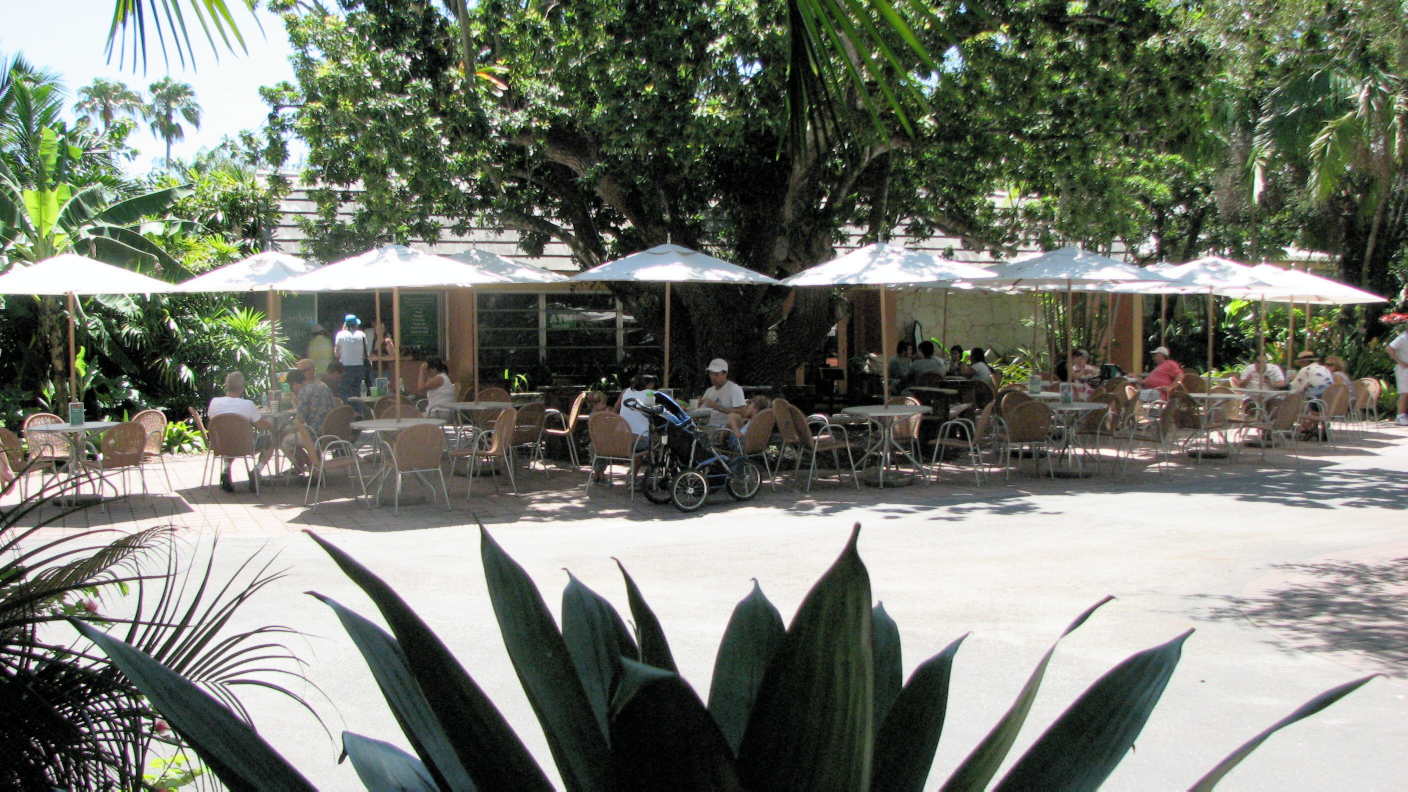
On a hot Sunday afternoon, it is heaven to find a shady place to sit and enjoy a quick meal or a cool drink. Besides the Veranda restaurant, this Garden Cafe is the only place visitors can find food and beverage inside this beautiful Fairchild Tropical Botanic Garden (FTBG) in Miami, one of the world's preeminent botanic gardens. Established in 1938, the 83-acre garden is among the region's most popular visitor attractions. FTBG's mission is to save tropical plant diversity by exploring, explaining and conserving the world of tropical plants.

It's hot, but it's beautiful here and you are surrounded by living and blooming things of all sorts, visitors included. No wonder the Miami Herald names Fairchild #1 Marvel of Florida. Admission is US $20, but it's free in August and September so if you are in Miami during this time, come on in to marvel.

Hot Miami Sun

Saturday, August 23, 2008

Natural Fermat's Spirals

Fermat's spiral is also known as a parabolic spiral. It's given by the polar equation r = k a^1/2 where r is the distance from the origin, k is a constant that determines how tightly wound the spiral is, and a is the polar angle. This type of spiral has the property of enclosing equal areas with every turn as it is illustrated below:

Fermat's Spiral

What do you know? Here is one such natural spiral. It's a tendril from my Antigone vine, ready to unfurl and hook onto whatever support it can find to climb. The amazing thing for this natural spiral is that it does not start from the origin, but from the stem of the vine. I think that this is an excellent way to efficiently search for a contact in three dimension with a minimum amount of tendril length.

Antigone Tendril

Friday, August 22, 2008

I Ordered This?

TGIF, that's "Thank God It's Friday," is an international fast food franchise and it has several restaurants in Miami. I suddenly remembered them when they were blanketing the TVs with a new wave of ads, showing delicious and dirt cheap lunch menus. Of course I know that's not quite the truth, but I needed a blog. The net result is this inside shot of their bar. This restaurant is on US-1 across from the University of Miami main campus.

I hate those ads (especially those in the US) that show sizzlingly and princely appetizing hot meals on the grill that lure customers in to "What's this? Did I order this?" amazement! Don't you?

Just For Blog

Thursday, August 21, 2008

Kigelia Africana

Kigelia is a genus of flowering plants in the family Bignoniaceae. This genus comprises only one species, Kigelia Africana, which occurs throughout tropical Africa from Eritrea and Chad south to northern South Africa, and west to Senegal and Namibia. The genus name comes from the Mozambican Bantu name, kigeli-keia, while the common name Sausage Tree refers to the long, sausage-like fruit. Its name in Afrikaans Worsboom also means Sausage Tree. Their flowers' scent is most notable at night and they rely on pollination by bats, which visit them for pollen and nectar. The insert on the left shows the flowers in closeup. There are many sausage trees in Miami, and this one is at the corner of 67th Avenue and SW 64th Street. I'll watch it now and then to see if the bats are not too lazy this year to make sausages.

Note: Some synonyms (Kigelia Pinnata (Jacq.) DC.; Kigelia Abyssinica A. Rich.; Kigelia Aethiopica Decne.) are still accepted by a few horticulturists as distinct species, but botanical studies agree that the genus contains only one species (Joffe 2003, GRIN.) In African herbal medicine, the sausage fruit is believed to be a cure for a wide range of ailments, from rheumatism, snakebites, evil spirits, syphilis, and even tornadoes (Watkins 1975). An alcoholic beverage similar to beer is also made from it. But watch out! The fresh fruit is poisonous and strongly purgative so you really need to know how to prepare before eating or drinking them.

Sausage Tree

Wednesday, August 20, 2008

Sun Shine State

Miami's blue sky immediately returns after tropical storm Fay moves North to dump sorely needed water to lake Okeechobee near Orlando. We needed that. Miami traffic is back to normal, as indicated by this big rental recreational vehicle stopping at a red traffic light just turning green.

Blue Sky Returns

Tuesday, August 19, 2008

It's Over

Fay wasn't so bad, just wet. This is what a typical front page of the Miami Herald newspaper looks like. Sometimes, the newspaper is wet due to the rain, and it is a bit wet today although it is double plastic-bagged when delivered. I get news free on the net so I don't really need to read these pages. Everything (almost everything) is closed today but things will return to normal tomorrow. Life goes on.

It's Over

Monday, August 18, 2008

Here She Comes

It looks like Fay will move due North cutting across the Florida Keys. The entire Southern coastal areas and the Florida Keys are under tropical storm warning. We in Miami probably will have a few miserable days but may be spared of major headaches. We probably will experience intermittent tropical storm winds and trust me, that's not very pleasant. Traffic will be a mess because in my opinion, Miamian drivers are the worst in the world. They can't drive when the roads are nice, let alone when they are stormy and wet! The kids are happy because they have an extended vacation day today, all schools are closed! I bet schools will remain closed for Tuesday too.

TS-Fay

Sunday, August 17, 2008

Before the Storm

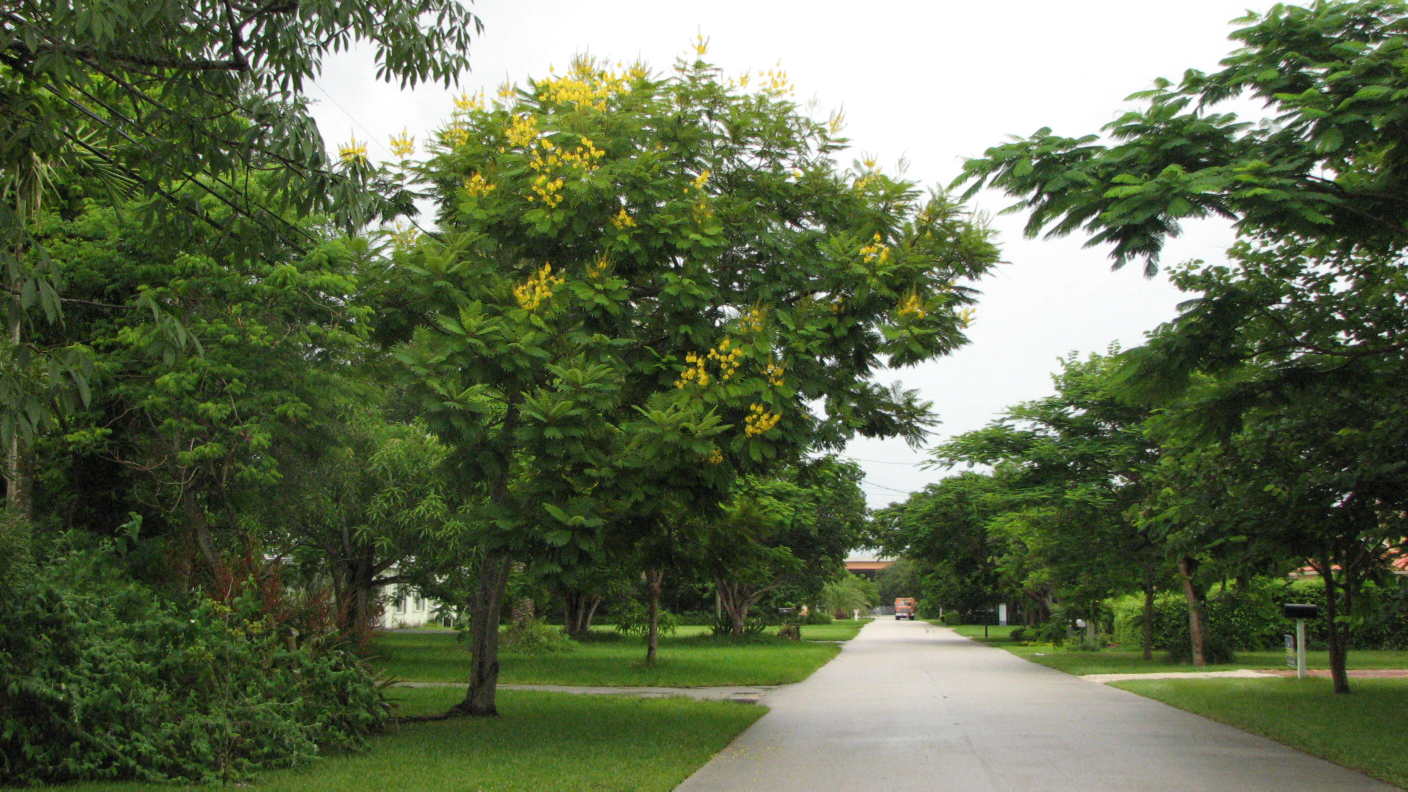
Here is SW 71st Avenue, a quiet residential avenue in South Miami. It's a cloudy day and all is eerily quiet. Tropical Storm Fay will arrive by late Monday and it won't be this serene then. The beautiful yellow flowering tree could be a Cassia. This species is so varied I can't tell by only looking at the tree, its leaves and its flowers.

Quiet <br />Street

Saturday, August 16, 2008

Summer's Gone

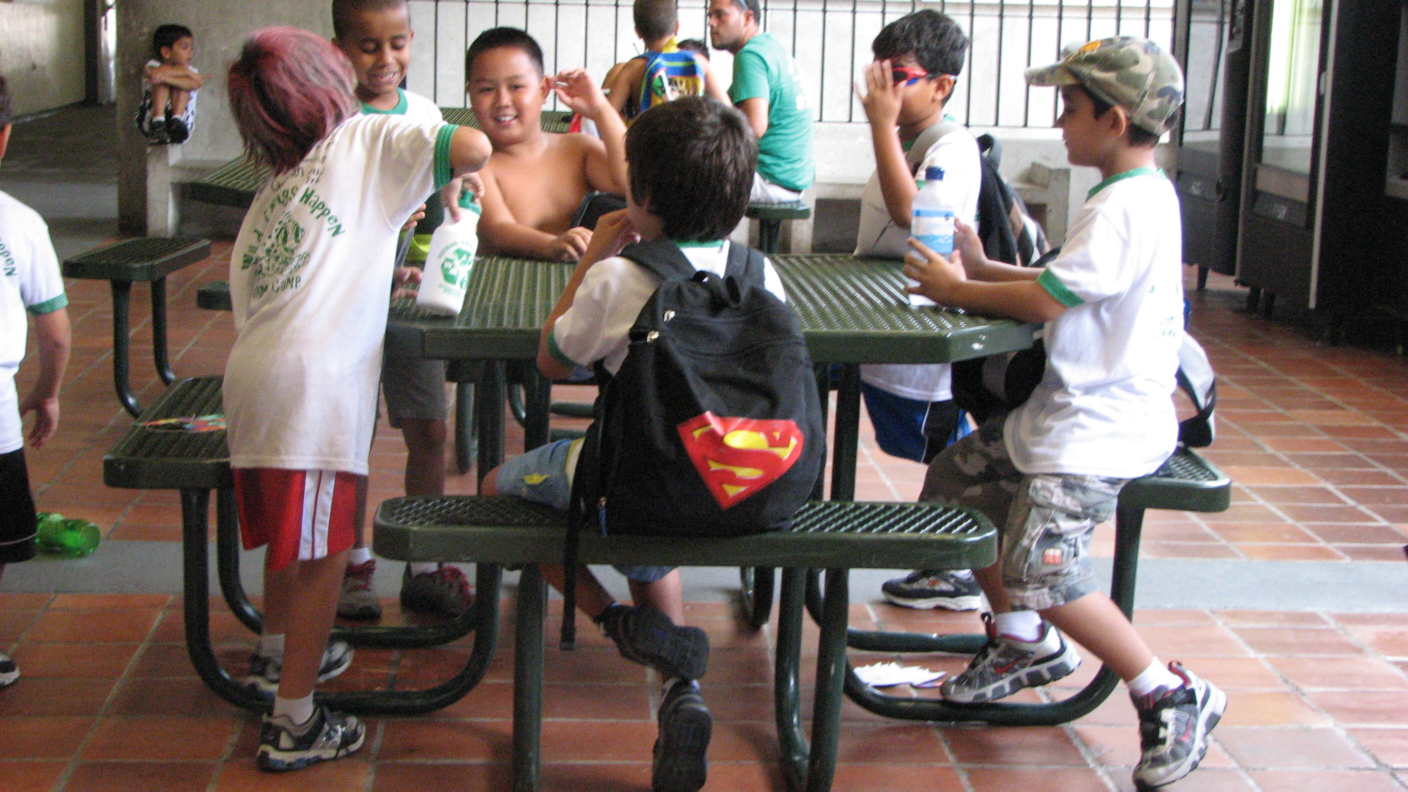
This is the last swim meet for these kids as summer is ending. Everyone here is excited (happy) to prepare the kids for their "going back to school" after the long summer break.

Last <br />Fling

Friday, August 15, 2008

Fay

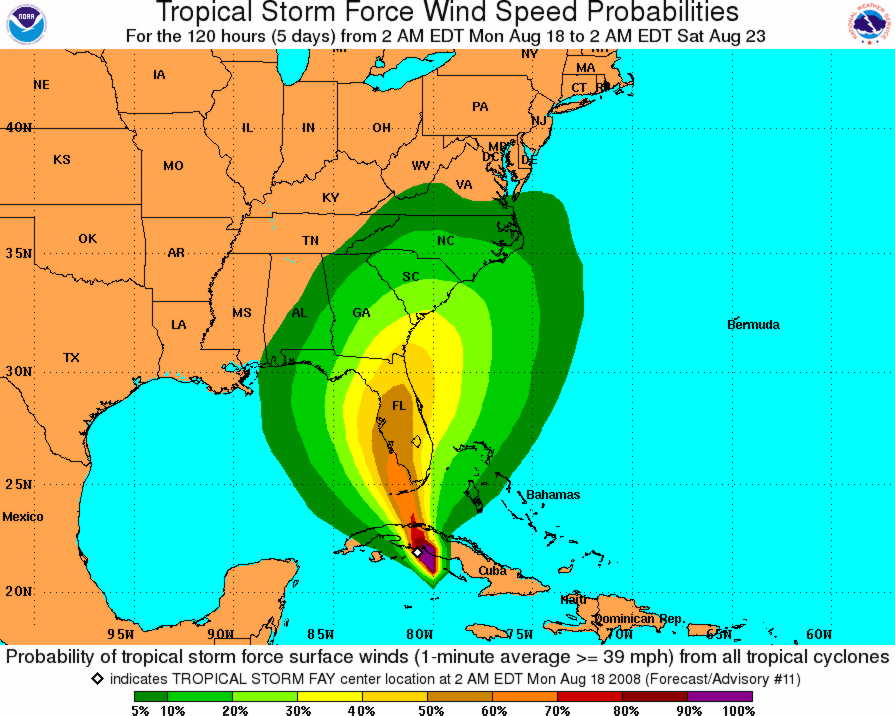
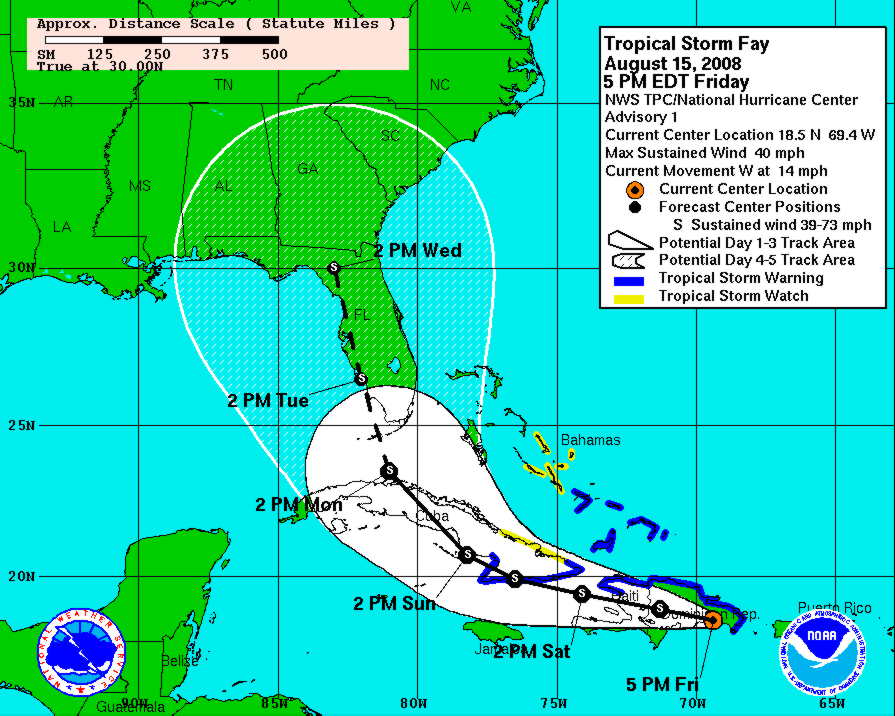
We'll be wet early next week. Tropical Storm Fay is coming our way. It's a good thing she is born at close proximity and has no time to become a nasty hurricane. But we'll get wet for certain. Areas receiving storm warning (very likely to have wind storm) and storm watch (should pay attention) are denoted by the blue and yellow marks on the map issued by the US National Hurricane Center.

Getting Wet

Thursday, August 14, 2008

Room For One

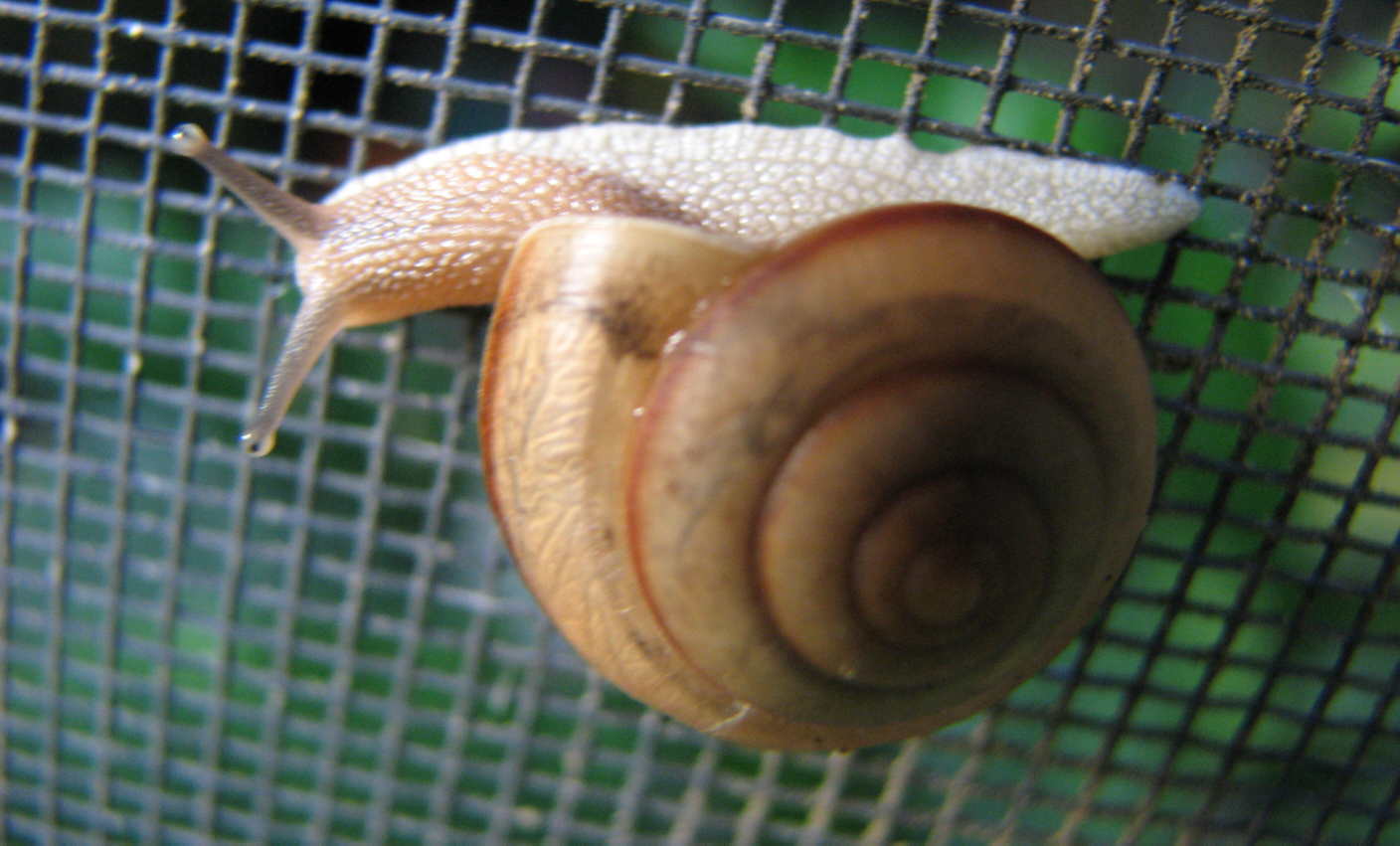
Meet Bradybaena Similaris, commonly known as the Asian Tramp Snail that is considered by many as an agricultural pest. It is here on my patio screen just getting a sun tan this morning.

This is an exotic import thought to have originated in south China and spread throughout the world, initially by hitchhiking on cargo transported by ship. The Asian tramp snail was first reported in the United States in New Orleans, Louisiana in 1939 This species was first recorded in Duval County, Florida in 1985 when a specimen was found on a head of lettuce at a local Winn-Dixie Grocery Store. Bradybaena Similaris has been found at many locations ranging from off the east coast of Africa, Australia, South America, as well as Bermuda, Barbados, and the Bahamas. Asian tramp snails have been reported as serious pests on citrus farms, as a source of damage to satsuma (that's my favorite tangerine) fruit plantations in Louisiana and as a serious agricultural pest in Hong Kong, feeding mainly on Chinese white cabbage, flowering cabbage, watercress and beans.

I read that this fellow likes to feed on lily! I need to keep an eye on my dwarf while lily from now on, and I hope my frog who patrols my patio nightly does not find this one anytime soon or he'll be frog food in no time.

Tight Fit

Wednesday, August 13, 2008

Miami Rhynco

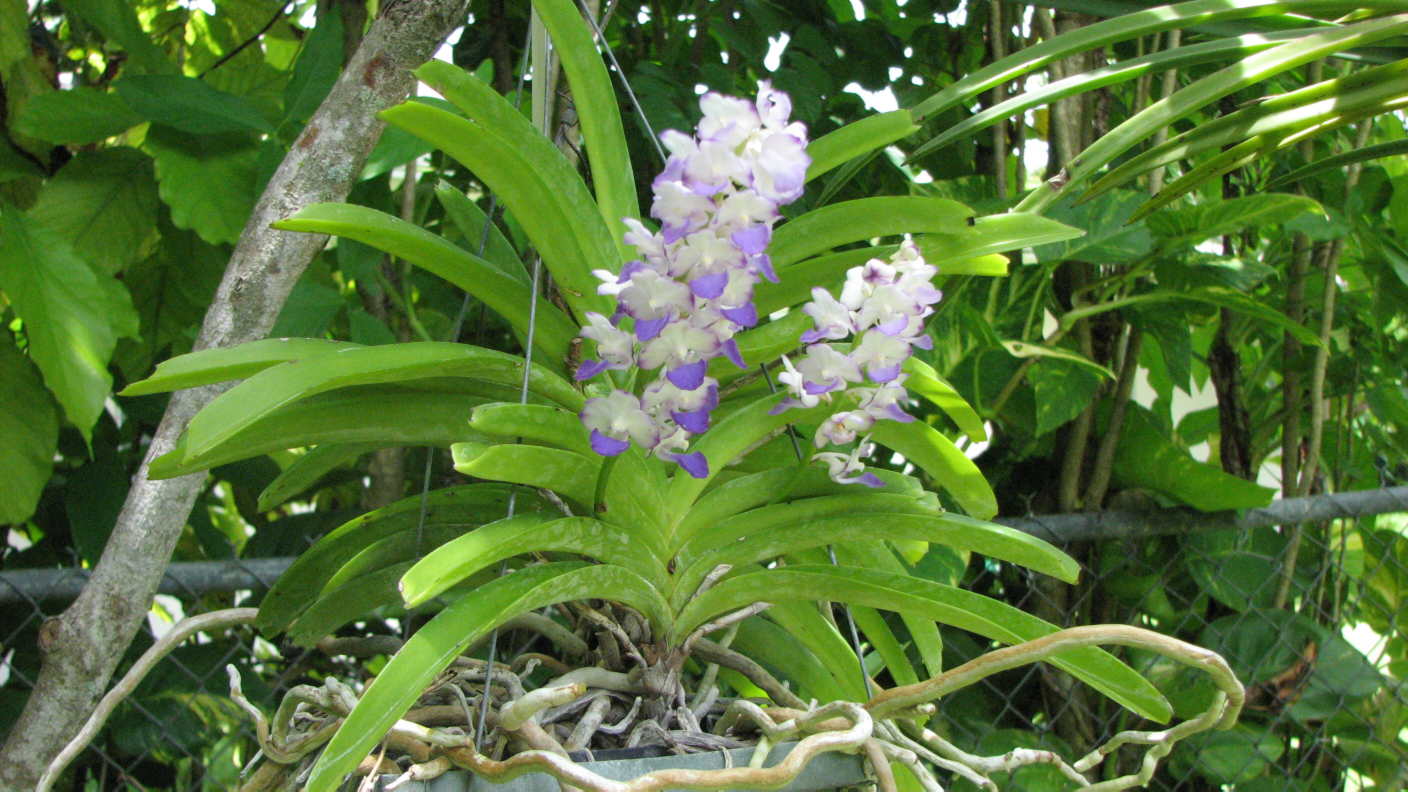
Rhyncostylis Coelestis is native to Southeast Asia and can be found in Thailand, India and Burma. This plant has an Ascocentrum-like growth habit and is of small size. The beautiful 2 tone purplish-blue flowers bloom in summer and have the most delightful fragrance. The flowers are long lasting and the plant is so easy to grow. This is the second flowering of this plant this summer.

Rhynco

Tuesday, August 12, 2008

Mr. Tree

I found this on a tree in front of a house on a quiet street in South Miami. I think it is a Mr. rather than a Mrs. but who is to say? I like the droopy eye lids, so human and so sleepy!

Tree Spirit