Friday, August 19, 2011

Mobile Art

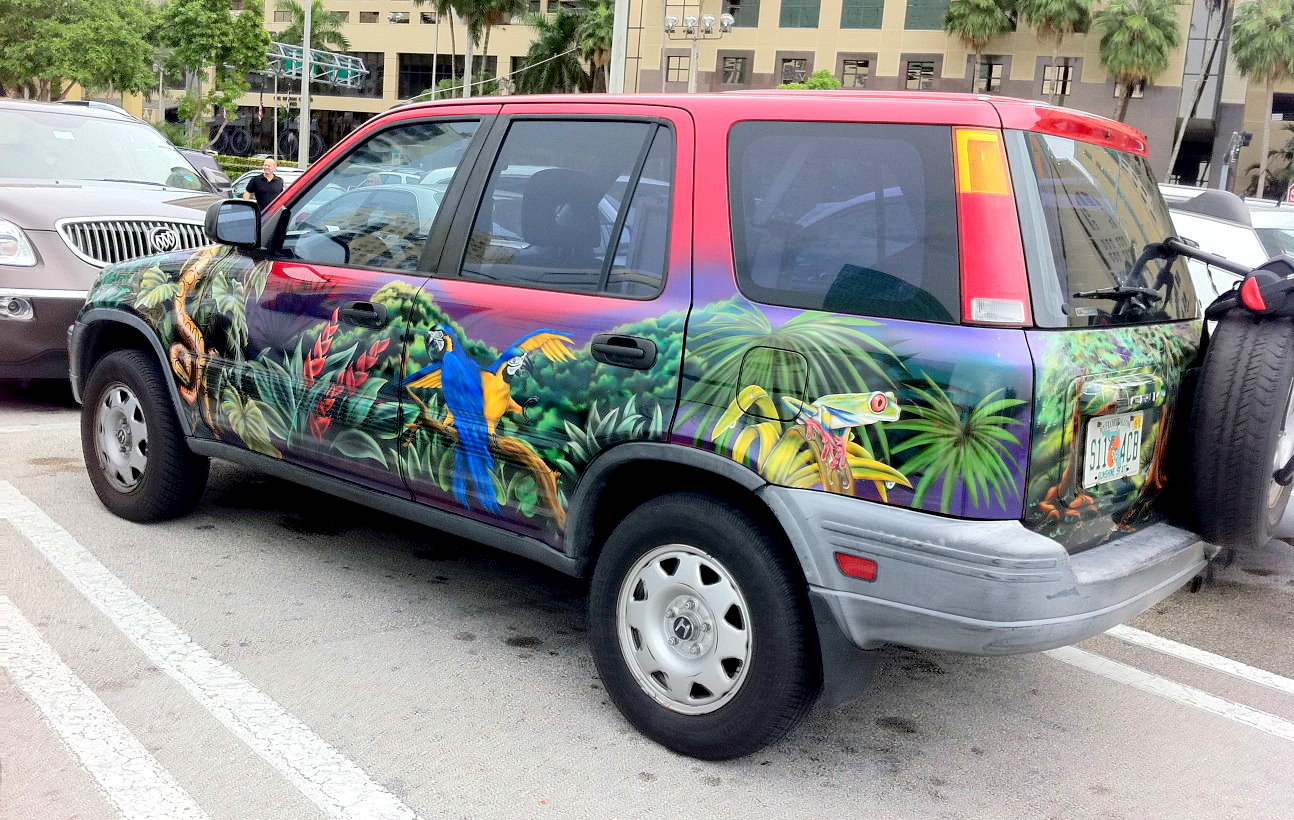
One of the many bonuses that comes with living in Miami is you get to see cars like this one. I always regret not to wait until I see the owner to ask how something like this can be done to my car. You know what I would have painted on mine? Lotus! What else? Just like Monet's paintings, but instead of water lilies, the pond would be full of lotus flowers.
Traveling Art

Thursday, August 18, 2011

Delicatessen

Delicatessen is a term meaning "delicacies" or "fine foods." This word came from Germany, with the old German spelling Delikatessen, plural of Delikatesse i.e. "delicacy." Germany got this from France's délicatesse which means "delicious things (to eat)." Ultimately, the French word came from Latin's "delicatus," meaning "giving pleasure, delightful, pleasing."

It's no wonder I like to hang out at this place in this Publix supermarket to get these cuts for sandwich making. A pound of this and a pound of that and another pound of the other thing rapidly add up to tons of calories, but it's hard to resist this sinful habit. Thankfully, there is always a long line that usually prevents me to overindulge too often. I'll come back tomorrow!
Boar's Head

Wednesday, August 17, 2011

Future Bufo americanus

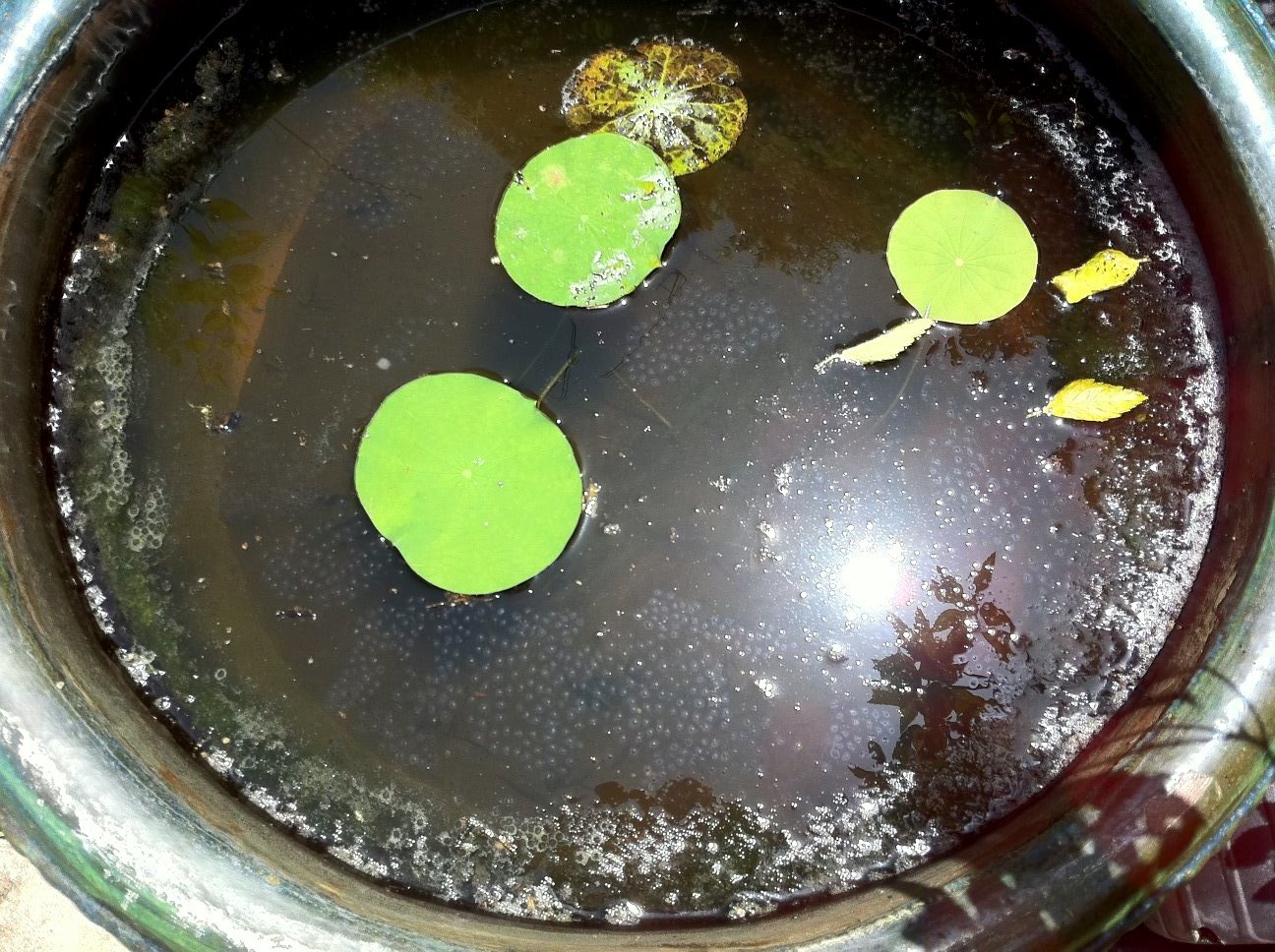
I have a pet common toad (Bufo ameicanus) that lives in the small waterfall in my patio. It must be at least 7 year old now. Once in a while, I see it outside sightseeing in the back yard. I call it "it" because I am not sure if it's a "he" or a "she." Whatever its gender, it is quite busy procreating at this moment. My little pond is full of little tad poles swimming around... thousands of them... and outside, in this large container for my new lotus, you can see thousands of newly laid eggs. This water was empty of inhabitants just two days ago. Click on the photo and you'll see thousands of the little spheres of life in the water.

The Common Toad is widespread throughout the whole of Europe and Asia, abundant everywhere except Ireland, it will be found in woods, fields, gardens, and any dark moist areas. Outside of the breeding season it can be found in drier areas. A nocturnal animal it eats insects, worms, molluscs and occasionally small amphibians. It hibernates over winter in small dry holes and under logs and stones. It lives in Lan's little fountain, I must add!

After mating the female lays two strings of 1000-6000 eggs underwater which are entwined around aquatic plants. Tadpoles hatch in about 12 days (that makes it August 27 for this batch) and metamorphose after a further 70-90 days, the young then leave the water. They grow slowly becoming adult in about five years, with a life span of up to 40 years.

I think the tad poles love lotus seeds and roots, so this may be bad news for my lotus. If they eat my lotus, they will have to deal with an eviction from me.

A Toad's Life

Tuesday, August 16, 2011

Mow Me Again, Please!

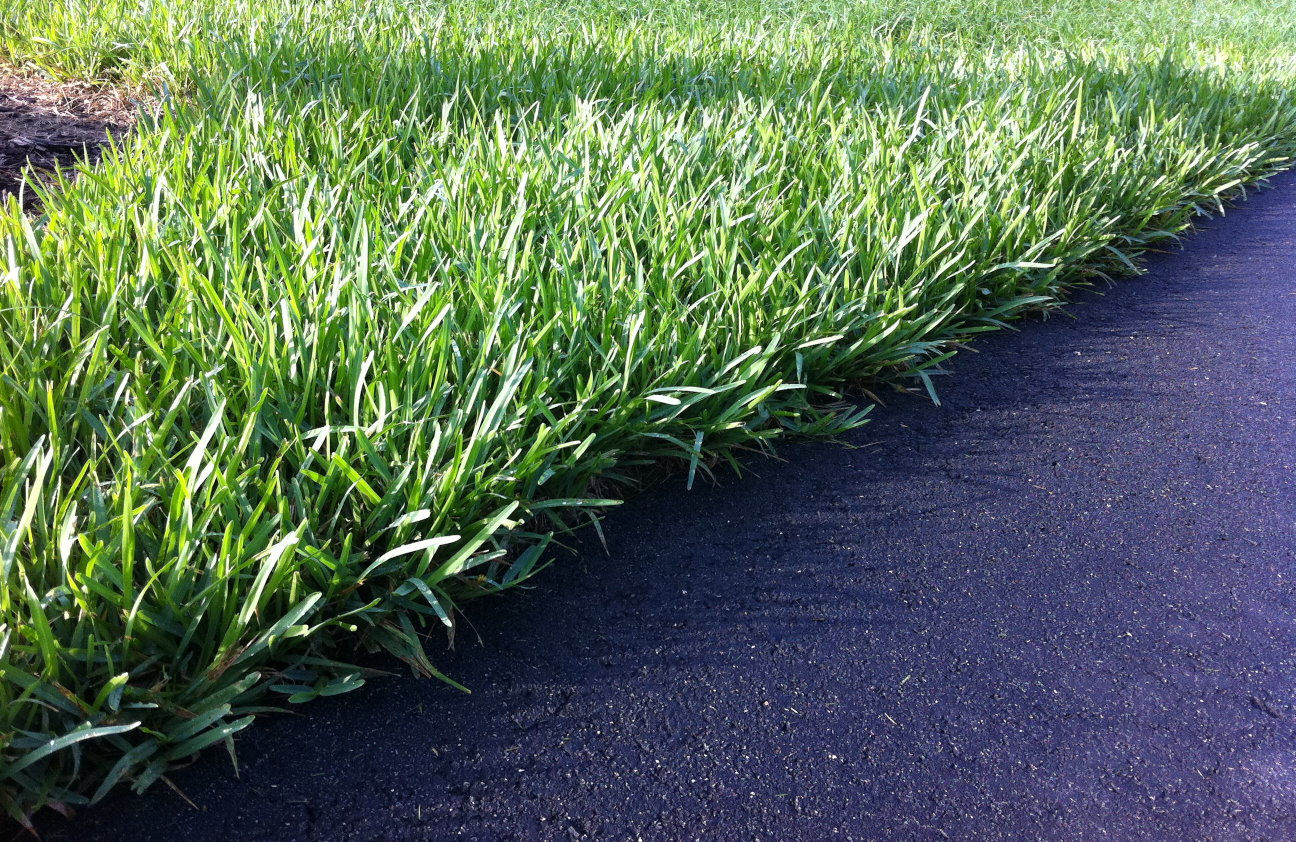
This is what the daily drumbeat of rain, rain and more rain in Miami doing to our grass! And mosquitoes! Hungry, nimble and no mercy Miami mosquitoes! All we need now is a big hurricane! Life has its ups and downs. Would you agree with me to say it's now pretty much downhill, looking at this?
Mow Me

Monday, August 15, 2011

Recycle

In Miami, trash and garbage collection have become a well oiled machinery with great efficiency. Cities are organized into segments and neighborhoods are assigned two days of the week in which to place their trash and discards out for collection.

Here, on Mondays, every two weeks, in addition to garbage, recycled material are picked up. The truck you see is picking up the dark blue container with its mechanical arms. In a flash, the contents are emptied into the truck's big container and it moves on to the next house. There are definite rules that describe what can and cannot be recycled, and the population is very good to follow these rules, although I am not sure how things work at the triage stations. What do they do if they find illegal items in the bin? A mystery to me!
Recycled

Sunday, August 14, 2011

UFO

Sunday morning... I saw something out of the ordinary in my yard and took a close look. The four strange looking white things, instead of UFOs as I originally thought, turn out to be wild mushrooms that came out of the ground because they were excited by the continual rain of days past. They look gorgeous and quite appealing to me already because this is just what I need for my omelette. A godsend! But... Aren't mushrooms just fruits of fungi, and their one purpose in life is to disperse spores for survival? It may not be such a good idea to get some fungi in my system and I'll pass!
UFO

Saturday, August 13, 2011

Court Yard

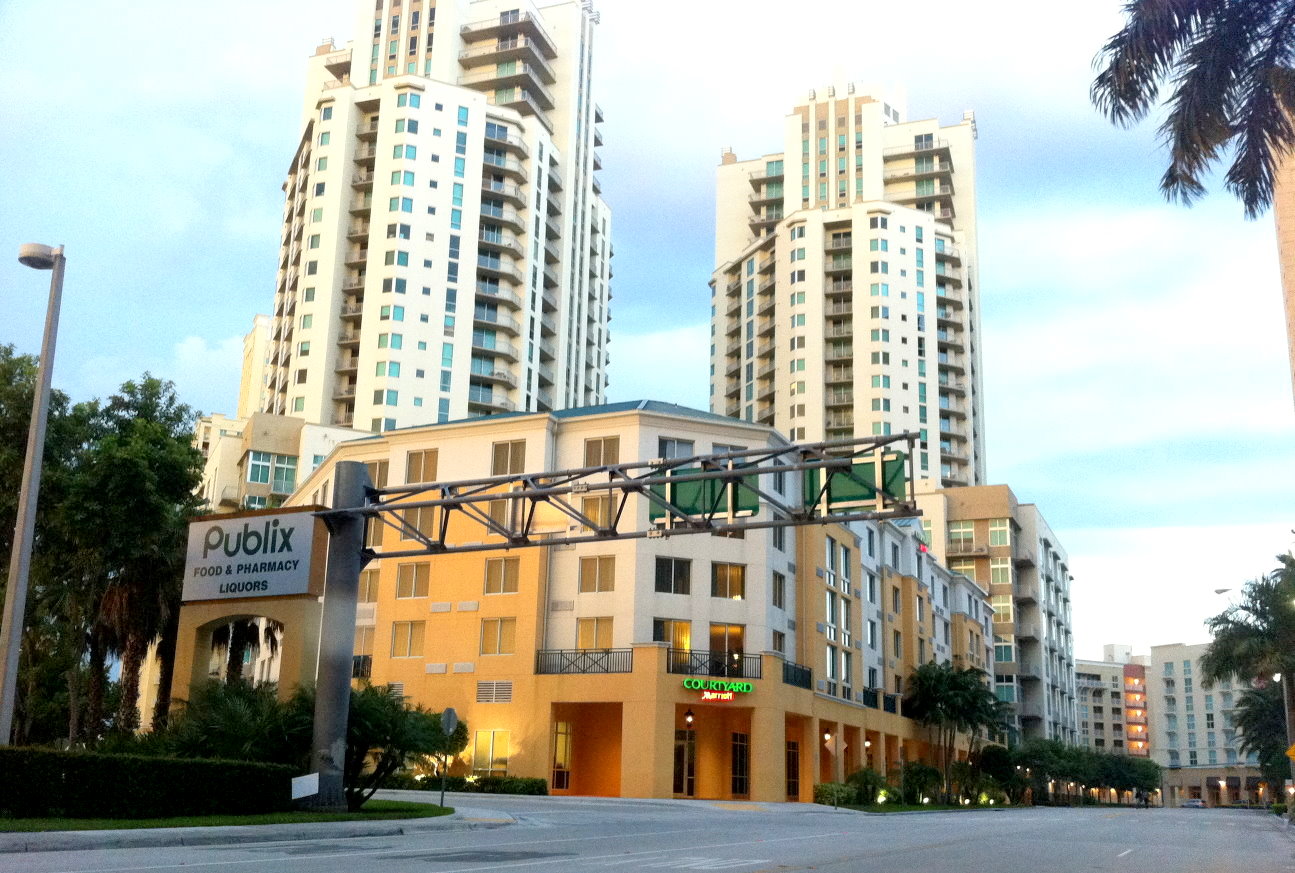
It is almost dusk, but you can hardly tell looking at this photo. This is another view of Miami's Dadeland Village. The fairly new Marriott Courtyard is next to the Publix super market on South Dadeland Boulevard. The glow you see is caused by the huge Miami sun getting ready to set. It will be dusk in only a few minutes and it's too bad I can't show you the photo of a glorious sun setting. I know it's mission impossible to drive and at the same time taking a shot when the big sun is in your face. There will be another chance, I am sure because I think the sun must set every day. Am I right?
Court Yard

Friday, August 12, 2011

Smashed

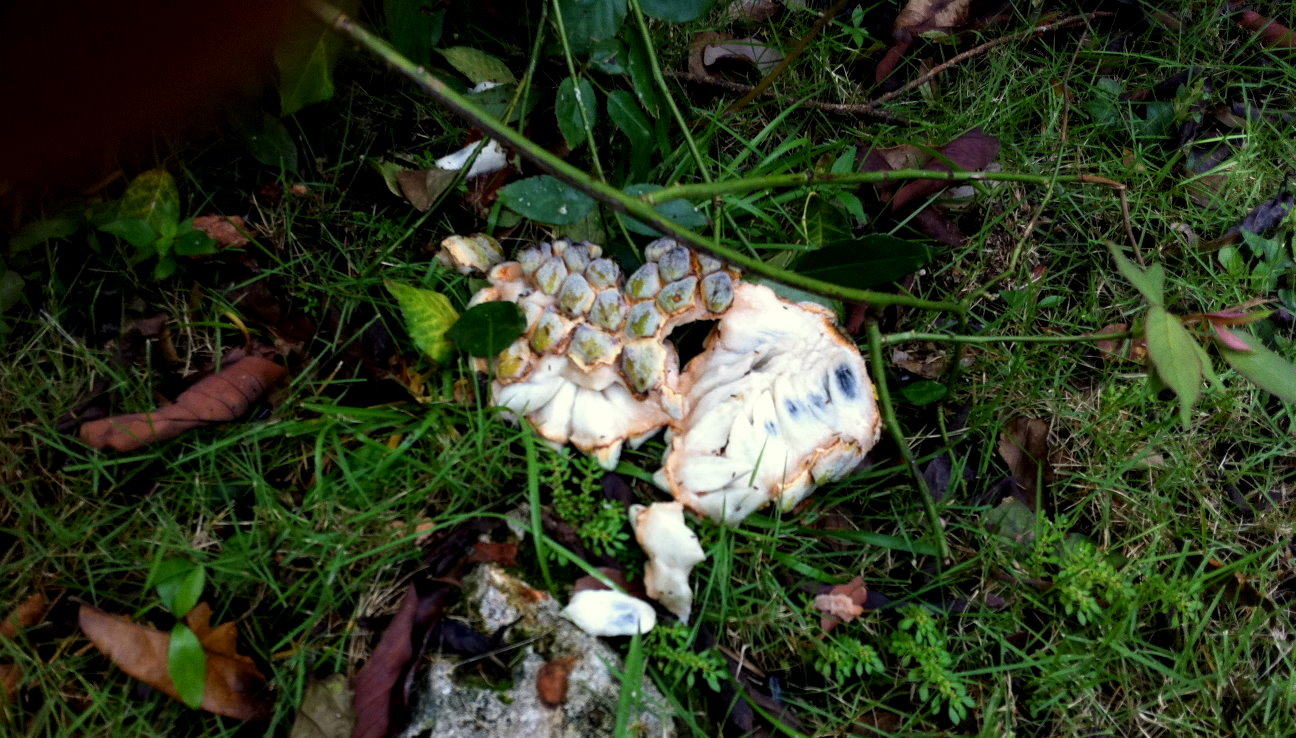
It is raining just about every afternoon in Miami, and the sugar apples can't take it any more... So they one after another give up the ghost and make the big jump like this one here. In this drama, I can tell you a few stories... First of all, like the story of the two Rambutans, this variety of sugar apple (Annona squamosa) exists in two sub-types: a desirable and a less desirable one. This one is the ugly duckling type. The difference is in the firmness of the edible pulp. The fruit is less desirable when its pulp is very loosely bound together. The seeds are large and the pulp around them is paper thin so this type is not well received by the consumers. In fact, this type is not commercially viable. When the flesh is tightly bound internally, the seeds are much smaller and the fruits are in great demand.

During rainy days, the fruits split easily while ripening on the tree and once there is a crack anywhere, you can trust that zillion of tiny little creatures whose name is unknown to me invade the fruit to claim it as their territory. You can't see them in this photo, but there is a large colony of such individuals in the exposed flesh of this splattered fruit. The bottom line is the fruit does not entirely go to waste.

If you want to eat this fruit, you must know when it should be picked from the tree and let it ripen indoor. Only then you can be sure that the pulp you digest does not contain countless little tenants that may be very mad that you ate them.
Lesser Sugar Apple

Thursday, August 11, 2011

Lasiodiplodia Rot

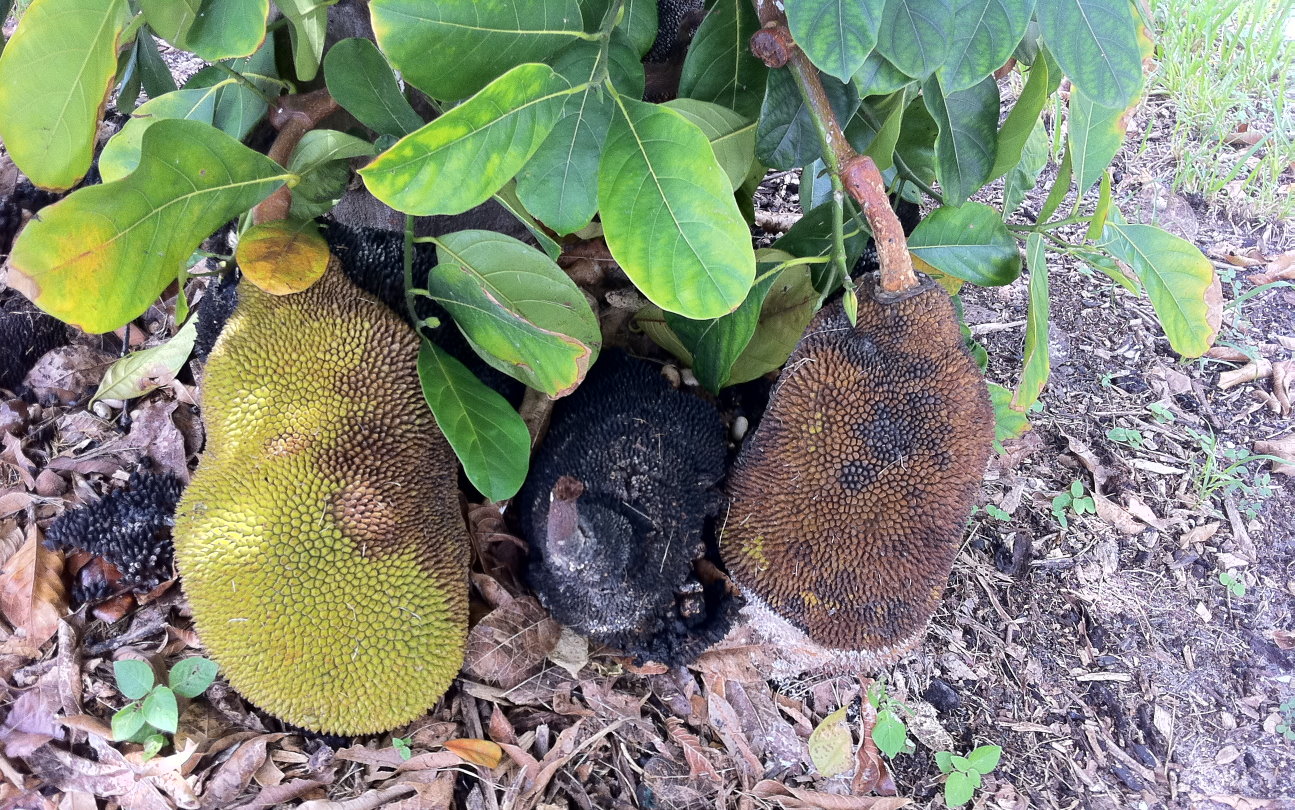
I often talked about the jackfruit and showed you beautiful specimens of them. Like the mango, there is a dark side to this story too: plant disease! Jackfruit (Artocarpus heterophyllus Lam.) can be attacked by many diseases such as Rhizopus, anthracnose and other fruit rot. I took my eyes off this healthy tree that had many beautiful fruits hanging on the tree since June. Today, sadly, I am showing you a photo of the same fruits but not so beautiful anymore. What you see are the same three fruits shown in the photo link above. Note that the large fruit on the left has been removed, perhaps a week ago. Whoever did that probably did the right thing because it would have been lost like all these. I believe the problem is what is called the Lasiodiplodia rot. Lasiodiplodia fruit rot often occurs on mature or wounded fruit while the Rhizopus acts on younger and immature fruits. With Lasiodiplodia, diseased fruits are covered with gray or black flat spot under high humidity. In the early stage of Lasiodiplodia fruit rot, tiny yellow-brown lesions appear on the peel. The lesions can rapidly expand to 10 cm in diameter within 5 days and become dark brown with a light margin. The rot symptoms progress quickly from the surface into the sarcocarps that eventually turn black and soft. The fruits of course are unfit for consumption. Do you know how heavy these fruits weigh? There are still more than a dozen rapidly dying jackfruits on this tree, and getting rid of them will be a big chore. I'll help if asked!
Fruit Rot

Wednesday, August 10, 2011

Alstonia macrophylla

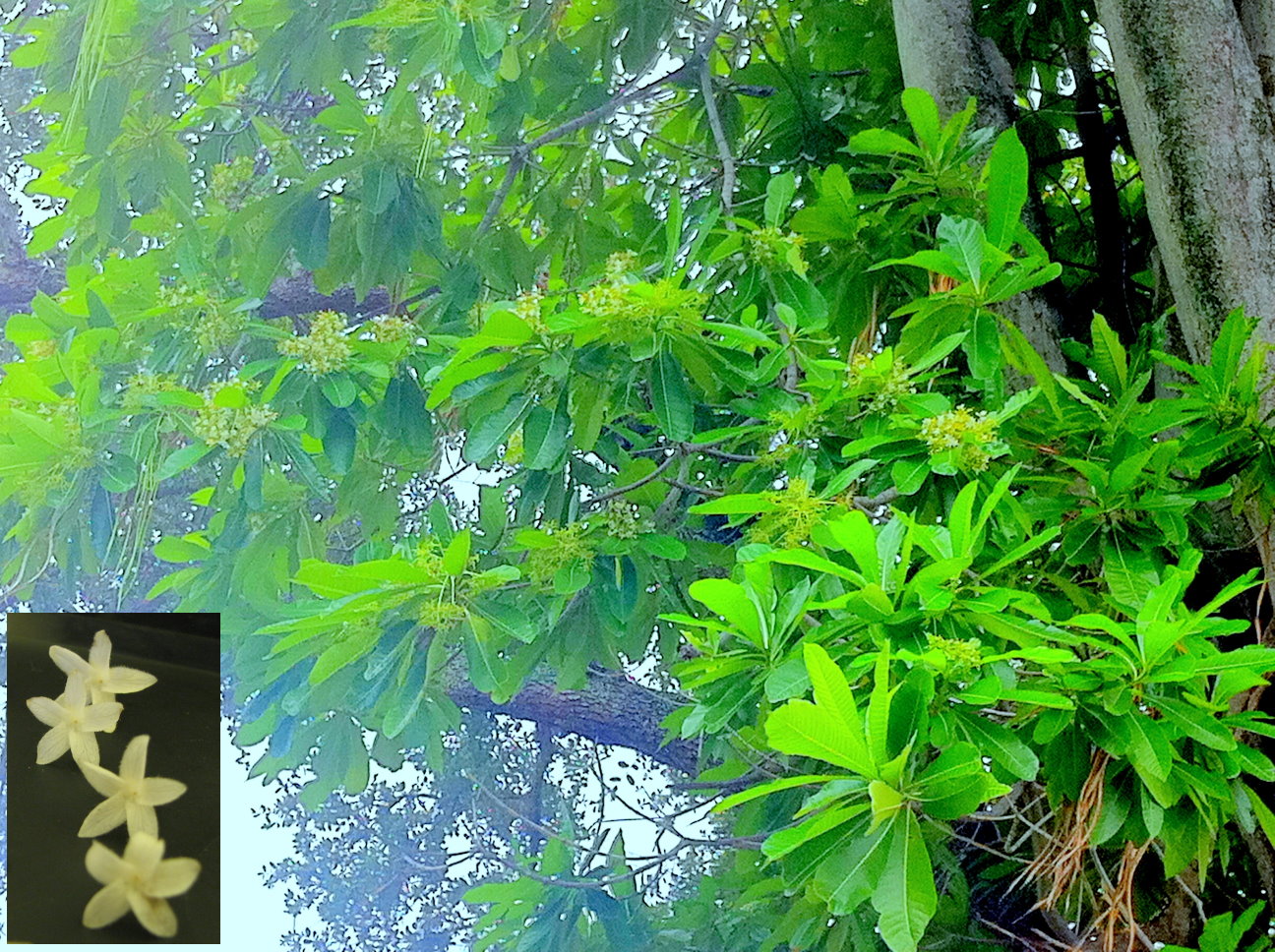
About three years ago, on August 30th, 2008, I blogged about a tree in Miami's little Havana section here. I thought it is an Alstonia scholaris, but it is not. Now I stand corrected and say it is an Alstonia macrophylla. It is quite hard to differentiate the two species, and there are still some unanswered questions. So this is a continuing saga. I have consulted with quite a number of expert botanists and various books but a complete answer is still elusive. The one key element that keeps me focused is the strong scent that A. scholaris is supposed to have. This tree is in bloom for a few weeks now, and after many visits, I cannot say that I can discern any fragrance. That's quite a disappointment. However, I can tell now that I had a handful of the tiny beautiful white flowers today and I did discern for the first time a very faint sweet and pleasant smell by putting them in a plastic bag to capture their scent. That's what I was looking for... but this is A. macrophylla, not quite what I was seeking...Now I got to find the other species, the A. scholaris. Stay tuned...To be continued...
Hoa Sua

Tuesday, August 9, 2011

Annona squamosa

It has been quite some time that I have paid very little attention to my sugar apple trees. They have grown pretty high and the fruits are out of sight. Now and then, a ripe fruit would fall and scatter on the grass... This year, a low branch has this large 4 inch fruit that caught my attention. Hello Annona squamosa!

I know just a person who would love this, and it is for that person. This fruit is softening perfectly and will be ready in a couple more days.
Sugar Apple

Monday, August 8, 2011

Kids Meal Toys

In the US, for the mighty dollar, there is a perpetual corporate machinery that never sleeps. It must rack its brain to come up with newer products for the insatiable consumer. Burger King, to attract young kids to their stores, comes up with frequent lures it adds to its food product. The idea is very simple, get them hooked during their tender ages and they are customers for life. Here is the latest: Paper Jamz tiny electronic toys that make musical tunes. These are miniature of real musical toys made out of cardboard that can play like real musical instruments. There is one of these BK Kids Meal Toys in each of the Kids Meal Box. When a button is pushed, a tune is played. That's it! Kids love these kinds of things.

Can you match the names with the instruments? They are: Paper Jamz Flame Guitar, PJ Kickin' Keyboard, PJ Rocking Guitar, PJ Smashin' Drum Machine, PJ Warp Guitar, PJ Electro Keyboard, PJ Rock Guitar, PJ Bangin' Drums, PJ Checker Guitar and PJ Smashin' Aerial Drums.
BK Toys

Sunday, August 7, 2011

Billbergia pyramidalis

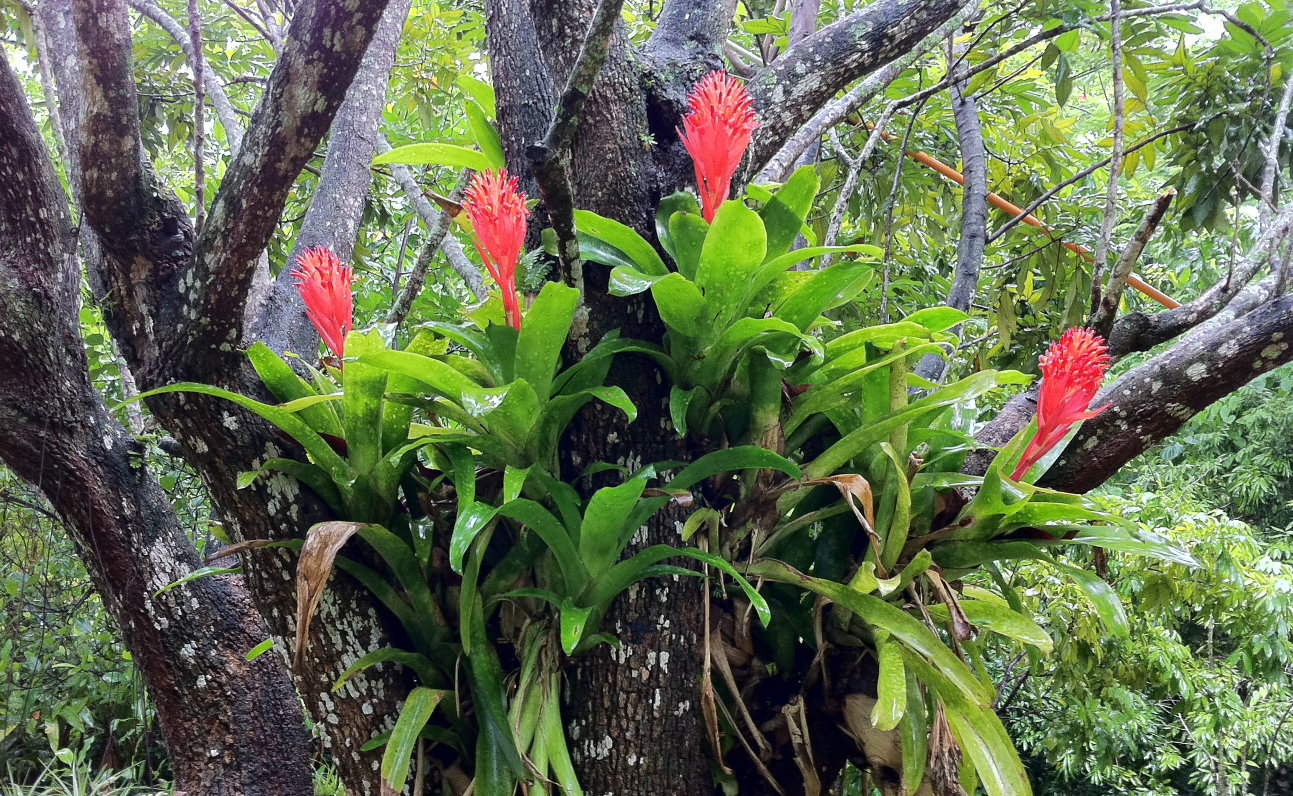
Billbergia pyramidalis is a species in the Bromeliaceae family. Bright pink and purple tips glow on their blooms and these bromeliads are found almost everywhere you look at this time. Billbergia pyramidalis specially likes to grow on or near trees that are used as support. After today's rain, these blooms are so bright they glow. Their nick name is "Summer Torch" and they easily colonize a large area just like what you see here around my longan tree.
Summer Torch

Saturday, August 6, 2011

Love of Lotus

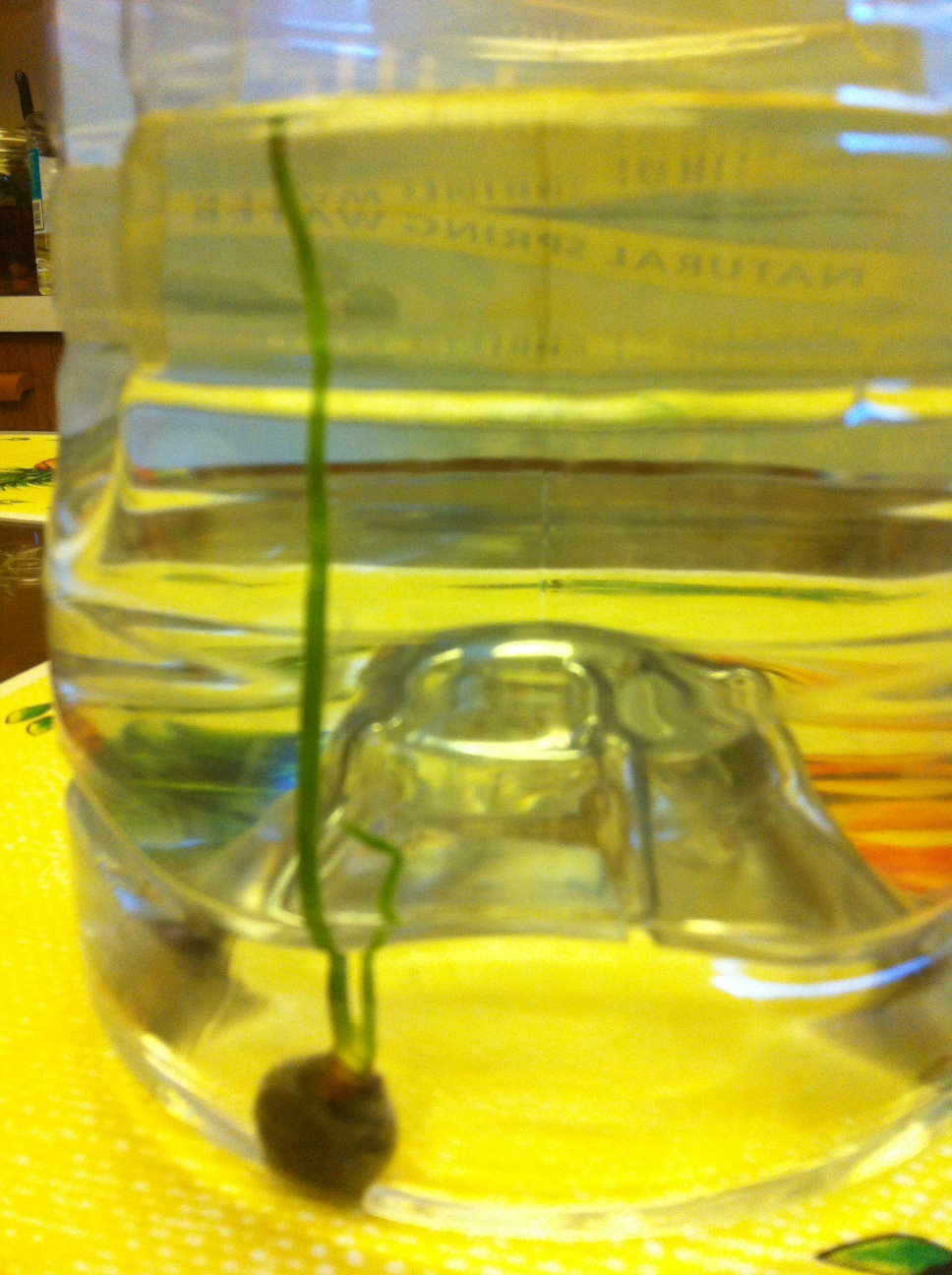
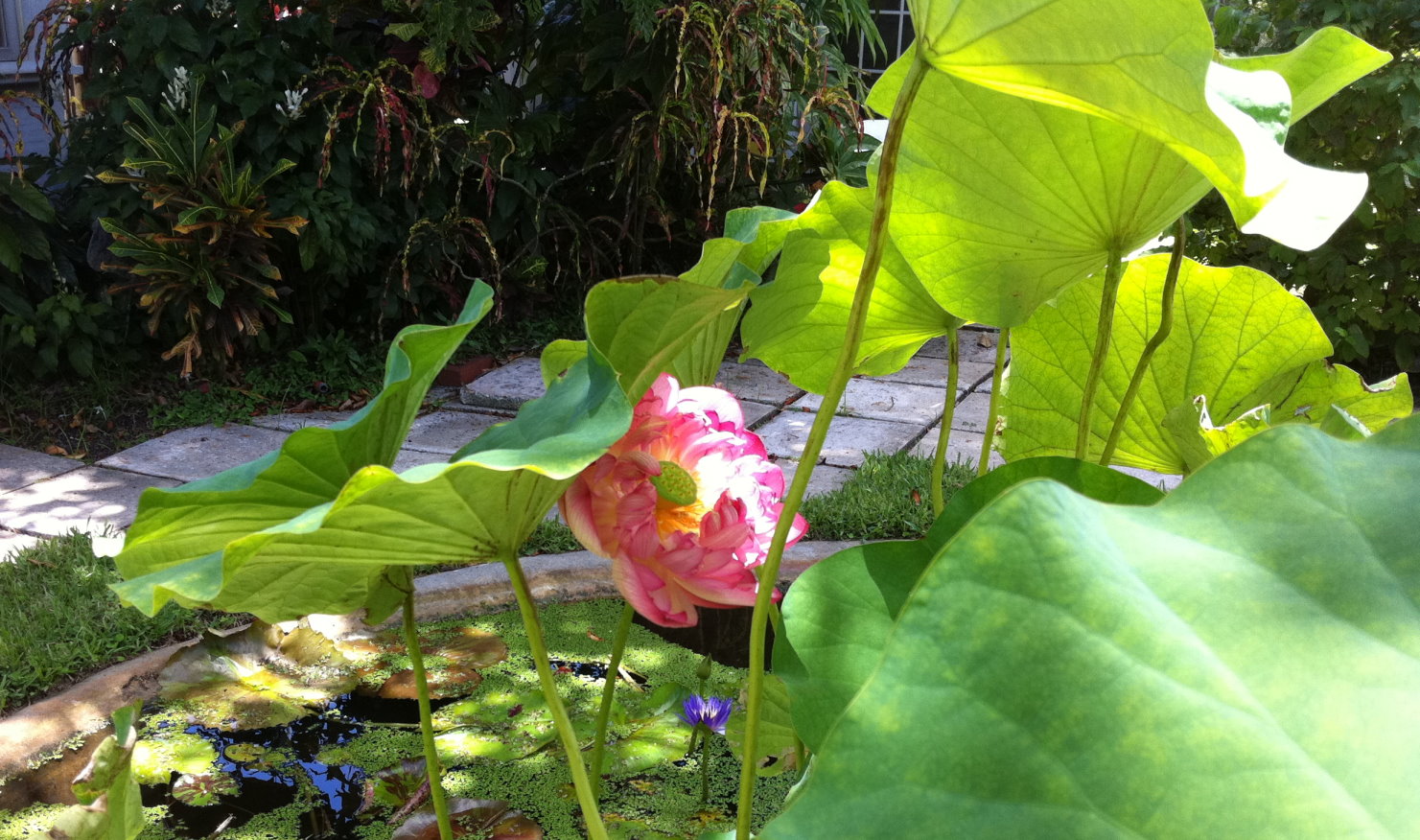
OK, after many sleepless nights, I came to the conclusion that I want to become a Lotus lover and expert. Easy said than done, I know, but I'll try. About a week ago, I began the germinating process for a Nelumbo nucifera seed. A new growth emerged only after a couple of days. That is amazingly rewarding, to see a new development emerging from nothing. Not really from nothing, but from a seed. According to theory, the seedling starts out with two new growths. When they reach the water surface, the waterproof leaves will begin to unfold. It will take two years for the beautiful lotus flowers to come to life. Come back here in the fall of 2013 to see the first flowers of this plant.
Summer roll

Friday, August 5, 2011

Summer Rolls

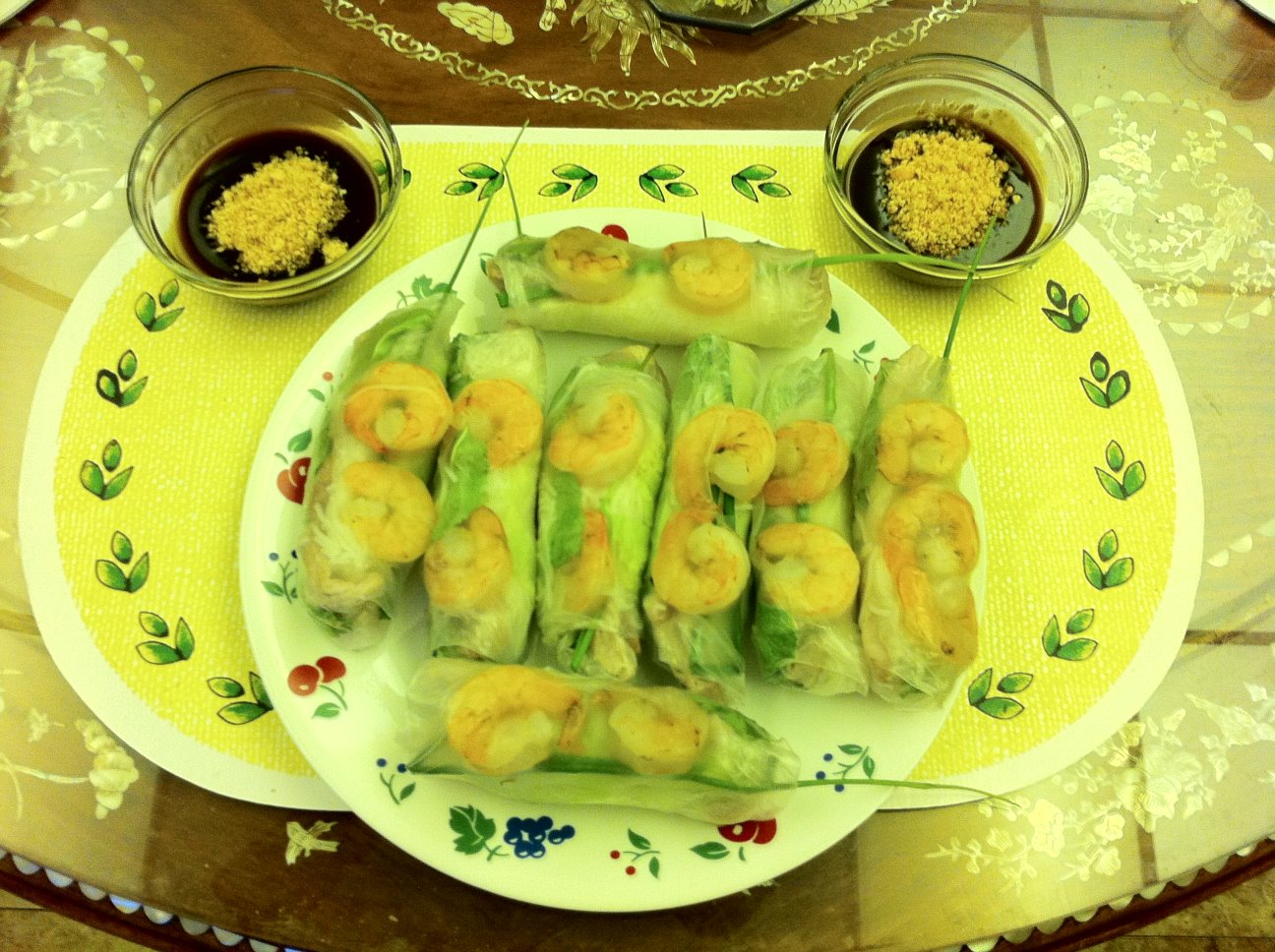
Hey folks, meet Miami's Gỏi cuốn. It is "made in Miami" and aka Miami summer roll, Miami Vietnamese spring roll, or Miami fresh roll. Vietnamese gỏi cuốn; literally means "salad roll" is a dish consisting of pork, shrimp, herbs, bún (rice vermicelli), and other ingredients wrapped in rice paper. They are served at room temperature, and are not deep fried. Summer roll has gradually gained popularity among Vietnam's neighboring countries and in the West. Many Western restaurants serve Vietnamese summer rolls as an appetizer.

Believe it or not, I made these myself. It wasn't too hard because I learned how to roll cigarettes when young and adventurous. This is a bit different because you don't smoke these. Now I am exhausted and can't find any good Miami photos thus this is used instead. I can certify that these are really, really really authentic. I know, I have done research at least half a day to know what should be inside.

They look amazingly ugly and unappetizing, but trust me, they were deliciously yummy. Beats Burger King any night. Of course, I didn't eat all of them. Are you crazy? Confidentially though, I don't know why they made me put in the chives. Can't eat those long things!
Summer roll

Thursday, August 4, 2011

Ylang-Ylang III

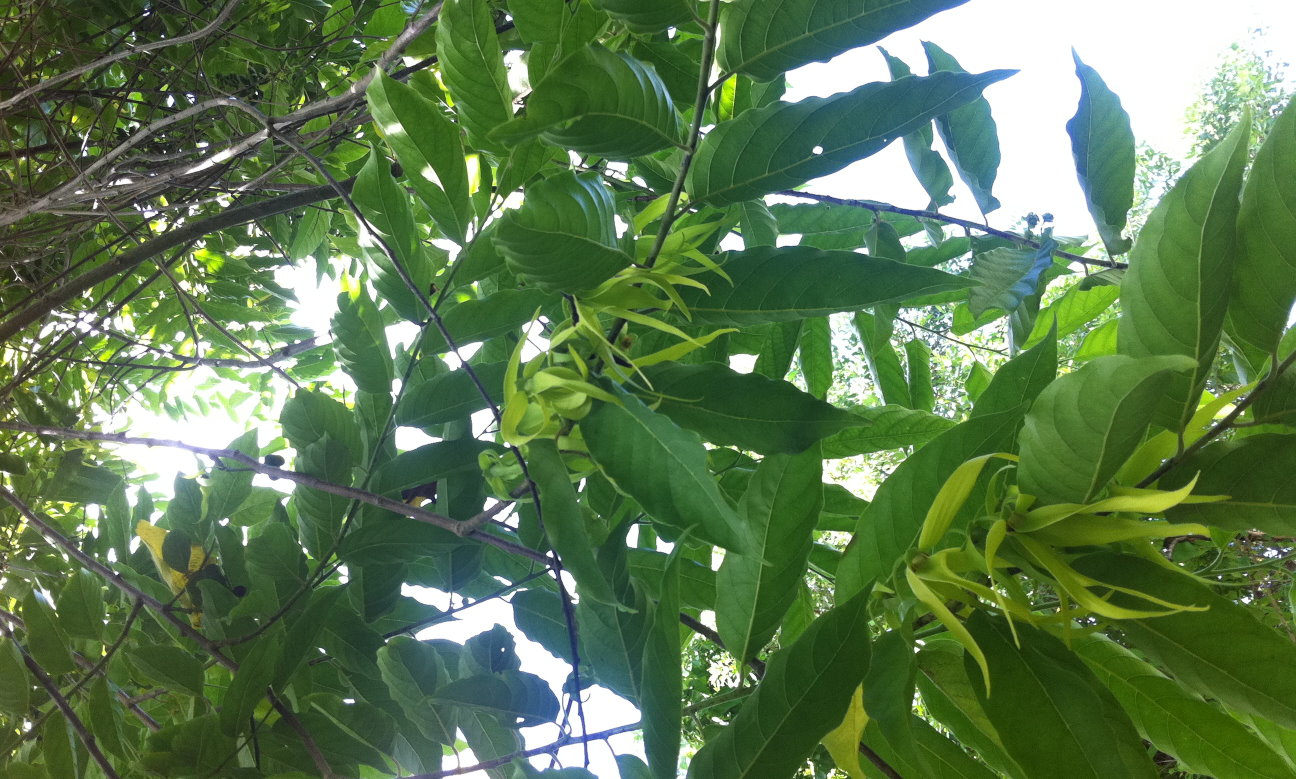
Cananga odorata is a fast-growing tree of the custard-apple family, Annonaceae, that exceeds 15 ft per year and attains an average height of 40 ft. It grows in full or partial sun, and prefers the acidic soils of its native rainforest habitat. The flower is drooping, long-stalked, with six narrow greenish yellow petals, rather like a sea star in appearance, and yields a highly fragrant essential oil.

My tree which was badly damaged years ago by a hurricane, has fully recovered and has grown to be 30 or 40 feet and in bloom right now. I think there are many myths about the scents of flowering tree/flowers. Usually, there is a lot of exaggeration. Take this Ylang-Ylang for instance... its fragrance is quite subtle and not overpowering as some say. When you pass under it, you'll stop because you have detected some unusual and very pleasant scent... but it may take you a while to find its source. And it is much more easily detectable in the morning.

The essential oil of Ylang-Ylang is used in aromatherapy. It is believed to relieve high blood pressure, normalize sebum secretion for skin problems, and is considered to be an aphrodisiac. The oil from Ylang-Ylang is widely used in perfumery for oriental or floral themed perfumes (like Chanel No. 5). In Indonesia, Ylang-Ylang flowers are spread on the bed of newlywed couples. In the Philippines, its flowers, together with the flowers of the sampaguita, are strung into a necklace (lei) and worn by women and used to adorn religious images. My advice to you is to either get married in Indonesia or go there for your honeymoon.

Ylang-Ylang is believed to give relief to many ailments: motion sickness, palpitations and reducing high blood pressure, slow down over-rapid breathing and heart tachycardia, treating PMS, extreme mood swings, hair split-ends. You think I can quit my day job and live off my tree here?
Ylang

Wednesday, August 3, 2011

Steel Trees

I think I gained at least 2 or 3 pounds today, all in the name of August 3rd! Please don't ask me why... And if you do, I won't give you an honest answer. But I did return to PF Chang for lunch, and this is how it looks, kind of an ugly structure, don't you think? Looking at this, I can't understand why this building is decorated with the two "trees" made out of some kind of metal to adorn its entrance. This is Miami, and it's not real trees that we lack. If my name were Chang, which it is not, and I wish it were, I would plant two huge baobab trees in these locations. Nah! That's too African, let's use bamboos, yes, a bamboo forest with roaming pandas! Or anything but these two expensive and scrofulous, unlovely, unpicturesque and unsightly looking brown artificial trees. I wish I knew more synonyms for ugly! OK, after this outburst, I now feel not so bad for having gained so many pounds in a day! And it's Chang's fault!
Brown Tree

Tuesday, August 2, 2011

Banana Spider

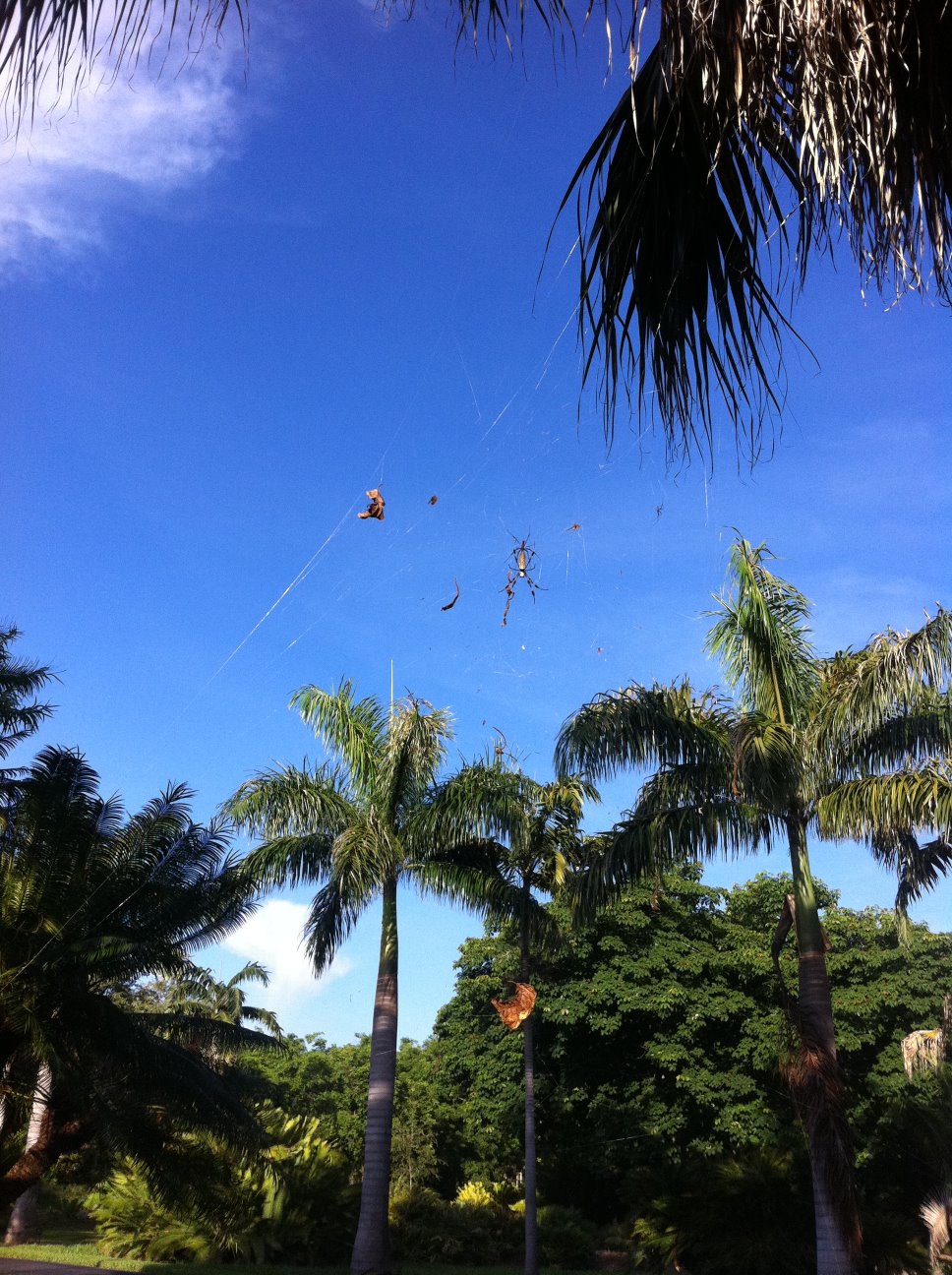
Nephila clavipes is a species of golden orb-web spider. This species lives in the warmer regions of the Americas. The large size and bright colours of the species make it distinctive. Many call them Banana Spiders because of their yellow bodies. The female is much larger than the male. She is about 3 inches long, and the male is about 1/2 inch long.

In the United States, N. clavipes ranges throughout the coastal southeast and inland, from North Carolina to Texas. Golden orb-weavers are especially numerous in the time after summer and before fall in the south-eastern and southern U.S. This species is widespread — and often common — in large parts of Central America and warmer regions of South America.

The web of a mature female can reach one meter in width, With a tensile strength of 4×10⁹ N/m2, the silk of N. clavipes exceeds that of steel by a factor of six. The yellow threads appearing as a rich gold in sunlight. Males come into the female's web for copulating. If you look closely, you will see that there are two males that have made it to this web. After mating, the female spins an egg sac on a tree, laying hundreds of eggs in one sac. While it is venomous to humans, it will only bite if pinched, and if doing so, the bite is usually relatively harmless and only leads to slight redness and localized pain.

I wouldn't even dream of pinching this banana lady. No sir! But I'll take a look now and then to see if she got some golden eggs laying around here.
Banana Spider

Monday, August 1, 2011

Perfect Lotus

If I were to make a card and send to my secret crush, I would use this. What do you think? Would you like to receive one?
PostCard

Sunday, July 31, 2011

Building Unabated

What bad economy? While the US is still reeling and moaning about the lethargic job market... and the ailing economy... and the wrangling of its leadership to get the nation into more debt...; the healthcare business is laughing all the way to the bank. Baptist health, the Goliath in Miami is getting bigger relentlessly. A new hospital just launched in West Kendall... and now this new expansion in South Miami hospital that was annexed into the Baptist health conglomerate not too long ago. I am always amazed at the speed and efficiency of the construction industry in the US. Compared with what it takes nature to grow a simple tree in years, decades, or even centuries... these concrete buildings are finished in no time at all. However, the consolation us mortal beings have is that from space, these man-made structures are invisible and insignificant when compared to nature's oceans, jungles, deserts and mighty rivers.
Scorching Hot

Saturday, July 30, 2011

Hot Miami

It's high noon in Miami and it's hot today. The temperature reads 92 degree Fahrenheit, but the "feel like" temperature is hobbing around 100 - 102 degrees! They call that the heat index. You want to stay indoor and making sure your A/C is in tiptop shape. Do you know that A/C always break down on week ends? It's not a good day to work outdoor so I feel for this person holding the banner for the Metro PCS store here on US-1. In the US, all cities have regulations regarding billboard and banner advertising. I am sure this must carry a permit of some sort else the enforcers may come knock on the doors.
Scorching Hot

Friday, July 29, 2011

Nelumbo nucifera

I visited tog yesterday and could not resist to show a photo I took at his pond. The impressive lotus that he grows so well has this beauty that must have been in bloom quite a while to nurture the seed pod seen here. Lotus seeds or lotus nuts are the seeds of plants in the genus Nelumbo, particularly the species Nelumbo nucifera. I got a few seeds from tog and hope they will grow for me.
Lotus

Thursday, July 28, 2011

Coco de Mer

I probably will not be around to see the fruits of this tree!

The Coco de Mer (Lodoicea maldivica), the sole member of the genus Lodoicea, is a palm endemic to the islands of Praslin and Curieuse in the Seychelles. It formerly also was found on St Pierre, Chauve-Souris and Ile Ronde (Round Island, an islet near Praslin) in the Seychelles group, but has become extinct on these islands. The name of the genus, Lodoicea, is derived from Lodoicus, the Latinised form of Louis, in honour of King Louis XV of France. The tree grows to 25–34 m tall. It is dioecious, with separate male and female plants. The mature fruit is 40–50 cm in diameter and weighs 15–30 kg, and contains the largest seed in the plant kingdom. The fruit, which requires 6–7 years to mature and a further two years to germinate, is sometimes also referred to as the Sea Coconut, Bum Seed, Love Nut, double coconut, coco fesse (that's "butt" in French, in case you don't know,) or Seychelles Nut. The Coco de Mer is the most interesting species of the six monospecific endemic palms in Seychelles since it is the "only true case of island gigantism among Seychelles flowering plants, a unique feature of Seychelles vegetation" (Proctor, 1984). It is one of the most universally well-known plants and holds three botanical records; the largest fruit so far recorded weighed 42 kg; the mature seeds weighing up to 17.6 kg are the world's heaviest; and the female flowers are the largest of any palm. Of the six endemic palms it is the only dioecious species, with male and female flowers located on different plants.

The Seychelles nut was once believed to be a sea-bean or drift seed, a seed evolved to be dispersed by the sea. However, it is now known that the viable nut is too dense to float, and only rotted out nuts can be found on the sea surface, thus explaining why the trees are limited in range to just two islands.

Here is some interesting reading from "Legends of the Coco de Mer."

Formerly the Coco de Mer was known as Maldive Coconut. Its scientific name, Lodoicea maldivica, originated before the 18th century when the Seychelles were uninhabited. In centuries past the coconuts that fell from the trees and ended up in the sea would be carried away eastwards by the prevailing sea currents. The nuts can only float after the germination process, when they are hollow. In this way many drifted to the Maldives where they were gathered from the beaches and valued as an important trade and medicinal item.

The unique double coconut closely resembles a woman's buttocks. This association is reflected in one of the plant's archaic botanical names, Lodoicea callipyge Comm. ex J. St.-Hil., in which callipyge is from Greek words meaning 'beautiful rump'. Other botanical names used in the past include Lodoicea sechellarum Labill. and Lodoicea sonneratii (Giseke) Baill.

Until the true source of the nut was discovered in 1768, it was believed by many to grow on a mythical tree at the bottom of the sea. European nobles in the sixteenth century would often have the shells of these nuts polished and decorated with valuable jewels as collectibles for their private galleries. The Coco de Mer tree is now a rare and protected species.

This photo shows one of the two viable nuts that came from the Seychelles, and this was recently planted here. It will take decades for this to grow to maturity... but it is believed that this will survive at this location.
Double Nuts

Wednesday, July 27, 2011

Harvesting Longans

Deep in the south of Miami is farm land where you see trees more than you see buildings. Gradually, avocados and even mangos are replaced by more exotic fruit trees such as longans, lychees, carambolas, guavas, sugar apples, jack fruits and many others, including the highly sought after herbs and spices essential for preparing flavorful and exotic dishes. At this time, the longans are in full swing and this very large grove is in high gear. All the trees are loaded and the work to pick, pack and ship the fruits is labor intensive. These trees are trimmed yearly so the fruits are more easily picked.

My longan trees are never trimmed so this year, the fruits are so high touching the blue sky they are left for the birds and squirrels. If I am lucky, I can get a few that fall to the ground and not yet eaten by others. And that's enough for me.
Longan Grove

Tuesday, July 26, 2011

First Love

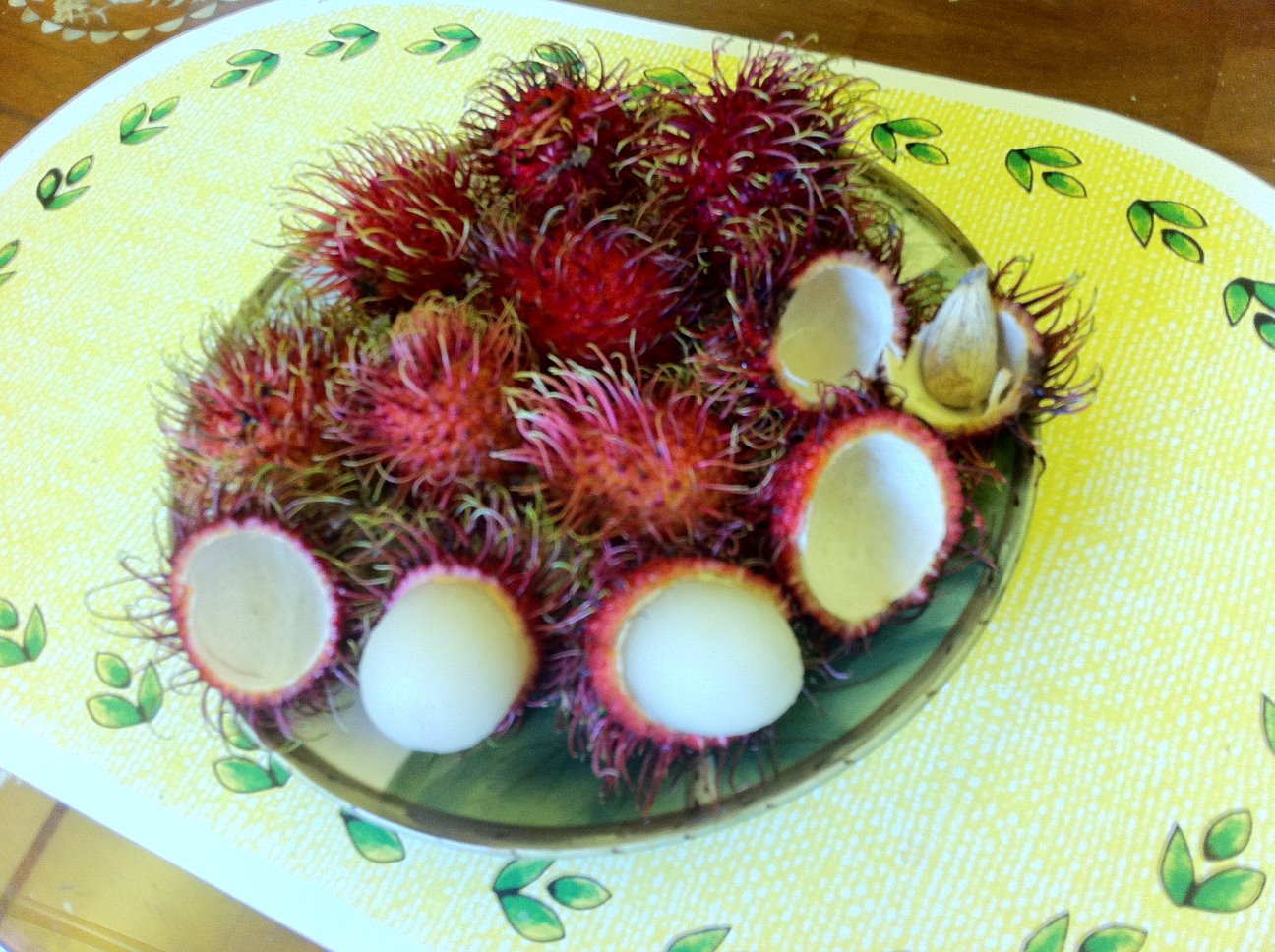
Yesterday was my lucky day, when I was given free and clear a small box of a fruit that some of you may have never heard of: Rambutan.

The rambutan (Nephelium lappaceum) is a medium-sized tropical tree in the family Sapindaceae, and the fruit of this tree shares the same name. It is native to Indonesia, The Philippines, Sri Lanka, Malaysia, VietNam (where it's called Chôm Chôm) and other countries in Southeast Asia. Rambutan is closely related to several other edible tropical fruits including the Lychee, Longan, and Mamoncillo. It is believed to be native to the Malay Archipelago, from where it spread westwards to Thailand, Burma, Sri Lanka and India; eastwards to Vietnam, the Philippines and Indonesia. The name rambutan is from the Indonesian word rambutan, which literally means hairy as seen by the long tentacles that cover this fruit.

My instinct was right. It told me to only get a handful and share the rest with others. This is the handful, and here's the verdict: this is a weird fruit! I remember distinctively I used to like this fruit when I was a toddler (just a few years ago...) in VietNam. In fact, many adults of oriental origins love this fruit. Not me! Not now! The last time I had a taste of this fruit was about 13 years ago. I didn't like it then, and I like it even less now.

There are two kinds of rambutan that I can remember, and they are different in the way the edible pulp easily separates from, or gets stuck to the seed. No one I know likes the kind that the pulp clings with dear life to its seed. Yuk! This bunch is the "better" kind. The seed easily separates by shedding its skin that becomes part of the pulp then both get to be eaten. I opened three and ate one. How would I describe my feeling now? Big yuk! No taste, no flavor... just like eating some amorphous soft rubber. It's safe to say I did not touch the rest of them.

The morale of this experience is this: Either your taste changes with time, or the memory you have of distant past is severely distorted. If you have nostalgia remembering your first love... beware if you see him or her again now!
Chôm Chôm

Monday, July 25, 2011

Visiting Banjong

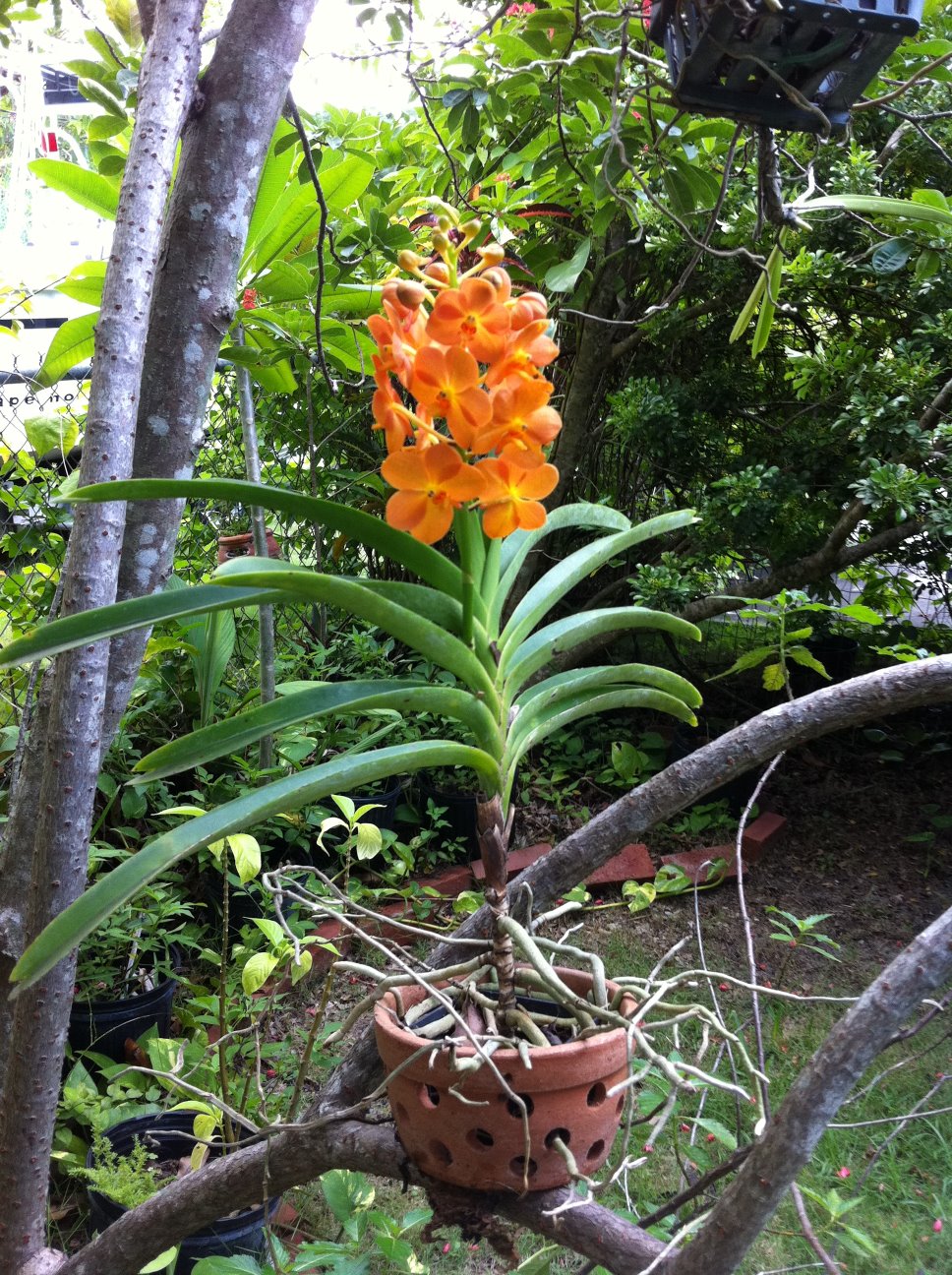
It has been a while since I took time to drive all the way South... Today, because it doesn't rain, I decided to pay a surprise visit to my old friend Banjong the orchid man. The surprise was on me because I found his gate tightly shut! Resourceful (and lucky) as I was, I didn't have to jump over his fence, but managed to get him to open the gate to let me in. Every time I come here, his orchids in bloom are always ready to pose for pictures. If you love Vandas, this is the place to be. But let me tell you about an orchid secret not too many know: instead of getting a very large flowered showy plant, get a new vanda cross that has a scent you will never forget after the first sniff of its flowers. And you can only get it here because he knows how to breed them in that way. If you do come, tell him I sent you, and ask for a Denisoniana cross. No, that is not in this photo, these are "showy plants" but flat on scents.
Banjong

Sunday, July 24, 2011

Borders No More

In February of this year, I mentioned about the problems Borders Book Shop was having, and predicted their demise. Sad to say, it was quite easily prophetic, and it finally happened. Today, cars are converging to this book shop to feast on this misfortune. It has become a too often seen ritual that bargain hunters stampede to pick clean the carcass of those that failed. If you wait a few more days or weeks, the discount will eventually be increased to 75% then the final curtain will fall, and this store will be no more. Have no fear, another business will reappear here and life goes on...
Going Out of Business

Saturday, July 23, 2011

Hair Cuttery

I have been procrastinating week to week to week to have my hair trimmed so I look less like a tree in autumn. It's Saturday and I decided to say what the heck, let's get it done! And I came here to let Delilah have her way with my head and trim my hair and give me a shampoo too. I still feel like Samson afterwards, weak and so vulnerable and no wonder I procrastinated. But it's too late now. It's already done! Sorry I only have this shot to show! It's not easy to take photos when you have a person with scissors fussing with your head. I hope these two beautiful young ladies do not mind when they will discover that they were being spied on!
Hair Cuttery

Friday, July 22, 2011

New Growth

A while back, I had a ficus tree growing in a container at this spot. Earlier this year, that tree was moved to be planted at its permanent location. When growing here, a main root of this tree has found its way through the bottom of the container to anchor itself in the ground. That main root had to be severed when the young plant was moved. Now look what has sprouted from that underground root: two baby plants. I know one can make beautiful bonsai trees from Ficus religiosa, so I am putting on my learning hat starting today to figure out how I will make a bonsai out of these unexpected growths. Wish me luck because I will need plenty of it.
Baby From Under

Thursday, July 21, 2011

Blood Mobile

As scheduled, I am parting with some of my blood today inside this blood mobile. It's all for supposedly a good cause so I don't mind the trouble going through this. In fact, I do this twice a year. I do have another shot of my arm and all the accessories attached to it, but it's too unappealing, so instead, I am showing a colleague of mine who is emptying his heart out with pleasure.
Blood Mobile

Wednesday, July 20, 2011

Paying Station

I think it is increasingly difficult to live in the US. "Modern" life, if you want to call it that, is making real life difficult, if not miserable, for me, that is... Let me explain... To start, you can no longer get to talk to any intelligent human being if you need help when dealing with large corporations. And I am not talking about technical help... in which case, you may go insane before getting anywhere. Systematically, all human who used to get real paying jobs are being replaced by machines, or by those who know less than nothing. Here I am in the Sunset place and my car is parked somewhere in its garage. I need to navigate this mechanic to pay for my parking charge and got 15 minutes to get out. If I cannot find my car and get to the gate within 15 minutes, I will have to go through a major crisis at the exit gate because it won't open and the persons behind me will be very upset. There used to be a person who will take my cash to let me out. Not any more. The same is true for parking meters, and toll gates etc, etc... Help!
South Miami

Tuesday, July 19, 2011

South Miami

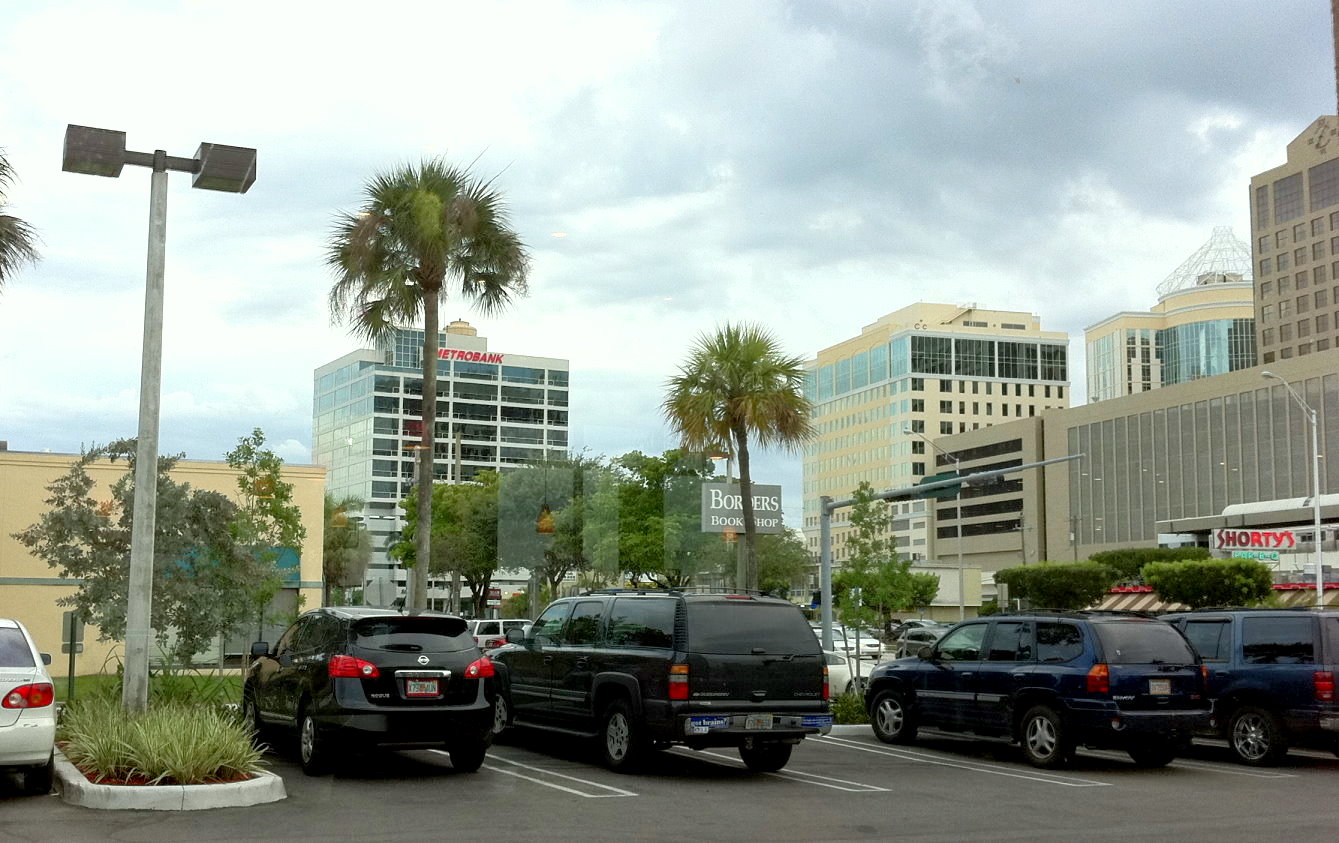
This is a view of South Miami business area along US-1. You see the Datran center towering over the very popular Shorty's rib place. You can't see the metrorail cars because they are behind the neon of Shorty's. On the left is the Borders bookshop. It is amazing for me to see that SUVs are still kings of the road here, despite the sorry state of the economy.
South Miami

Monday, July 18, 2011

The Birds

The sparrows, true sparrows, or Old World sparrows in the family Passeridae are small passerine birds. As eight or more species nest in or near buildings, and the House Sparrow and Eurasian Tree Sparrow in particular inhabit cities in large numbers, they may be the most familiar of all wild birds. Here, they have to peacefully share the air space with a large band of rogue green parrots that are very vocal. If they have a gang fight, I don't think these little sparrows stand a chance against the bigger parrots. Somehow, they stay away at safe distance on these wires that the parrots never use.
Sparrows

Sunday, July 17, 2011

Ascda.

Ascocenda, abbreviated as Ascda in the horticultural is a man-made hybrid orchid genus resulting from a cross between Ascocentrum and Vanda (Asctm × V). It was first described in Orchid Rev. 57: 172 (1949).

Ascocenda species are common in cultivation with numerous cultivars and often combine the large flower size of the Vanda parents with the color and compactness of the Ascocentrum parents. Most find their origin in Thailand, Myanmar, India and the Philippines.

These beautiful compact orchids are evergreen epiphytes with an upright, narrow, oviform leaves. The inflorescence is an axillary cluster with tall clusters of open flowers. They bloom twice or more a year with long lasting flowers. The flowers are brightly colored, often overlaid with contrasting colors. Mine blooms at least three times, if not four every year.
Ascocenda

Saturday, July 16, 2011

Dracula Calling

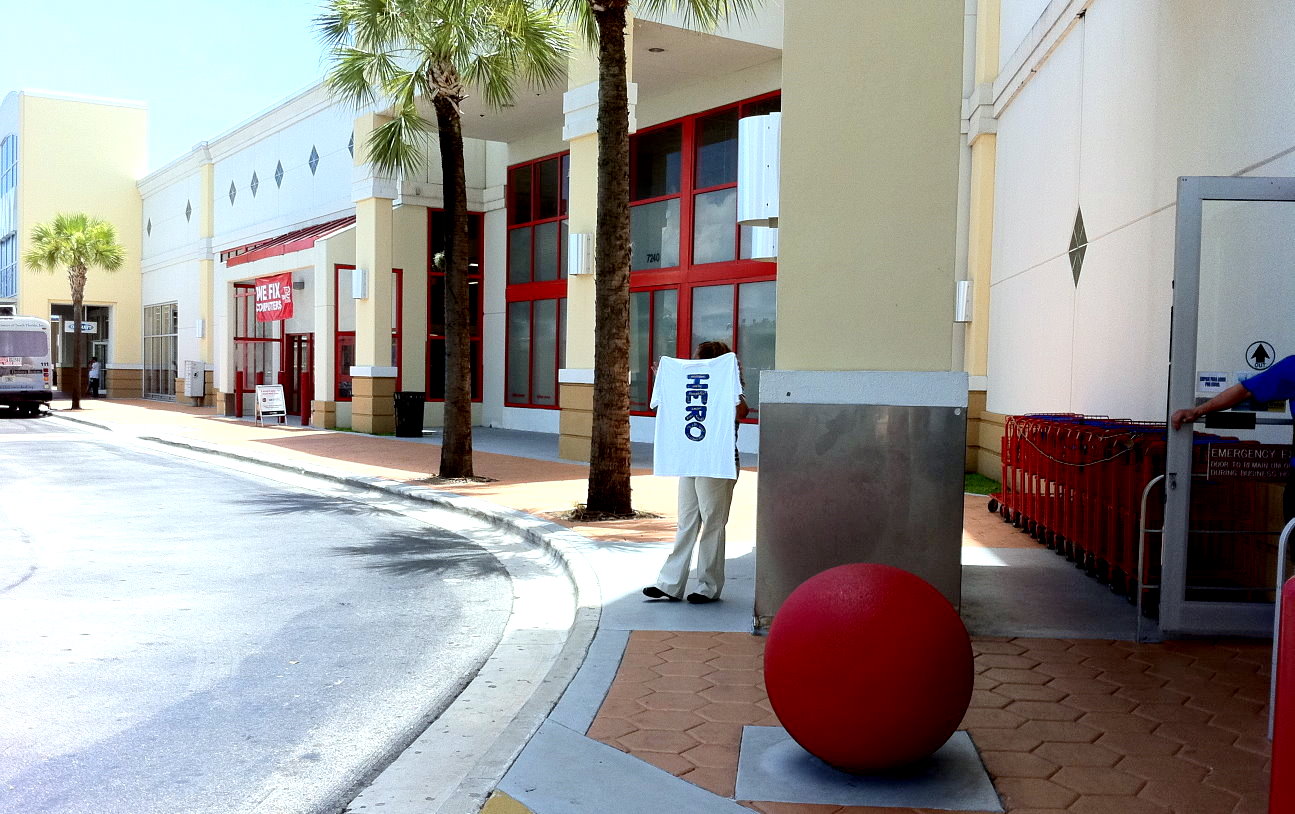
It's the weekend, and people may be in a good mood... so why not give a pint of blood and feel even better? The person holding the "HERO" T-shirt is attracting the attention of the local traffic here across Miami's Dadeland Mall. The deal is this: you step into the big truck parked on the left, roll up your shirt's sleeve, let a nice nurse stick a needle in the vein of the arm of your choice, allow your blood to fill a pint size bag. That's done! In return, you get the HERO T-shirt. You may also get a free soda, or even a free admission to some local events. In a week or so, you get to know your cholesterol level, know your blood type, and hopefully they won't call you in which case you do have a health problem that you are not aware of. That's a good deal! Me? I can't do this today because I am scheduled to let Dracula stick me next week on Thursday. Ouch!
We Need Your Blood

Friday, July 15, 2011

La Dolce Vita

Here is another proof of one of the many dream lifestyles in "paradise" Miami. What else do you want in life but driving around town in a convertible sport car towing a red hot wave runner? All this person needs is to get to the nearby blue ocean and quickly finds a place to launch the wave runner. Instant Dolce vita indeed.
Belle Vie

Thursday, July 14, 2011

New Name

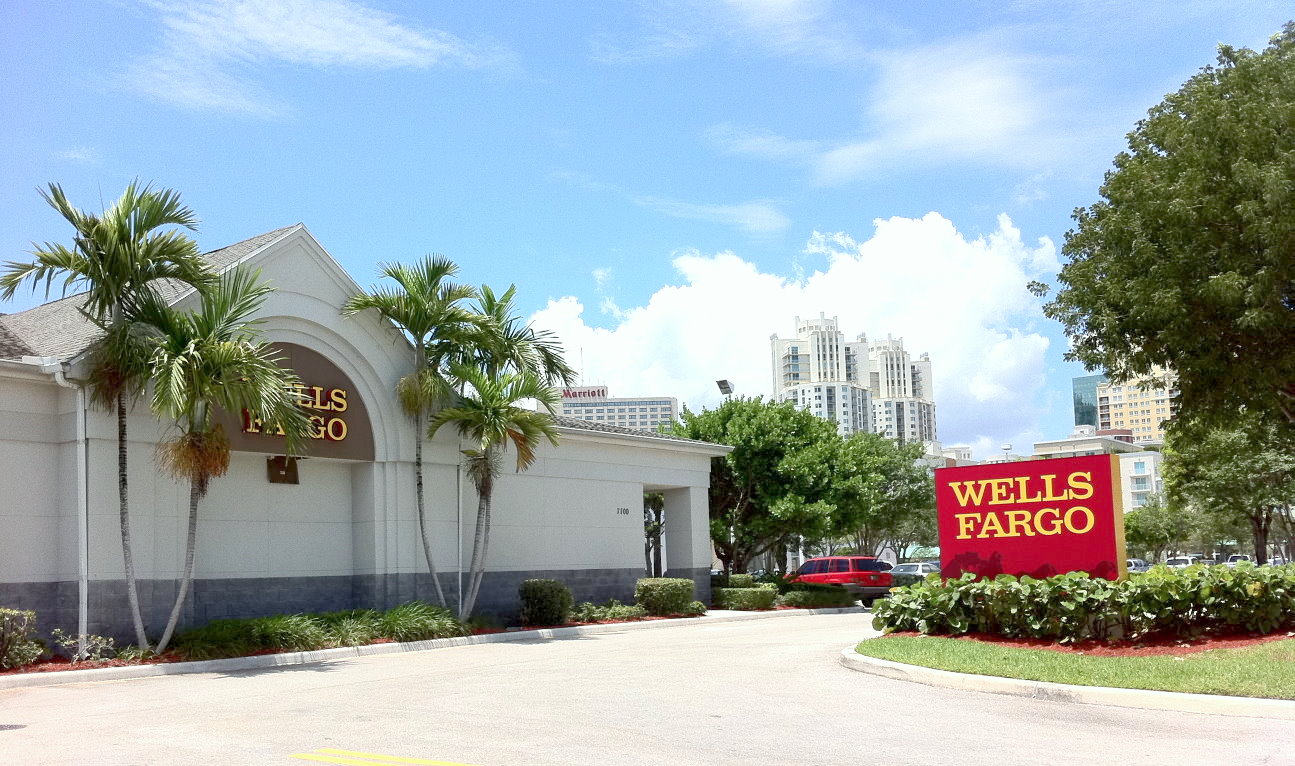
A local bank on SW Kendall Drive of Miami, formerly Wachovia finally officially got the name of its new owner: Wells Fargo. You can see in the background the Marriott hotel and the fairly new twin condo high rise that is the landmark of The Village of Dadeland.
Airport Security

Wednesday, July 13, 2011

Drive-Thru

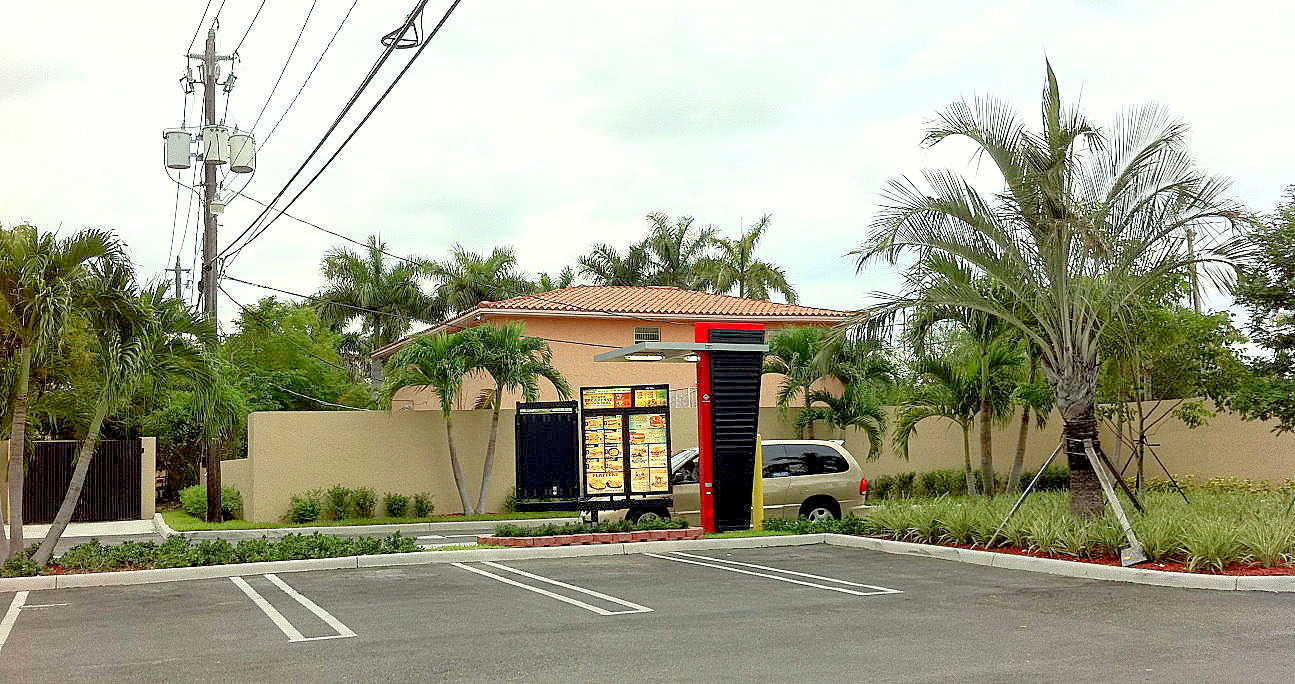
This is the drive-through at the fast food Burger King near the South Dade Miami metro rail transit system. In case you do not know what a drive-through or drive-thru is, it is a type of service provided by a business that allows customers to purchase products without leaving their cars. This way of selling a product was first pioneered in the United States in the 1930s but has since spread to other countries. We Americans love our cars so much we can't leave them even for a minute... then again, we also are so pressed in life that we don't have time to stop and sit down for food. You've got it, some of us eat while we drive.

A recent study by the American National Highway Traffic Safety Administration shows a staggering 80% of all car accidents and 65% of near misses are caused by distracted drivers more focused on their burgers than the road. The standard advice is then "Wait till you get home to eat that drive-thru."
Drive Through

Tuesday, July 12, 2011

Strip Bare, Please

I was at the Miami International Airport today. Not to miss a golden opportunity to take pictures at enormous risk to be yelled at or even thrown in jail, I got a few shots of the lines to pass security check prior to be allowed to board air planes. It is a very stressful place. I know, I've been there, done that! They make you take every items on your person and put them in buckets with the hope that you will lose some of them. I always do! They also want to see your toes, well, that's what I understand why they make you take off your shoes. Nowadays, they have a new gadget that sees through your outer clothes. If you plan to travel by air soon, make sure you wear your best underwear. At this time, the monitors are still in gray scale, but soon, they will be in technicolor in Panavision, so, wear them bright and colorful!
Airport Security

Monday, July 11, 2011

Vero's Angelina

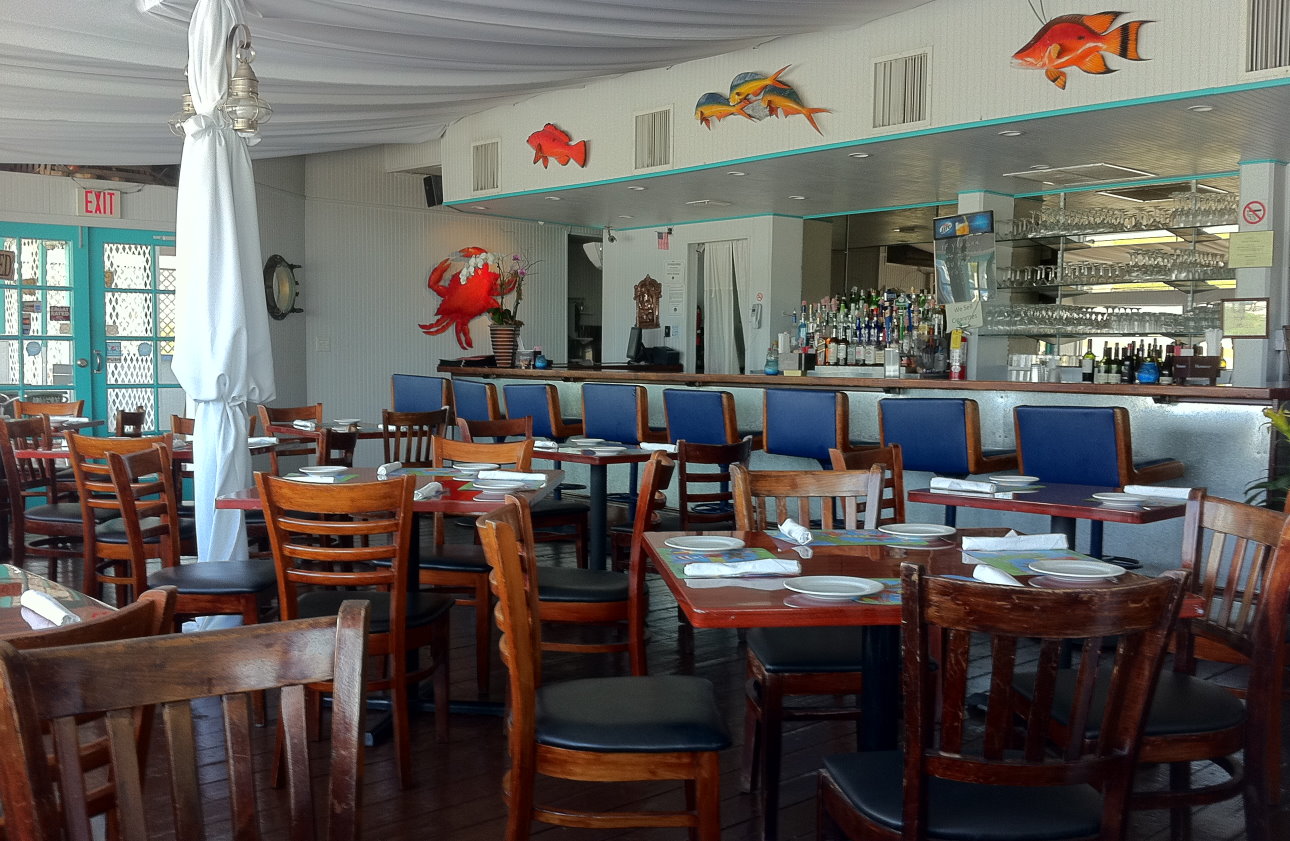
I have to celebrate a double birthday today, so I planned to come to my favorite seafood place. "The Hut," aka Bayside (not to confuse it with Bay Side market place in downtown Miami.) This is on Key Biscayne, right next to the now defunct marine stadium. To my big surprise, it is now an Italian sea food restaurant. It is called "Vero's by the Bay Lounge & Restaurant."

This is what they clamor by tooting their own horn: "Opened February 10, Vero's by the Bay appeases appetites of all types with an upscale menu of Italian-style seafood. Eggplant rollatini with ricotta and parmesan cheeses coronate meals with friends ($8.95), and the prosciutto e bufala takes its flavor from buffalo mozzarella and cured 18-month-old prosciutto that, unlike most toddler-aged meats, won't cry when you leave the room ($14.95). The cesare salad ($7.50) and mahi mahi sandwich/wrap ($9.50) drench taste buds in waves of flavor. Entree-minded epicureans delight in the ravioli d'aragosta, lobster ravioli slathered in creamy butter sage and shrimp ($22), and parago in crosta di banana—banana-crusted snapper ($23)—swim through white-wine sauces before satiating stomachs with the tropical essence of an edible beach ball. Patrons can savor dishes in Vero's by the Bay's dining room or fill up under oversized cocktail umbrellas on the sun-soaked dinner patio."

I like this restaurant already, not really because of the food, but because their very friendly waitress gave me a free cup of their "Zuppa" to taste. Very tasty, very salty too!
Vero's Now
I am still in a very jolly mood, and imagining her name is Angelina, this song is for her (Actually, their web plays this song sung by Louis Prima, which I like, so I am dedicating this to Angelina.) Can't be more Italian than this!

Sunday, July 10, 2011

Free Fish

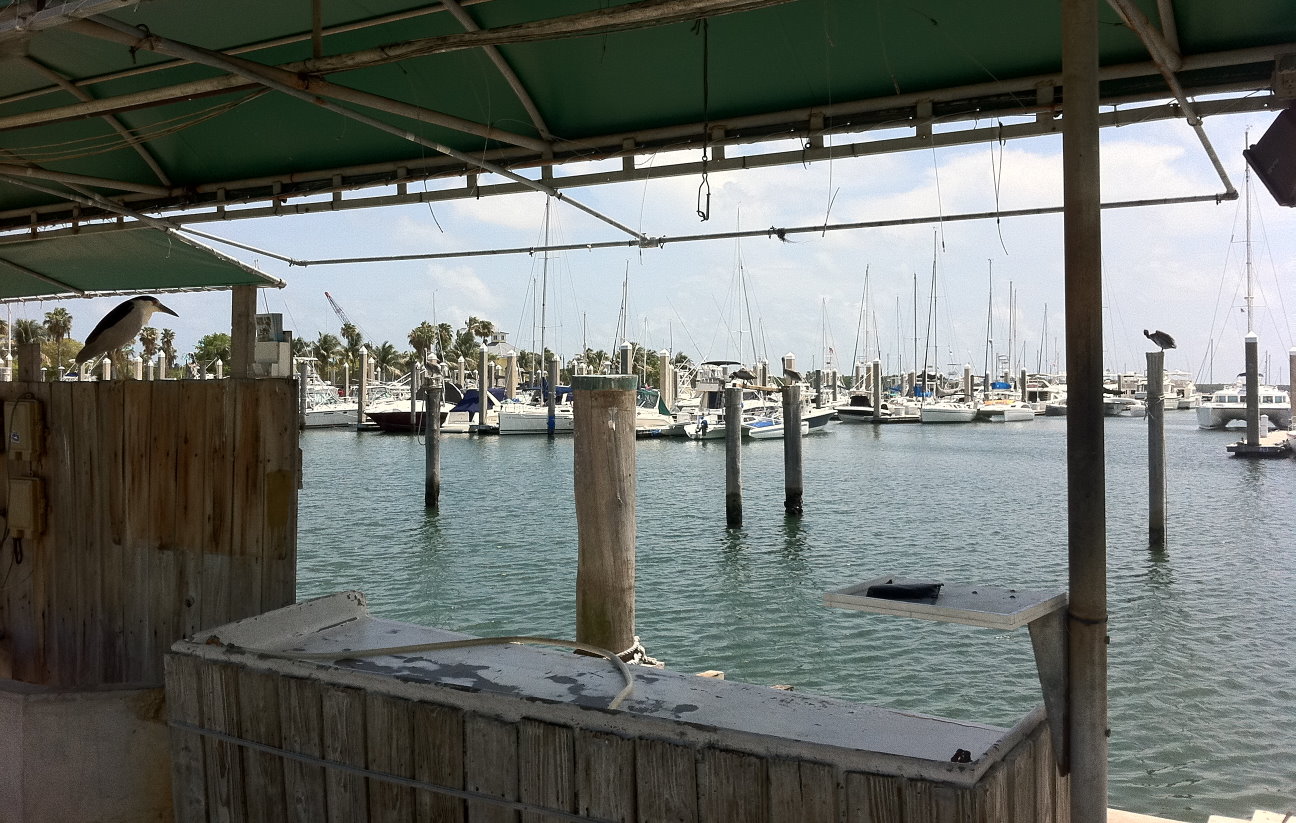
This is the Key Biscayne's marina that is near the University of Miami's Rosenstiel School of Marine and Atmospheric Sciences (RSMAS,) my alma mater. The deep sea fishing boats anchor here to launch their regular outings to fish in the Gulf Stream. Usually the boat captains get to keep the fish they helped the tourists reeling into their boats. At the end of the day, they sell the freshly caught fish here. The sea birds know that they should wait here to get their free meal, like the yellow billed heron on the left and the pelican on the right. I come here once in a blue moon to buy these fish that usually cost a fortune just because they were swimming around in the blue waters just a few hours before.
Blue Land Crab

Saturday, July 9, 2011

Hamburgers

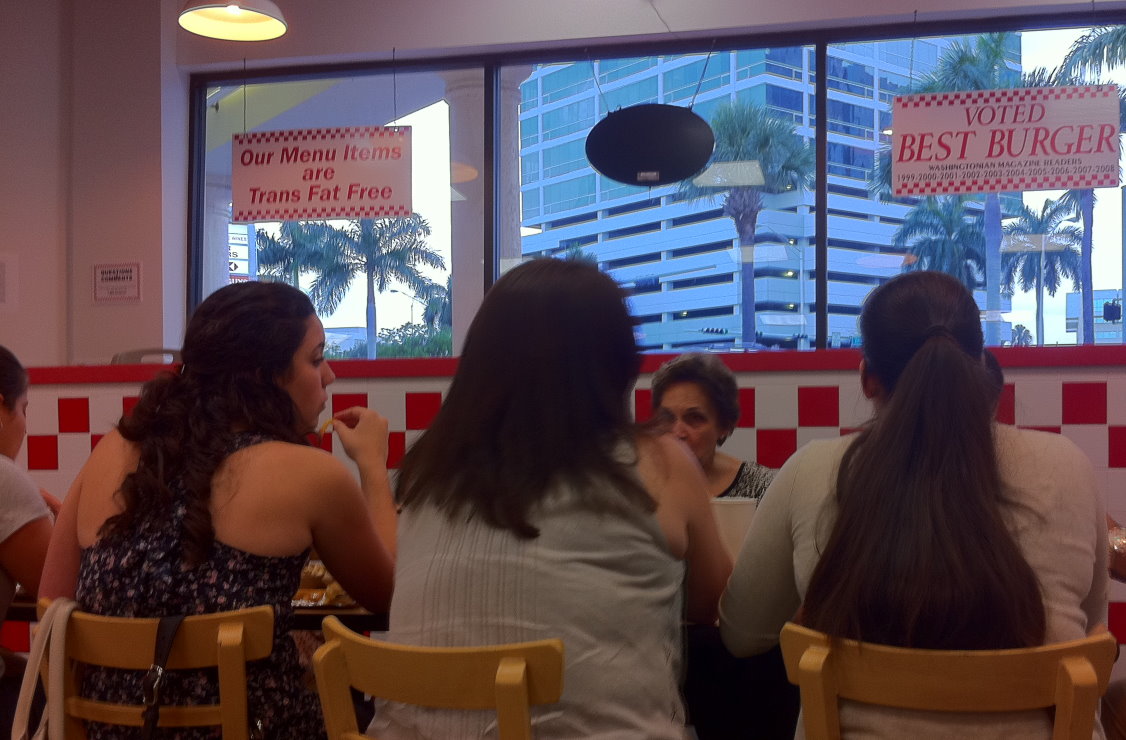
If you don't feel like cooking, because afterwards you need to do the dish etc... What you gonna do? You come here. Fast food is the easy way out. Did you recognize this place? That's the "Five Guys" burger joint on US-1 near the Datran center. If you can read the sign on the window, you'll know it says "Voted Best Burger" for every year since 1999!
Best Burger

Friday, July 8, 2011

Cardisoma guanhumi

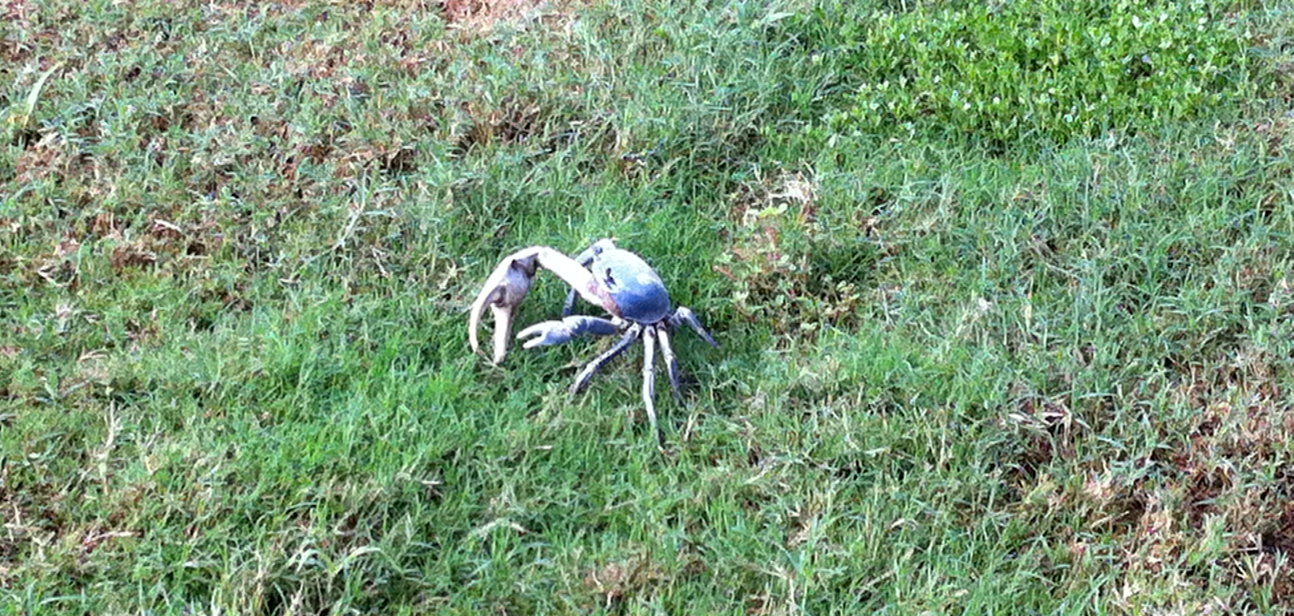
Today, I ran into what seemed to be a large army of these blue side crawling creatures. They look quite formidable and always ready to pick a fight. Literally, after so many rainy days, areas near water can face a large invasion of these blue invaders. Here they come, the blue land crabs (Cardisoma guanhumi) which is a large burrowing crab whose distribution on land is generally limited to within 5 km of the ocean. Large individuals may grow to over 11 cm and weigh over 500 grams.

Cardisoma guanhumi is a circumequatorial species found throughout estuarine regions of the Caribbean, Central and South America including Columbia, Venezuela, the Bahamas, and Puerto Rico. Within the U.S. it is limited to the Gulf of Mexico and coastal Florida and is rarely found more than 8 km from the ocean. It is found in greatest concentration on low lying ground, and burrow concentrations in these optimum habitat areas may exceed 7500 per acre. In Central and South America, as well as in the Bahamas, Cardisoma guanhumi is eaten as food. However, in the U.S. and in much of Puerto Rico it is considered a pest. I can tell you, having seen hundreds of them scurrying around here today, that I am quite afraid of them. Pests they are, in my humble opinion!

The population distribution of this species is heavily influenced by water temperature. In areas where water temperatures fall below 20 C in winter, larval survival is affected. Within the U.S., Cardisoma guanhumi has been observed as far north as Vero Beach, Florida. However, north of this area, water temperatures in the winter limit the growth of large populations of them.

In any case, they don't look very appetizing to me so I'll pass! This guy is caught off guard away from his hole so he is trying to fight his way back to his den.
Blue Land Crab

Thursday, July 7, 2011

Brewster

The lychee (Litchi chinensis, and commonly called leechi, litchi, laichi, lichu, lizhi) is the sole member of the genus Litchi in the soapberry family, Sapindaceae. It is a tropical and subtropical fruit tree native to China, related to longan, akee, and rambutan. It is now cultivated in many parts of the world. The fresh fruit has a "delicate, whitish pulp" with a "perfume" flavor that is lost in canning, so the fruit is mostly eaten fresh.

Lychees made their way to the continental United States around the turn of the 20th century when Rev. W. M. Brewster imported young lychee trees to Florida. Today the majority of lychees is cultivated in South-East Asia. In the United States, they can be grown in Florida, Hawaii, Texas, and California.

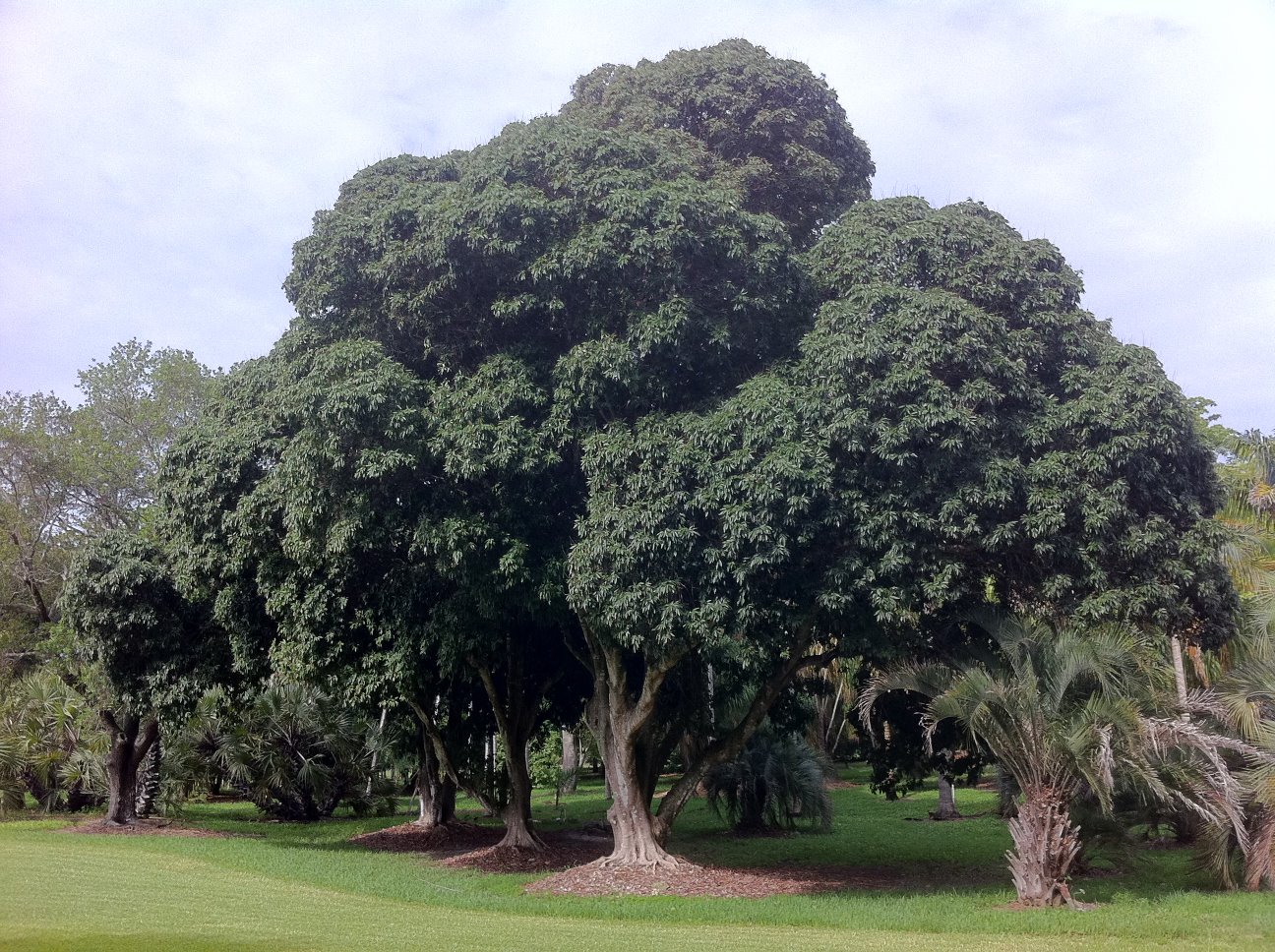
The Brewster lychee is very popular commercially because it bears fruits quite reliably. It can grow to be as tall as 25' to 50' with a spread of 15' to 25'. Their fruiting season begins in June and promptly ends at the beginning of July as these three trees can attest: no more fruits today! With lychee trees as huge as these, I am not sure how their fruits can be picked without elevated machinery. I'll try to remember and return here early June next year. Hopefully, they will fruit again then.
Brewster

Wednesday, July 6, 2011

Aechmea fasciata

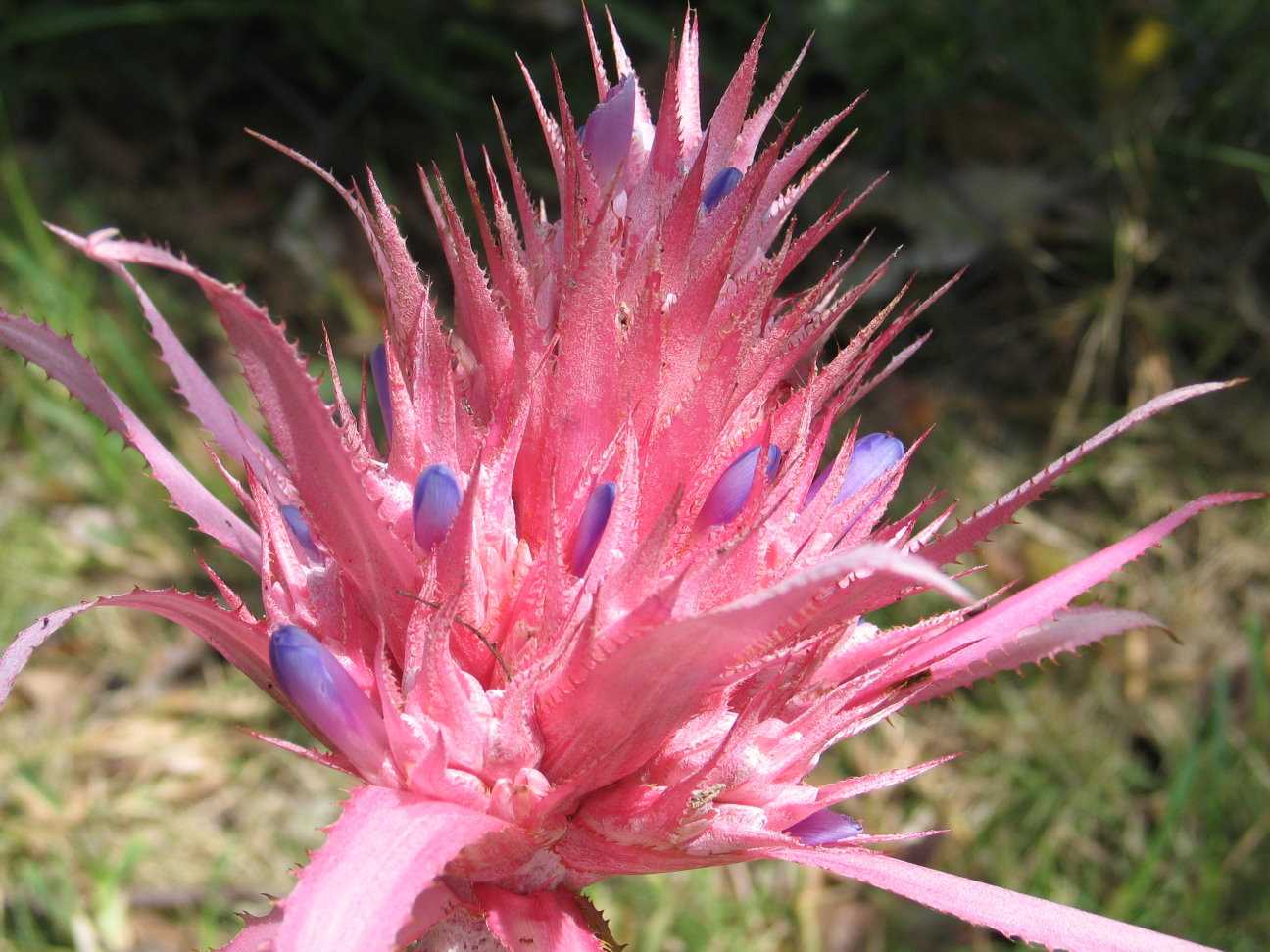
Aechmea fasciata (Silver-Vase, Urn Plant) is a pink bromeliad native to Brazil. This plant is probably the best known species in this genus which produces stunningly beautiful pink flowers. It is a reliable flowering bromeliad and I am used to see this display in June-July every year.
Pink Bromeliad

Tuesday, July 5, 2011

Space Shuttle Pose

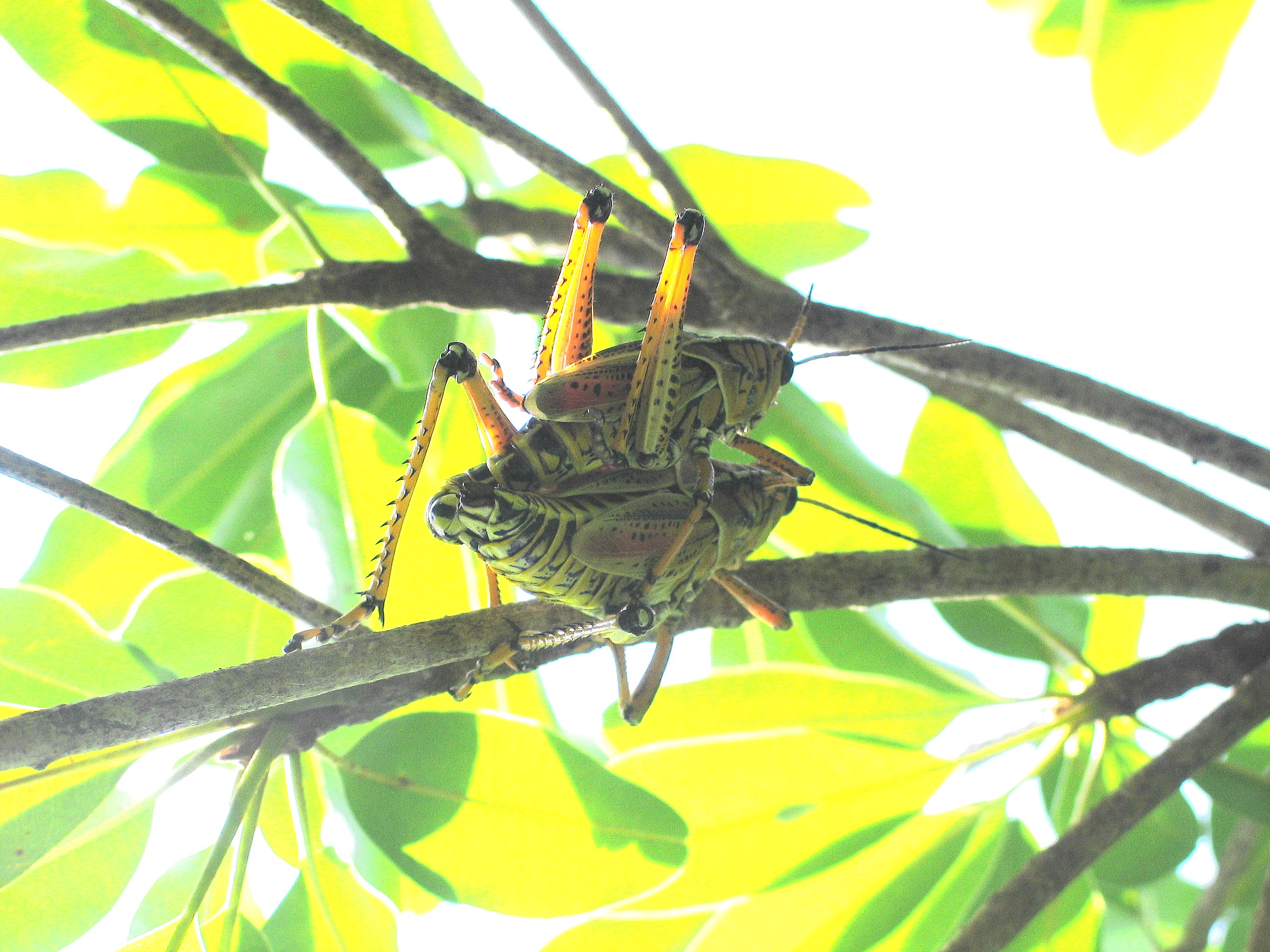
Just about every year, I can get a few of these photos from my backyard. This year, I decided to get it out there... so this is about the grasshoppers and their conquests.

Grasshoppers' hind femora are typically long and strong, designed for leaping. Generally they are winged, but hind wings are membranous while front wings are coriaceous and not fit for flight. Did you know that these wings really were not designed to fly, but to help finding mates? Read on... Females are normally larger than males, with short ovipositors. Males have a single unpaired plate at the end of the abdomen. Females have two pairs of triangular valves at the end of the abdomen used to dig in sand when laying their eggs.

Let me tell you this first, before we get to more exciting reading... In certain countries, grasshoppers are eaten as a good source of protein. In Mexico for example, chapulines (grasshoppers of the genus Sphenarium) are sought for their high content of protein, minerals and vitamins. They can be boiled or eaten raw, sun-dried, fried, flavored with spices, such as garlic, onions, chile, drenched in lime, and used in soup or as a filling for various dishes. They are abundant in Mexican food and street markets, particularly in the central regions. Grasshoppers are served on skewers in some Chinese food markets, like the Donghuamen Night Market. In some countries in the Middle East, grasshoppers are boiled in hot water with salt, left in the sun to dry then eaten as snacks. Raw grasshoppers should be eaten with caution, as they may contain tapeworms.

The above may have grossed you out, so here comes the more romantic facts regarding these critters...

Grasshoppers have an amazing ability to identify their mates. Each species has its individual song, produced by rubbing or flicking the lower back legs on the fore wings to create either a chirping or a clicking sound (this is known as stridulation.) Females sing more softly than males, facilitating differentiation between both sex and species. Species that make no sound rely on sight and scent to find a mate. Males emit pheromones, external hormones which attract females, while other species use their excellent eyesight to enable identification by color. The tiny, wingless grasshopper Drymophilacris bimaculata of Costa Rica has a brilliant green body with glimmering gold accents on its head, thorax, and genital areas. The male of this species searches out its mate by drumming its hind legs on its preferred food plant. The female drums back, and the pair identify each other by their unique coloring.

Elaborate courtship routines are performed by males in some species. The American grasshopper Syrbula admirabilis displays 18 individual poses using its wings, legs, and palps. Males of other species may wave brilliantly colored wings when wooing the female, while other species forego courtship altogether.

Mating occurs when the male lands on the female's back and this may last anywhere from 45 minutes to well over a day. In the species Extatosoma tiaratum, a female mates with several males. Most of the sperm in her genital tract from the first suitor is replaced by that of her next mate. Males therefore mate many times with the same partner and other females to gain the maximum opportunity to pass on their genes. Males of some species die shortly after mating. The females die after egg-laying, which may last until the cold weather begins.

Wow! Did you know all that? So here it is... I did some color enhancement to highlight the grasshoppers which resulted in the background leaves looking strange. Sorry.
Check Mate

Monday, July 4, 2011

Old Glory

The national flag of the United States of America (or the American flag) consists of thirteen equal horizontal stripes of red (top and bottom) alternating with white, with a blue rectangle in the canton (referred to specifically as the "union") bearing fifty small, white, five-pointed stars arranged in nine offset horizontal rows of six stars (top and bottom) alternating with rows of five stars. The fifty stars on the flag represent the 50 states and the 13 stripes represent the thirteen colonies that rebelled against the British monarchy and became the first states in the Union. Nicknames for the flag include the "Stars and Stripes", "Old Glory," and "The Star-Spangled Banner" (also the name of the national anthem).

"The Star-Spangled Banner" is the national anthem of the United States of America. The lyrics come from "Defence of Fort McHenry", a poem written in 1814 by the 35-year-old lawyer and amateur poet, Francis Scott Key, after witnessing the bombardment of Fort McHenry by the British Royal Navy ships in Chesapeake Bay during the Battle of Fort McHenry in the War of 1812.

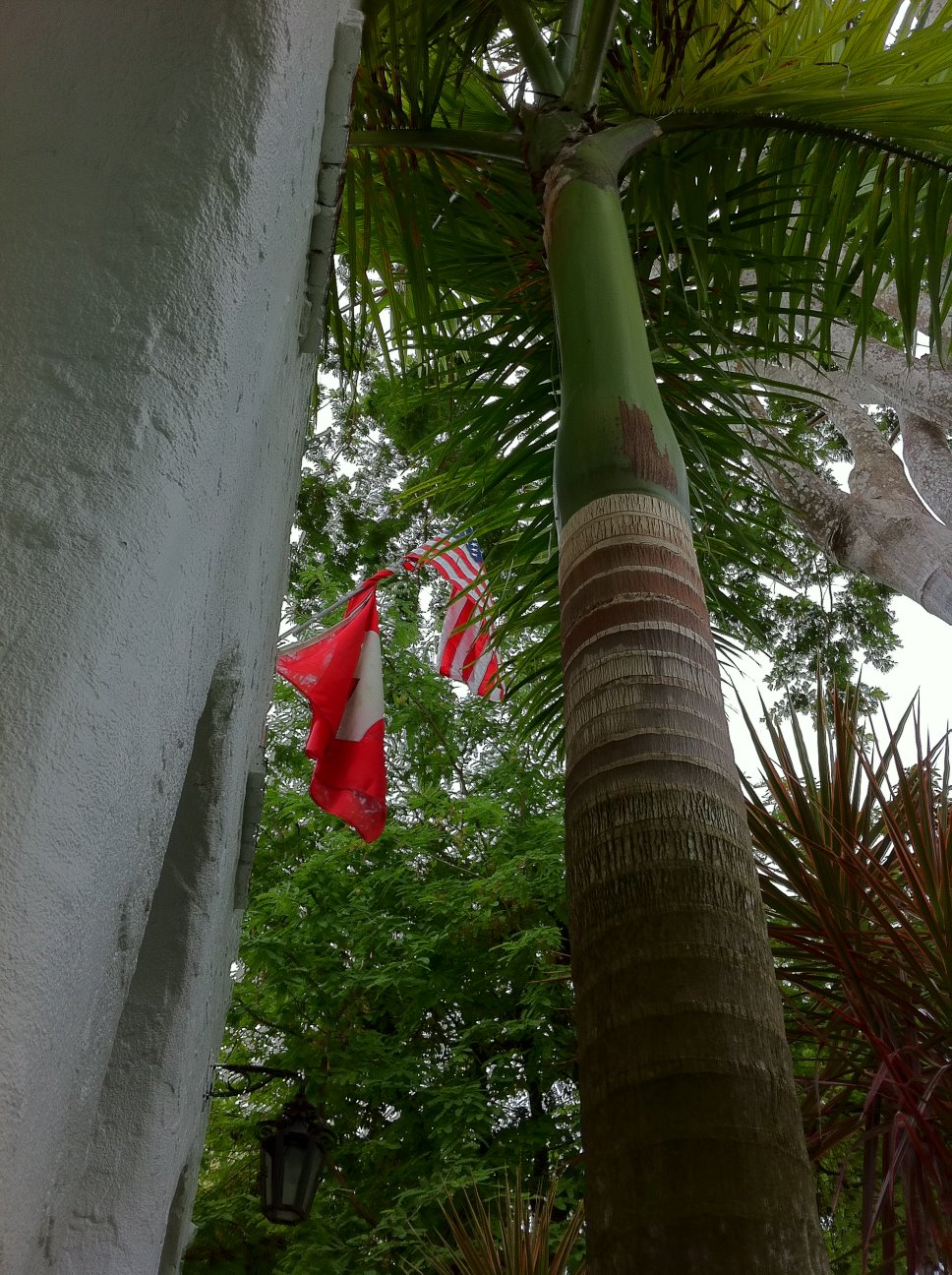
The "The Star-Spangled Banner" is proudly displayed here on July's 4th, which is today. If there is another flag to be displayed nearby, it has to be flown lower than the "Stars and Stripes."
Star Bangles Banner

Sunday, July 3, 2011

Fireworks

Every year, this place hosts this tent for the sale of the US' 4th of July celebration with fireworks. I watched this for a while today and I can tell you that business is very, very slow. I guess in this economy, few have money to burn.
Fireworks

Saturday, July 2, 2011

St. Sophia

At the intersection of SW 3rd Avenue and 24th Road of Miami, you find this beautiful church. Well, it is not really a church, but rather a cathedral. It is called the "St. Sophia Greek Orthodox Cathedral."

The Orthodox Church is the first Christian Church that was founded by Jesus Christ himself as described in the pages of the New Testament. Her history can be traced all the way back to Christ and His Twelve Apostles. The Orthodox Church is evangelical, but not Protestant. It is orthodox, but not Jewish. It is catholic, but not Roman. It is very ornate and beautiful inside. If you are in Miami, come to visit. As a bonus, you will be able to see beautiful huge banyan trees that line the median of Miami's SW 3rd Avenue.
St. Sophia

Friday, July 1, 2011

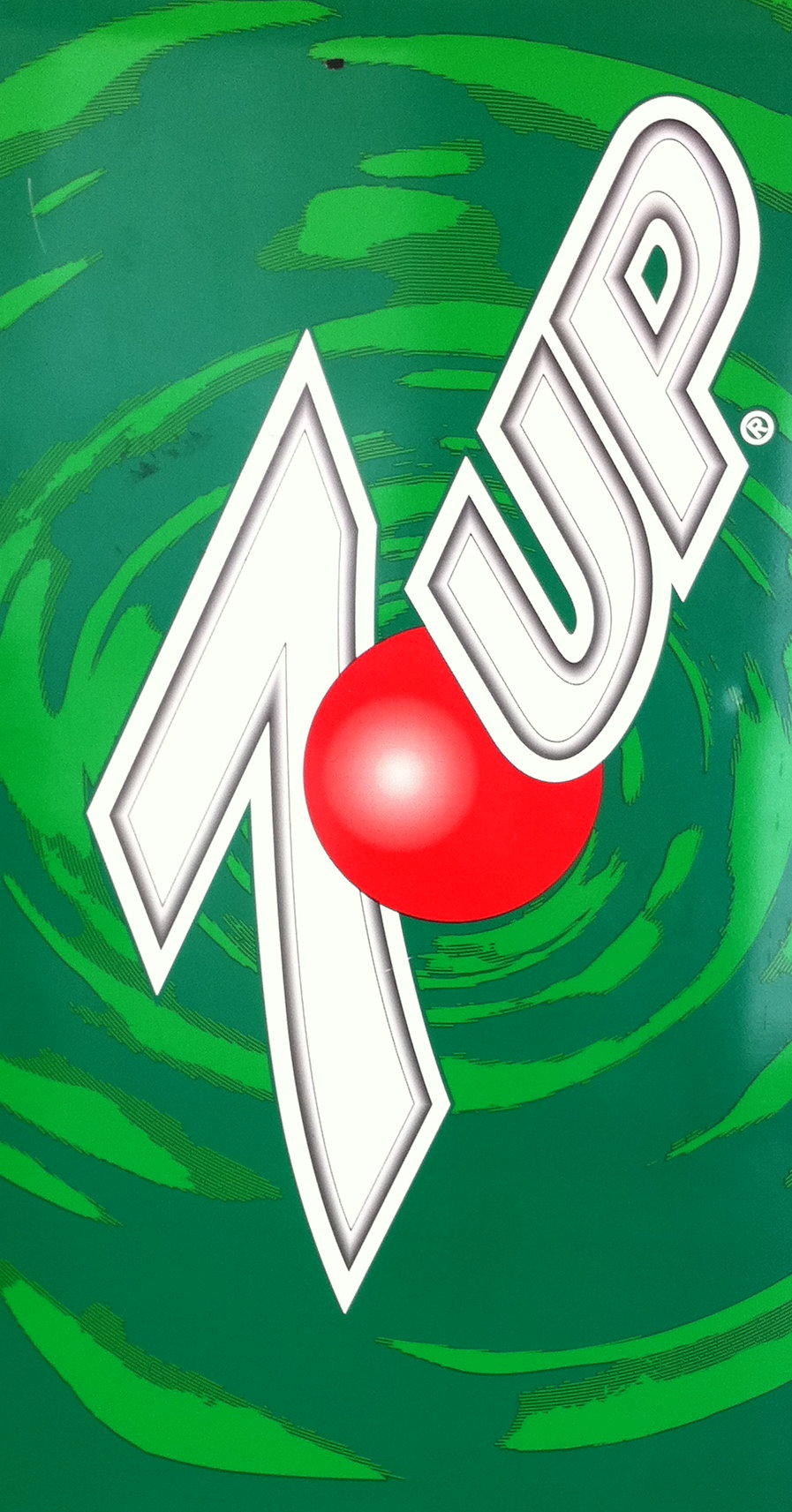
7 UP

7 Up is a brand of a lemon-lime flavored non-caffeinated soft drink. Inside a 7 Up can is found a concentrate manufactured at the Pepsi facility in Cidra. The 7 Up logo includes a red spot between the '7' and 'UP'; this red spot has been animated and used as a mascot for the brand as Cool Spot.

This product, originally named "Bib-Label Lithiated Lemon-Lime Soda", was launched two weeks before the Wall Street Crash of 1929. It contained lithium citrate, a mood-stabilizing drug, until 1950. 7 Up has been reformulated several times since its launch so it can be called "100% Natural." After a threat of law suit, it is now promoted as "100% Natural Flavors." To be honest with you, I don't think anybody would care one way or another except the people involved in the law suits.

Amazingly, 7 Up is a common folk remedy, for example, to relieve stomach aches. Really? Me? I used to use it to fizzle and clean the battery terminals of my ailing old cars.

Why am I talking about all this nonsense? In case you do not know, on the first day of each month, the photo daily people suggests a monthly theme used in the photos, and it is "Green" in July. In Miami, at this time, you see green everywhere, grass, trees, lizards... and they get to become monotonous, so I was very happy to walk by this vending machine. Green it is.
7 UP