Friday, September 19, 2008

American Solstice

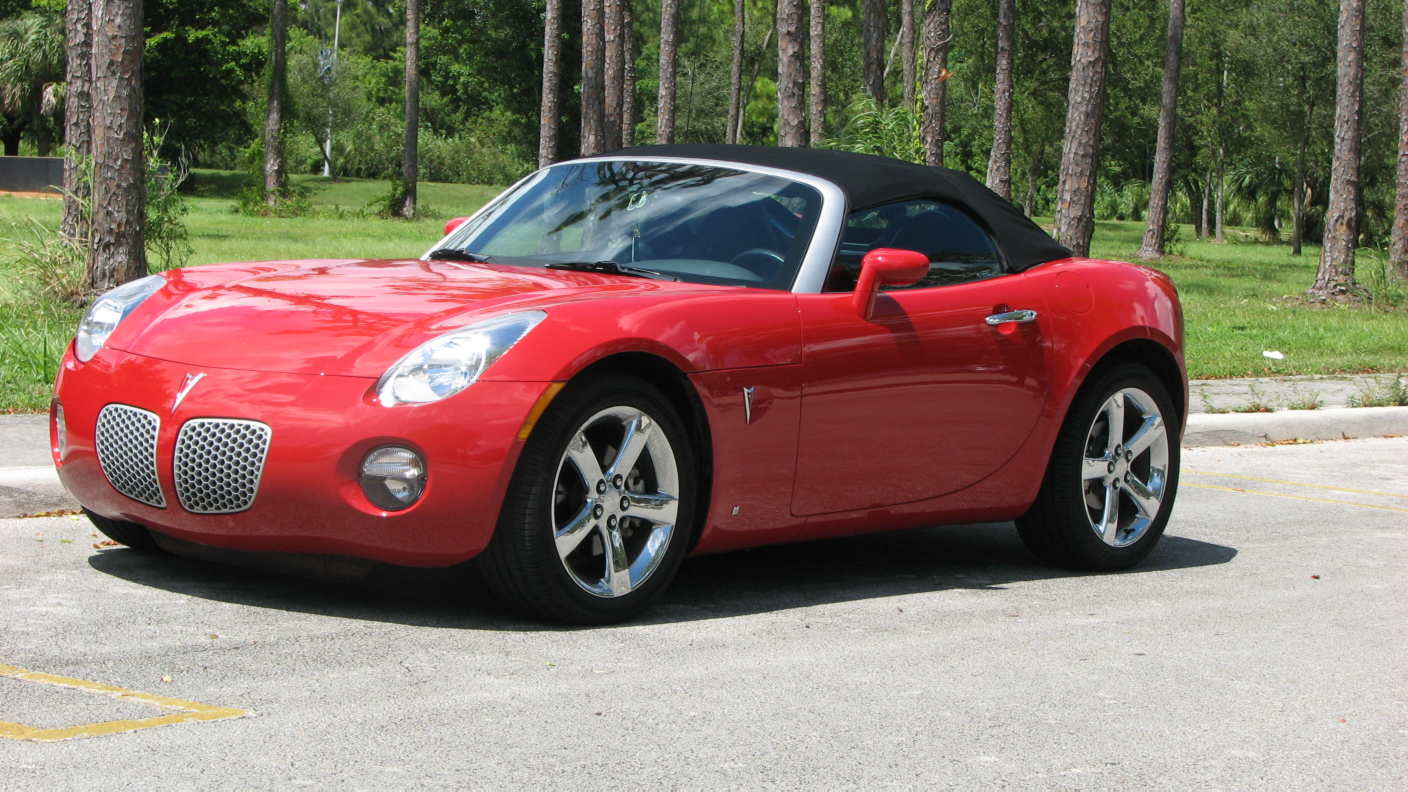
This American roadster Pontiac Solstice is a response to the assault from European and Japanese sport car imports. This car typically delivers 177-hp from a 2.4-liter four-cylinder engine. I don't think that is adequate to back up its sexy sports-car looks, much less to compete with more muscular imports that crowd the streets of Miami. Obviously, it is good enough for a college student's transportation.

SR-826

Thursday, September 18, 2008

Palmetto

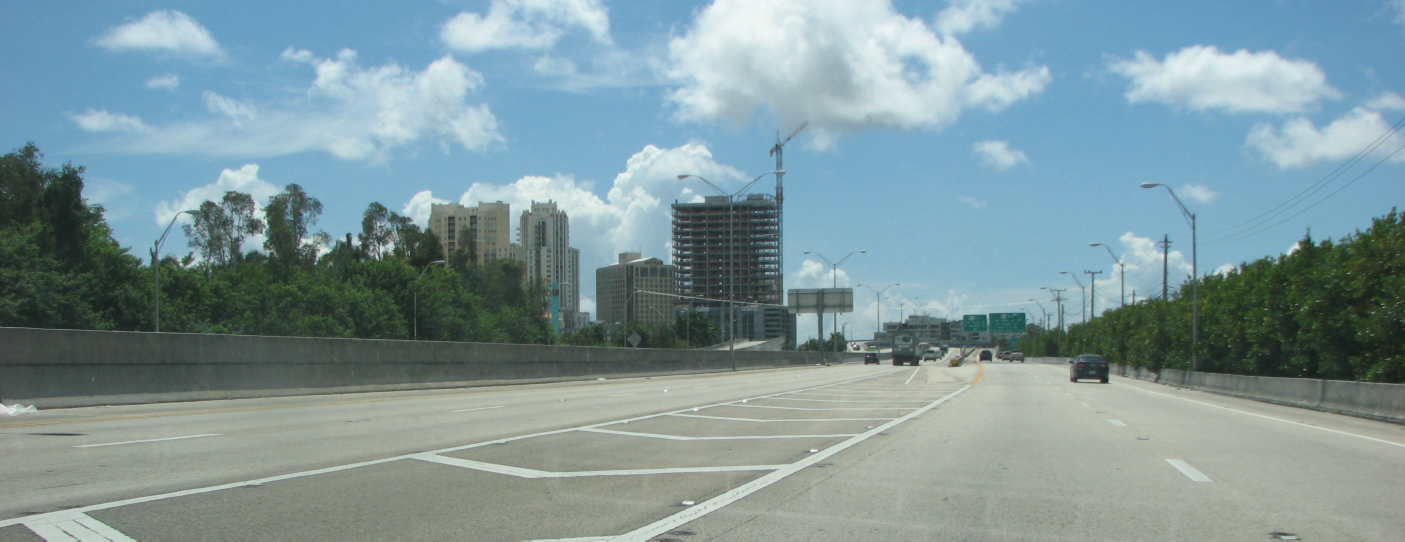
This is the Palmetto Expressway (SR-826) Southbound about to end and merge with US-1. The last exit to the right is Kendall Drive where Dadeland Mall sits and the new Village of Dadeland is sprouting up.

SR-826

Wednesday, September 17, 2008

Roots & Roots

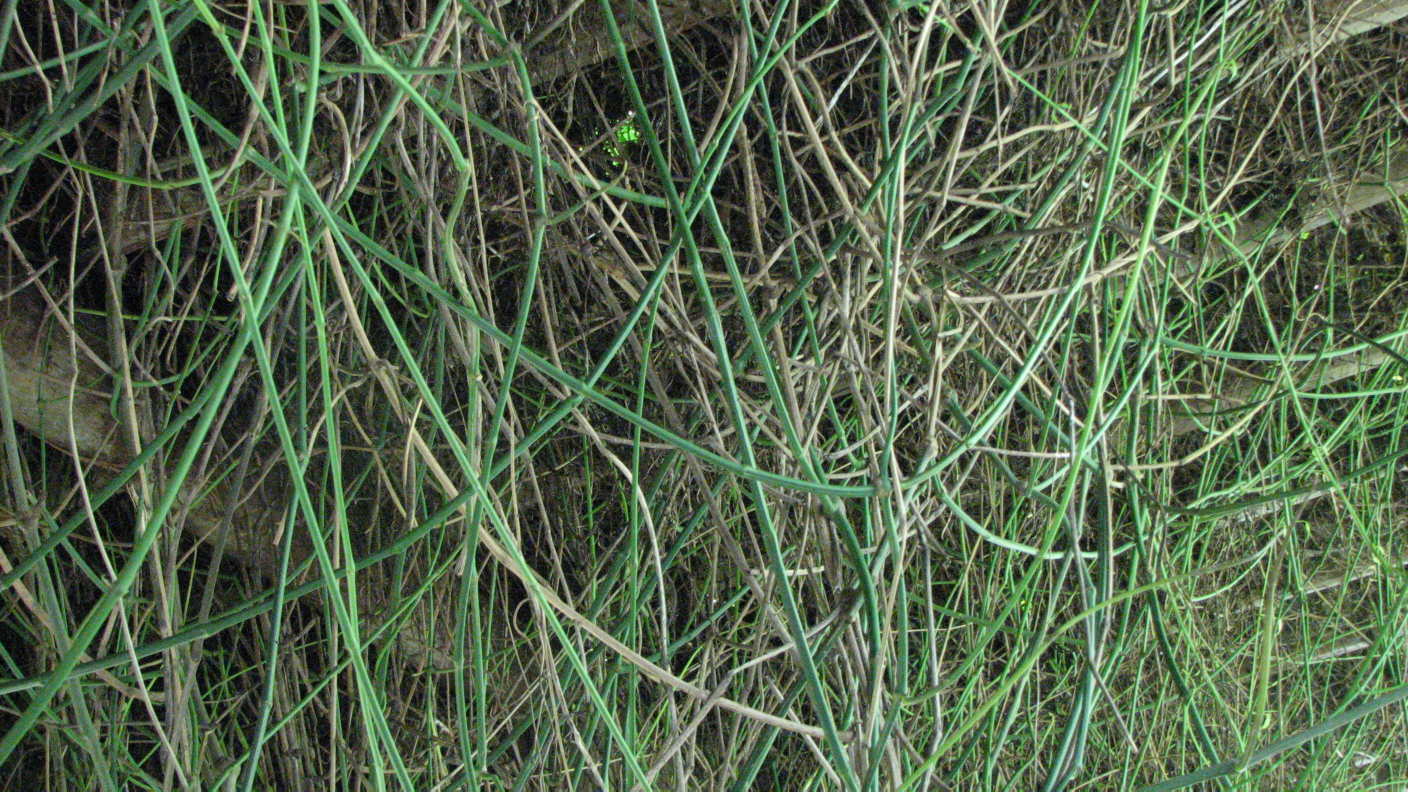
Under the vine pergola. As tropical as subtropical can get.

Roots

Surf & Turf

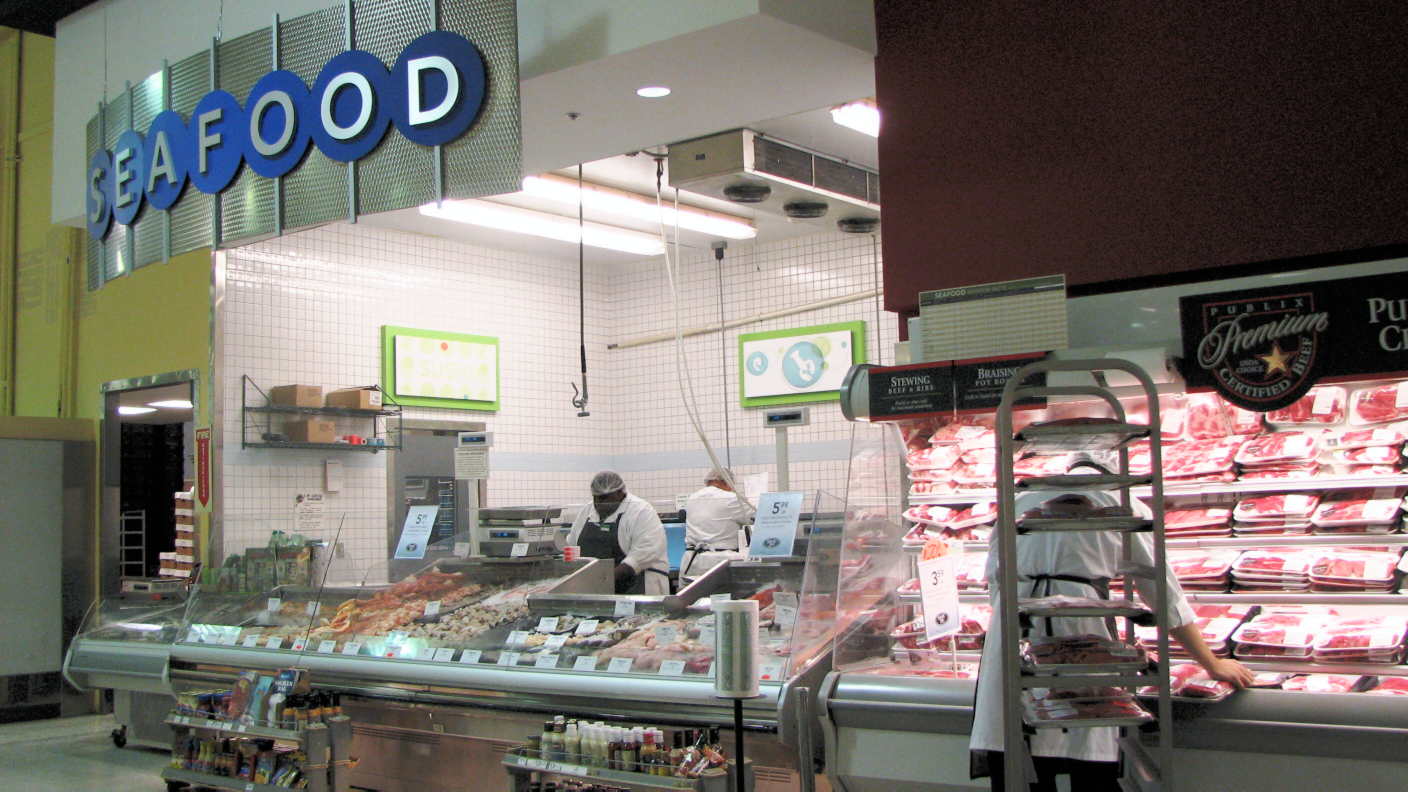
It is evident, Surf (Sea food) is on the left side; and Turf (Meat) is on the right side. This is inside a Publix supermarket where I come to empty my wallet regularly. As I said before, you've got to eat. However, I rarely venture to this Surf & Turf corner. Are you kidding? At the price they are charging?

Foodstuff

Tuesday, September 16, 2008

Please Pay More

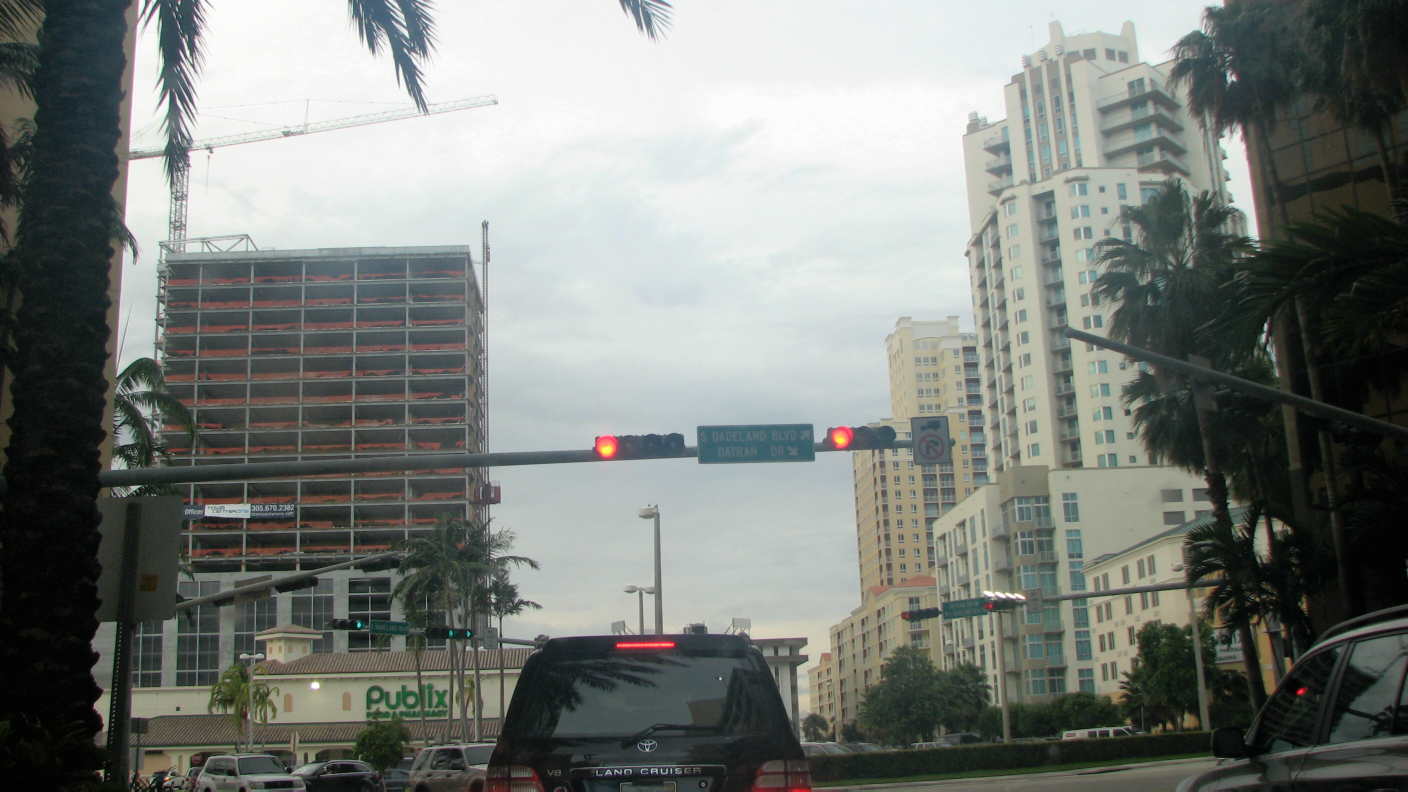
As recently as about three years ago, the only high rise in this view is the Publix grocery store. This is what this place looks like today. On the left is the Town CenterOne building rapidly taking shape. An immediate consequence is office rent in this area is doubling for every leasee. So, pay up or move out!

New Look

Monday, September 15, 2008

Real Fast Food

No matter how bad the economy gets, no matter how tough your financial situation is, you've got to eat. This man can certainly help because he is here every week day flipping hamburgers, frying the French fries or cook whatever the menu says you can order. It's not gourmet food, but you'll live.

Flipping burgers

Sunday, September 14, 2008

Psidium Guajava

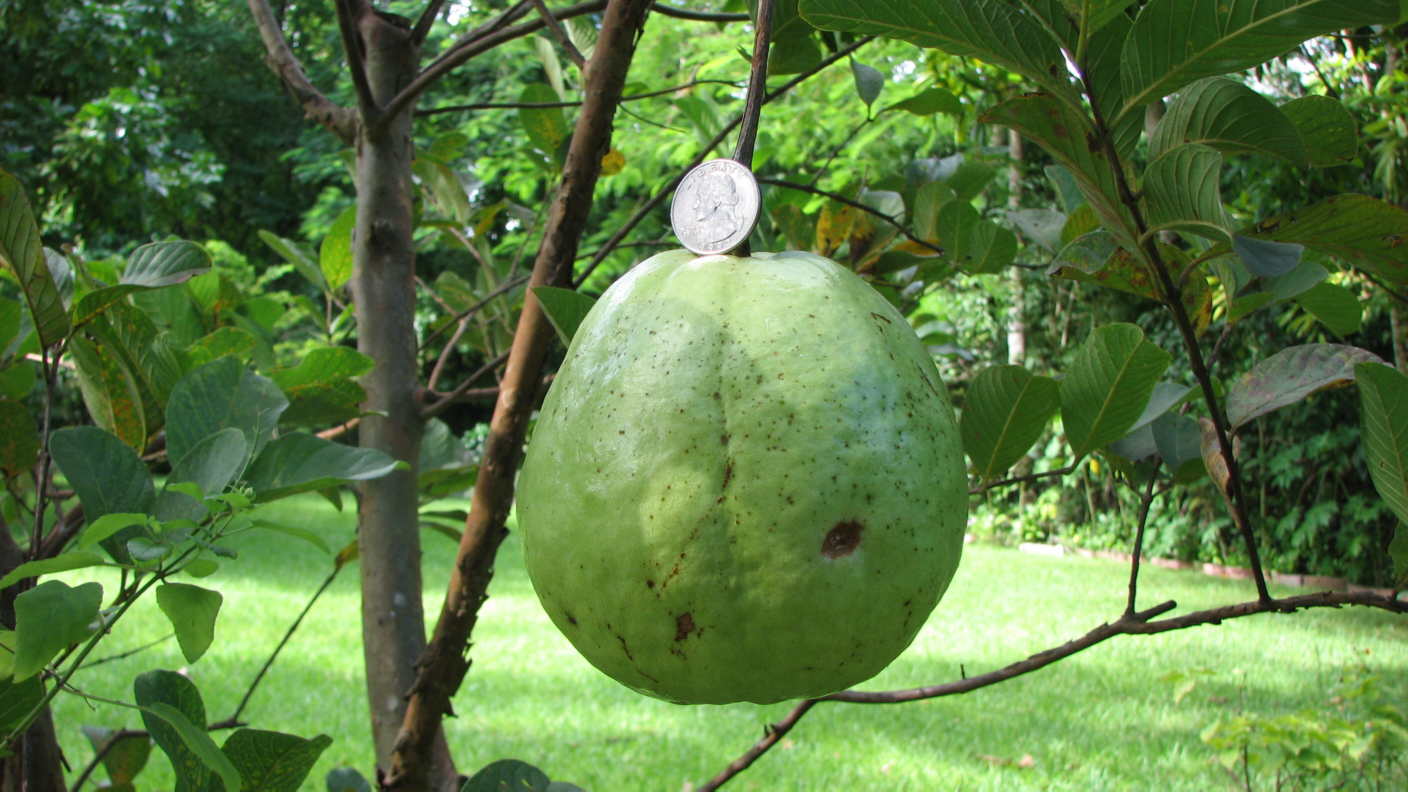
Look at this fruit. It's a guava. This must be mid September! This tree is extremely reliable: if I protect the fruits against the fruit flies, this is the time for harvest. This one is 4.5 inches in diameter. The US money coin to show relative size is a quarter dollar coin.

Guava Season

Saturday, September 13, 2008

Green Snake

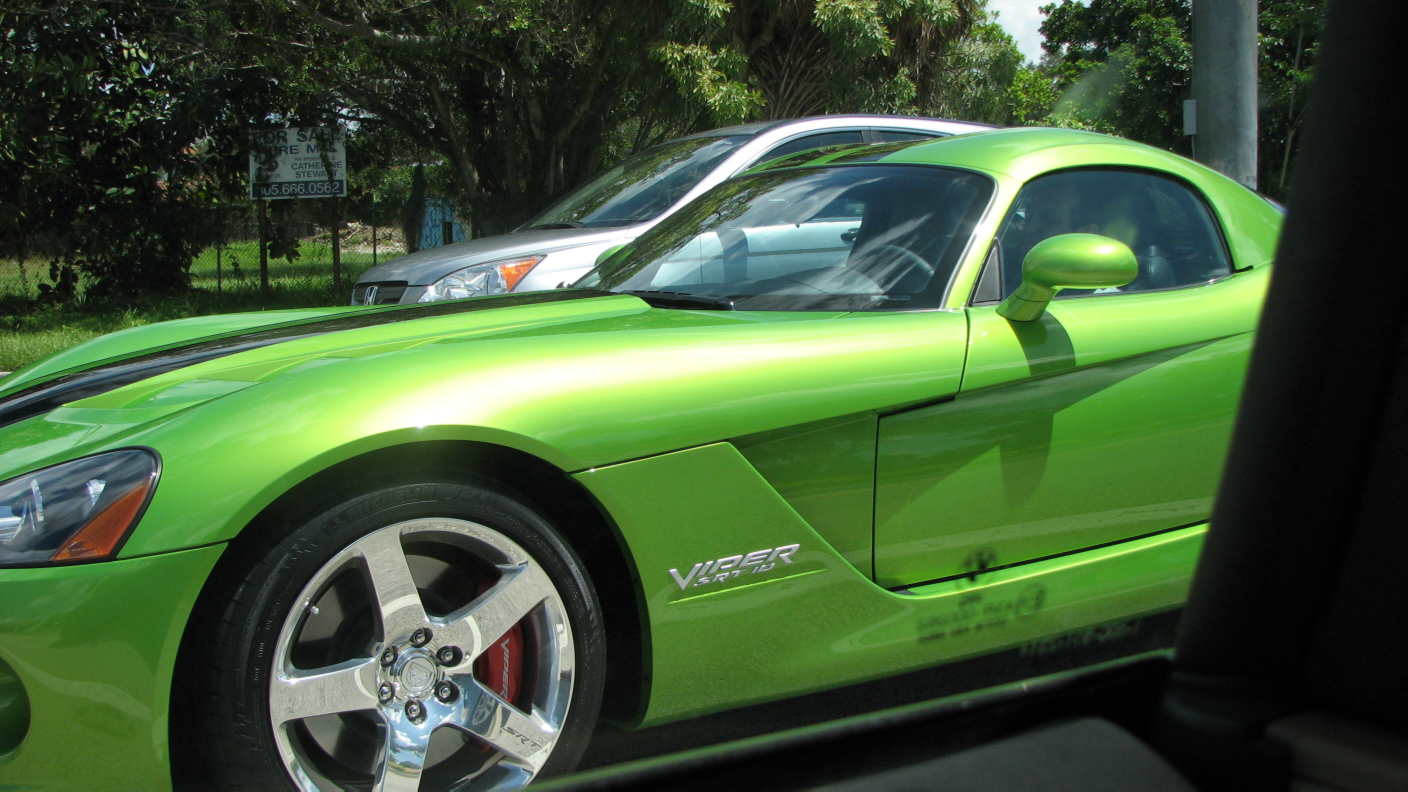
The 2008 Dodge Viper SRT-10 is different from most performance cars. This car can kill you. The Viper is a machine to be treated like a loaded gun. It's a serious, serious piece of equipment because the reworked 8.4 liter V10 under the Viper's considerable hood has been updated and upgraded to create this 600-horsepower monster capable of top speed over 200 mph (that's about 320 km/hour!) The price of this car starts at US $84K, but by the time you get all the options typically tempting you at American car dealerships, I bet you'll be out about $100K or more. Well, I call this a poor man's Ferrari. It's right next to me today at a traffic light.

$100K Viper

Friday, September 12, 2008

Cheeseburgers... Cheeseburgers

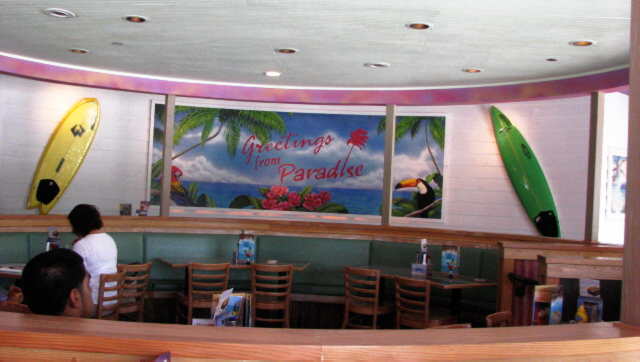
A taste of Hawaii in the heart of South Miami. This is the Cheeseburger in Paradise fast food restaurant inside Sunset Place. The theme is definitely Aloha as can easily be seen in the surf board decorations.

A Taste of Hawaii

Thursday, September 11, 2008

Fruits or Flowers

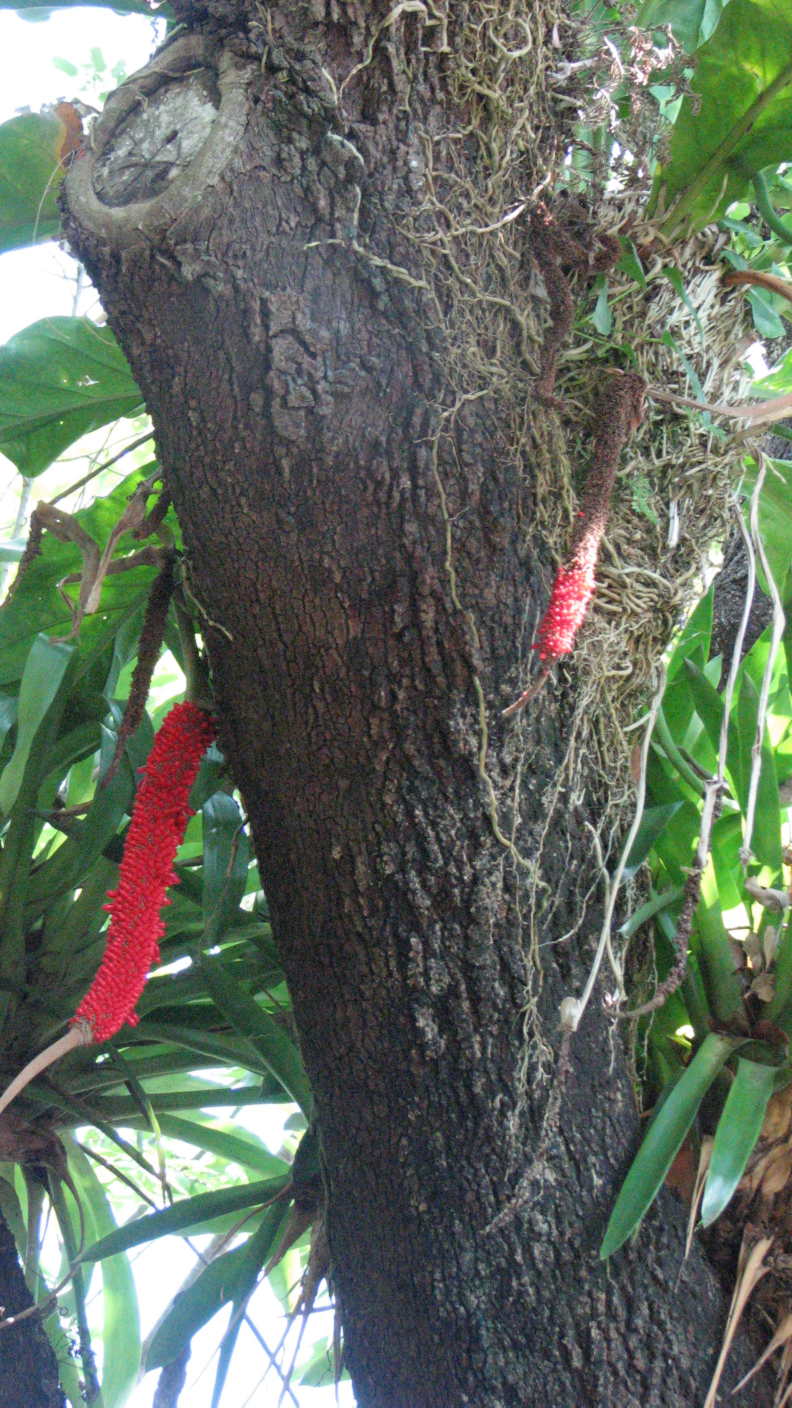
Are these fruits, are these flowers? They are about 20 feet up this tall tree so it will be hard for me to get a closer look. For now, let's call this "mysteriously beautiful red things."

Mysterious Things

Wednesday, September 10, 2008

Chlorine

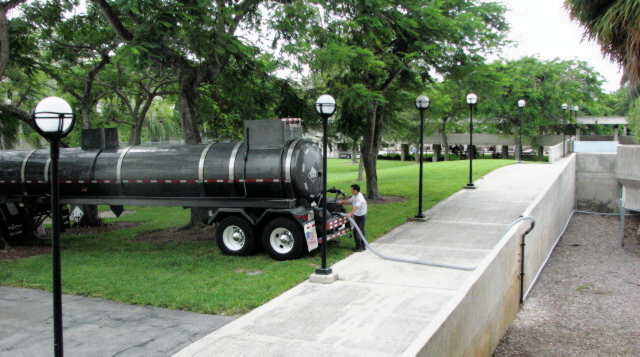
This is a 1,000 gallons of chlorine being delivered to the olympic size swimming pool site of Miami Dade College Kendall campus. No wonder the water smells funny whenever I go there to swim around.

Chlorine

Tuesday, September 9, 2008

Rising High

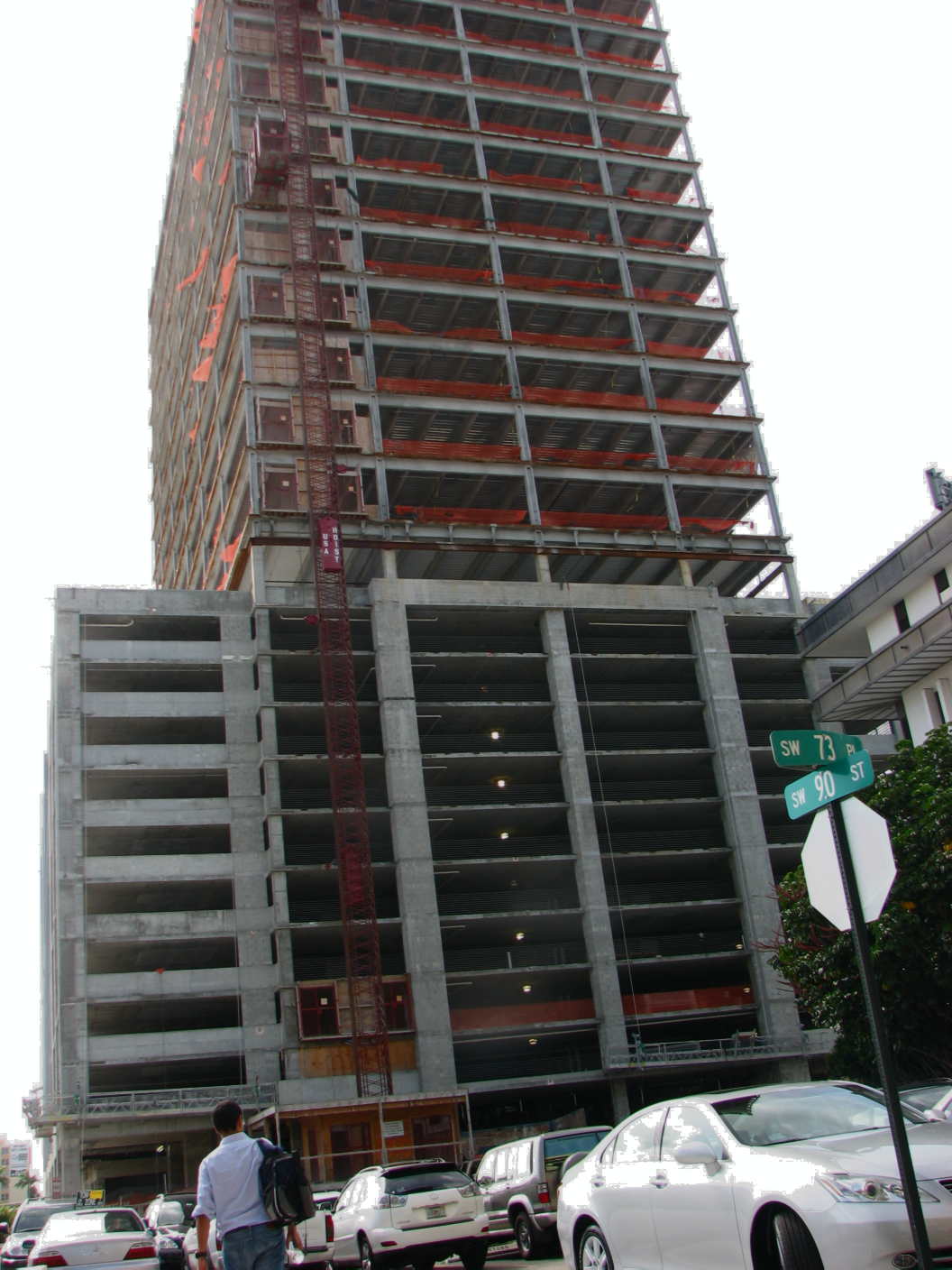
Here is an intermediate look of the new office building under construction. There is always big worries of erecting new buildings at construction sites during hurricane season because it is very costly to secure all loose objects so they do not become lethal flying projectiles.

Under Construction

Monday, September 8, 2008

Bilimbi

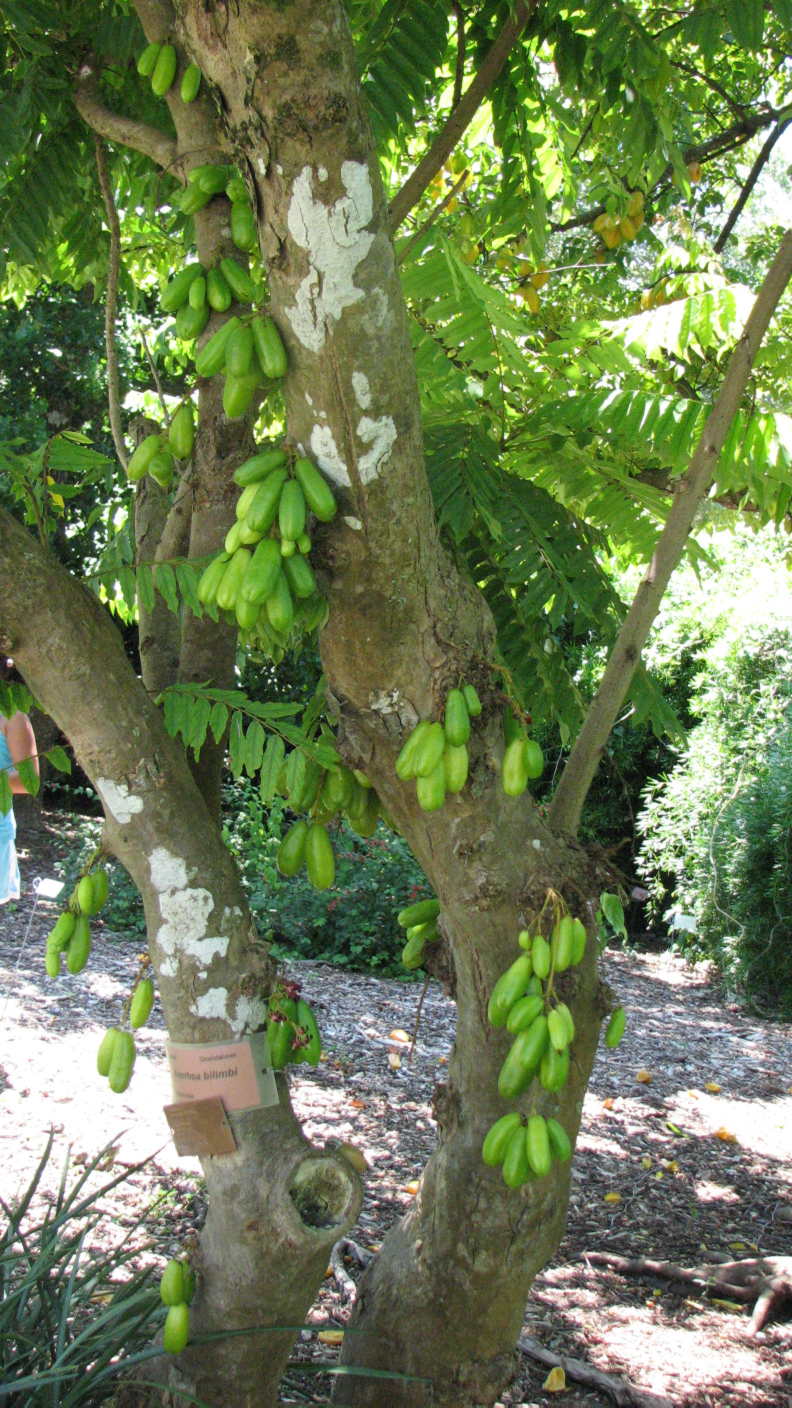
While I am on a roll about Florida flora, I want to show you another nice tree that grows and fruits easily in Miami climate: the Cucumber Tree. Averrhoa bilimbi L., a member of the family Oxalidaceae is native to the Moluccas (Indonesia) but is now cultivated in many other places in the Tropics. It forms a medium- sized to large tree that may reach a height of 60 feet, but more commonly is 20 to 30 feet. This tree has a close relative in the Star Fruit but this is more cold sensitive than the Carambola.

The mature fruits of the bilimbi resemble small cucumbers and usually range from 2 to 3 inches in length. They have a smooth thin, green rind sometimes faintly five-angled, and an acid pulp in which are imbedded several small seeds. As with the carambola, there is a sweet form of the bilimbi, which lacks the acid taste. Fruits of the bilimbi are rich source of Vitamin C. They are candied or cooked with sugar as a preserve. The pulp also is used to make a refreshing drink. The fruit is generally regarded as too acid for eating raw, but in Costa Rica, the green, uncooked fruits are prepared as a relish that is served with rice and beans. Sometimes it is an accompaniment for fish and meat. Ripe fruits are frequently added to curries in the Far East. Bilimbi is often used in place of mango to make chutney. To reduce acidity, it may be first pricked and soaked in water overnight, or soaked in salted water for a shorter time; then boiled with sugar to make a delicious jam. Half-ripe fruits are salted, set out in the sun, and pickled in brine.

Cucumber Tree

Sunday, September 7, 2008

Under the Baobab Tree

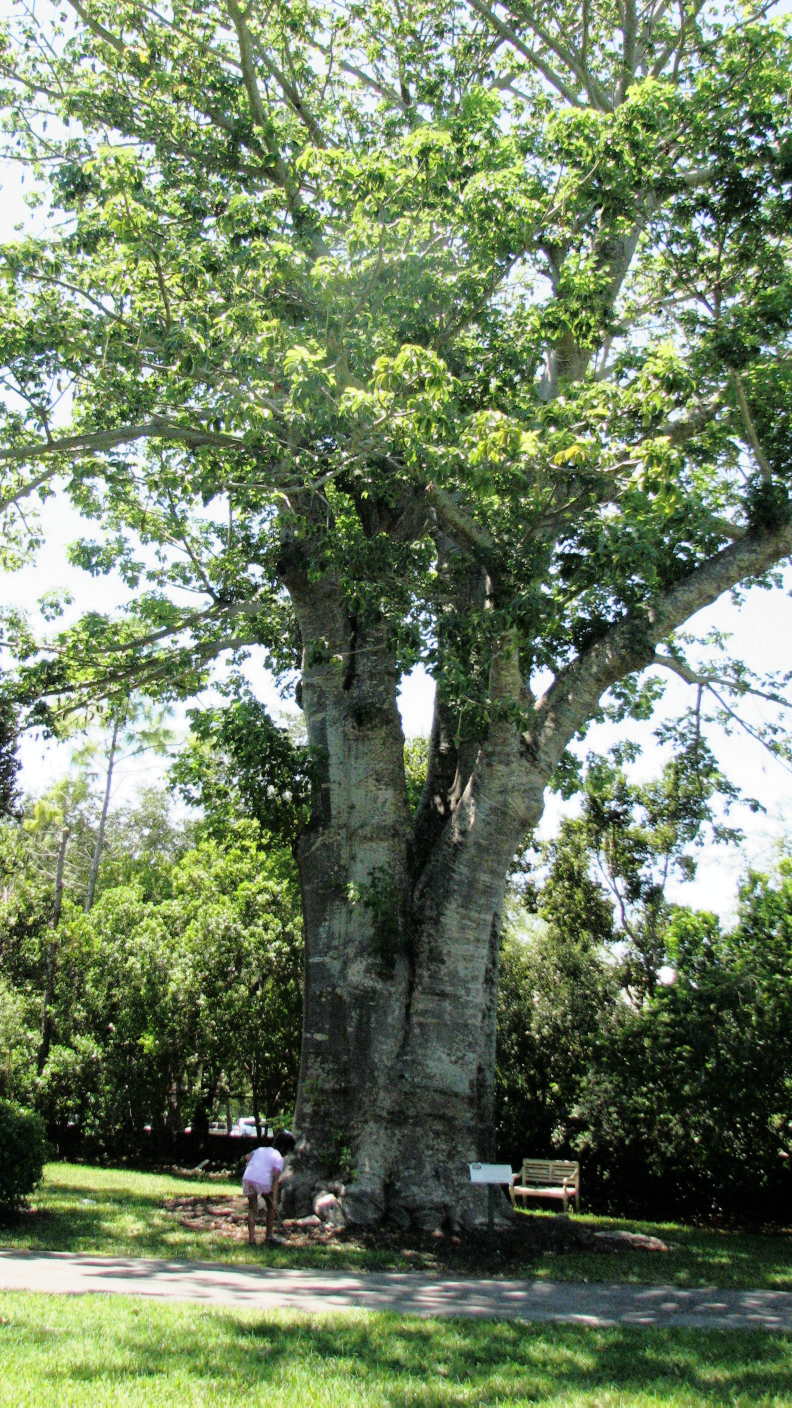
Adansonia digitata, the Baobab tree, is a species from the Bombacaceae family. It is also known by many other names, such as the 'dead-rat tree' (from the appearance of the fruits,) 'monkey-bread tree' (the soft fruits are edible,) 'upside-down tree' (the sparse branches resemble roots,) and cream of tartar tree. In French, it is known as calebassier du Sénégal and arbre de mille ans; in Portuguese as molambeira, imbondeiro, calabaceira and cabacevre; and in Swahili as mbuyu, mkuu hapingwa, mkuu hafungwa and muuyu.

This is a long living tree, and some have been carbon dated to thousands of years. Baobab trees flower for the first time at about 20 years of age. In mid-summer, dozens of luminous white blossoms—the size of saucers—open at sunset. Their strong musky odor attracts fruit bats and hosts of other insects. Bats seek out the sweet nectar so they collect and distribute pollen as they move from flower to flower.

The seeds are housed in a hairy pod that resembles a miniature rugby ball, inside of which is a white pulp from which “cream of tartar” is derived. The baobab’s branches, with their hollows, dents and bloated stems, provide shelter and home for a great many animals: bushbabies, squirrels, rodents, lizards, snakes and tree frogs, as well as spiders, scorpions, and insects may live their entire lives in a single tree. Holes in the trunk provide ideal nesting sites for birds, such as rollers, hornbills, parrots, kestrels and spinetails. Larger cavities are often occupied by families of Barn Owls or Ground Hornbills. Eagles, vultures and storks frequently build their large stick nests on the outer branches. The nests of red-billed Buffalo-weavers are more often found in Baobabs than any other tree.

The fruit can be used for flour, the seeds roasted and the leaves cooked as vegetables. It has twice as much calcium as milk, is high in anti-oxidants, iron
and potassium, and has 6 times the vitamin C of an orange. The bark of the Baobab tree has been used traditionally in Africa to fight fevers.

The baobab tree serves as a meeting place for many villages to discuss community matters, relate the news of the day, or tell stories, thus the expression "Under the Baobab Tree."

This tree is not too large and it is in the FTBG. The photo is taken today and you can see (with some difficulties in this shot) the hanging flowers. It's always hard for me to take this kind of photos to show details against a bright sky as background. If you know the secret for these shots, meet me here.

Baobab Tree

Saturday, September 6, 2008

Tango Bleu

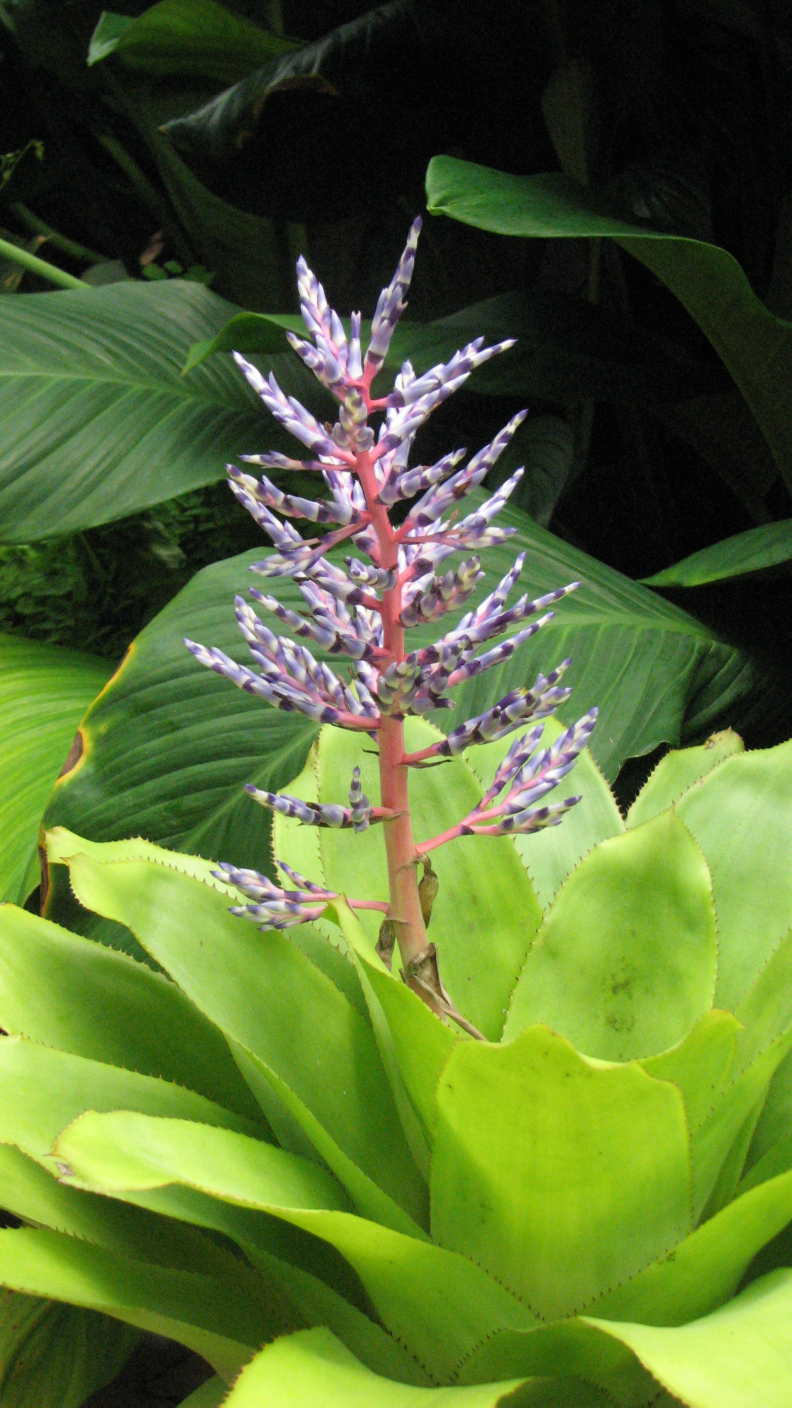
Bromeliad "Blue Tango" aka Aechmea "Del Mar" is simply beautiful. It made the news in the Miami Herald newspaper a few days ago in the Gardens section. I am not sure which variety this one is because the leaves are wider and shorter than normal, but it is one of the "Blue Tango" variety. I saw this at the Fairchild Tropical Botanic Garden. This is a patented bromeliad made in 1994, a cross of Aechmea fendleri X Aechmea dichlamydea trinitensis. This bromeliad will cost you a good US $50 to own, if you can find one.

By the way, I am very happy and relieved that hurricane Ike, according to forecast, is going to spare the Southeast coastal area, with perhaps the exception of areas near the Florida Keys. Ike in all likelihood will enter the Gulf of Mexico and may become a major threat to the Louisiana coast line, perhaps the city of New Orleans again! Let's hope not.

Del Mar

Friday, September 5, 2008

Oh No!

Bad News! Did I say that the US National Hurricane Center has made giant strides in their capability to make accurate predictions and they are usually right on with the future paths of storms? We are going to be in BIG TROUBLE early next week! Ike is coming, and it may be a mighty category 3 or 4 hurricane with nothing but warm open oceans before hitting the Bahamas and then US! I still remember cat 5 Andrew in 1992, and certainly do not want to blog any of that kind of photos of Miami! We can start to get frantic, starting NOW! I will definitely have to put up all the shutters by Saturday and start to hunker down! I bet the entire Southeast coast of Florida (and Miami) will shut down may be as early as Sunday. Help! Les Femmes et les Enfants d'abord! Au Secours! A l'aide! SOS! Ayuda! De Rescate! Hilfe! ヘルプ! помощь! βοήθεια! hjelp! aiuto! hjälp!

Bad News

Thursday, September 4, 2008

Chez lulu

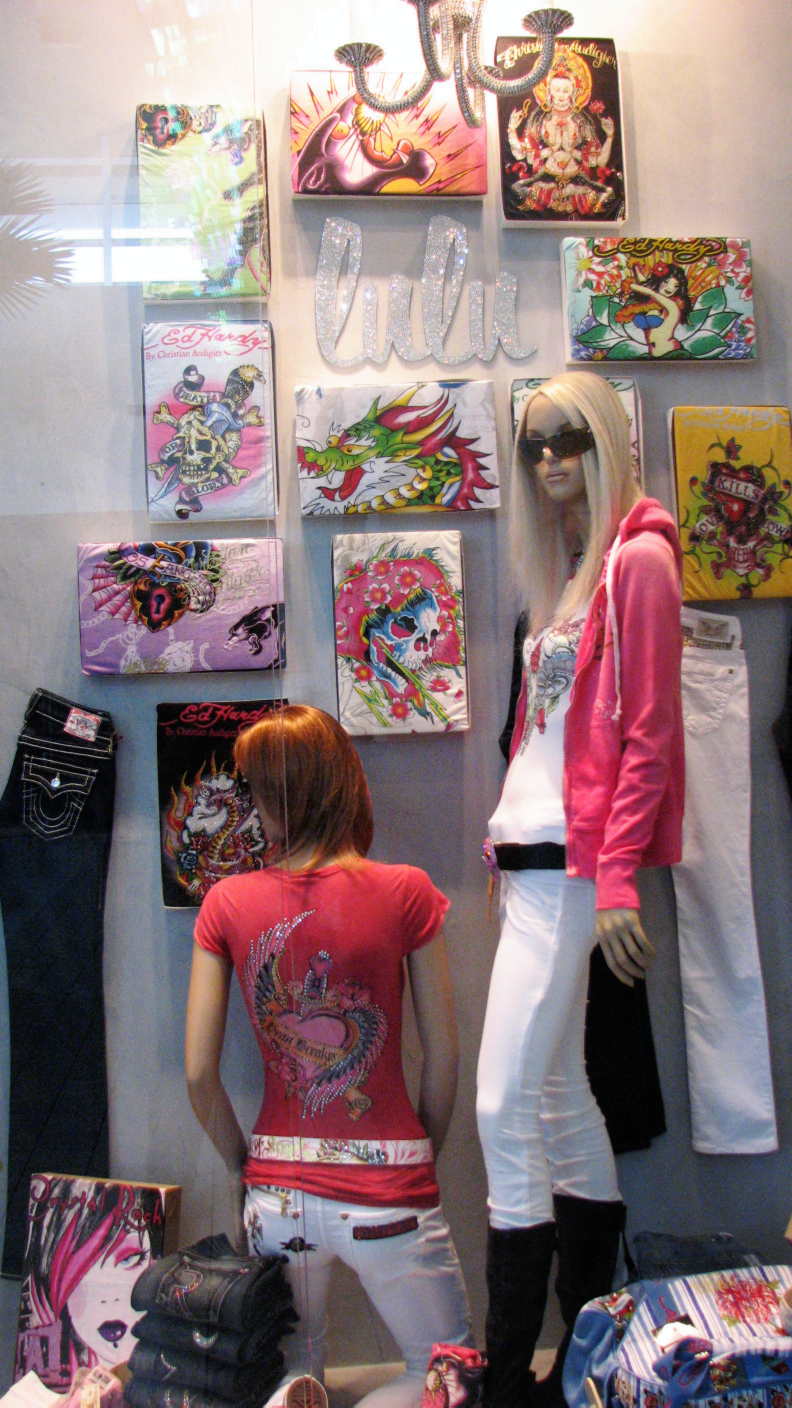
lulu is a fashionable casual garment store in Dadeland Mall. If I could afford this, I would have bought whatever it is with the dragon design. I am not sure if this is a unisex store, but judging from the mannequins, it's for girls! Nah!

lulu

Wednesday, September 3, 2008

Yikes!... Ike

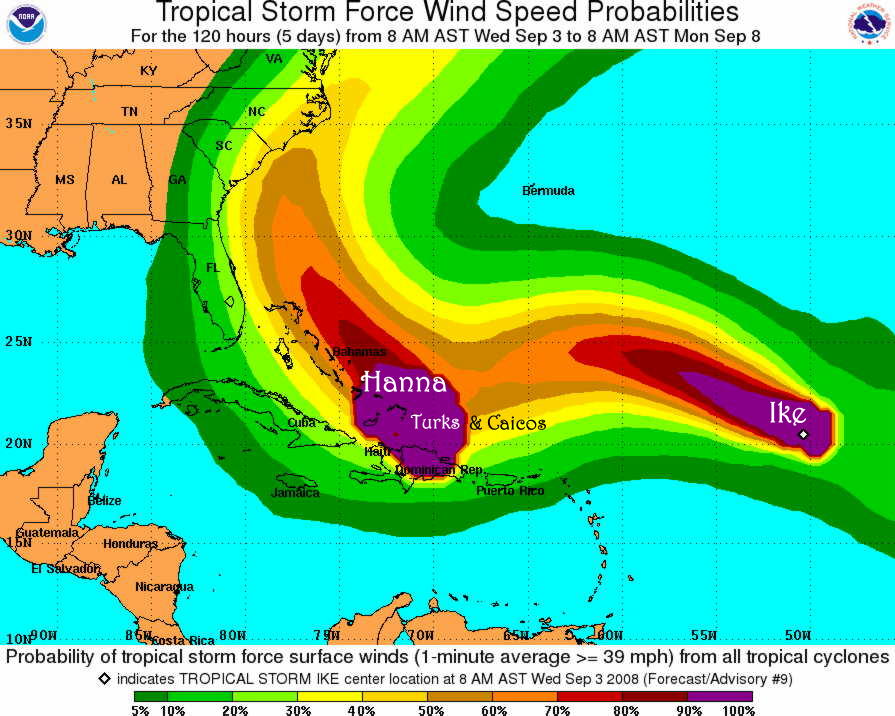
September is the peak time for hurricanes that can affect life in sub-tropical regions such as Miami (and the surrounding nations.) At this time, the tropic is full of storms brewing, alternately named as male/female. After Gustav, a guy, stormed through, Hanna is poised to cause trouble. In Miami, we are not too concerned about her, but the next guy, Ike, may be trouble in the making. We got to keep an eye on him. Farther out, Josephine is on sight but she will just go North in the open ocean, not bothering much else.

You can see our sister city, the Turks & Caicos Islands, in this hurricane map. She is being battered right now by Hanna, and hope that Ike will spare her.

The National Hurricane Center in the US has made giant strides in their capability to make accurate predictions and they are usually right on with the future paths of storms. I can tell you that is a big relief for us here in Miami. We know when we should get frantic and bite our finger nails. For Ike, it'll be by this weekend.

Ike

Tuesday, September 2, 2008

Star Fruit

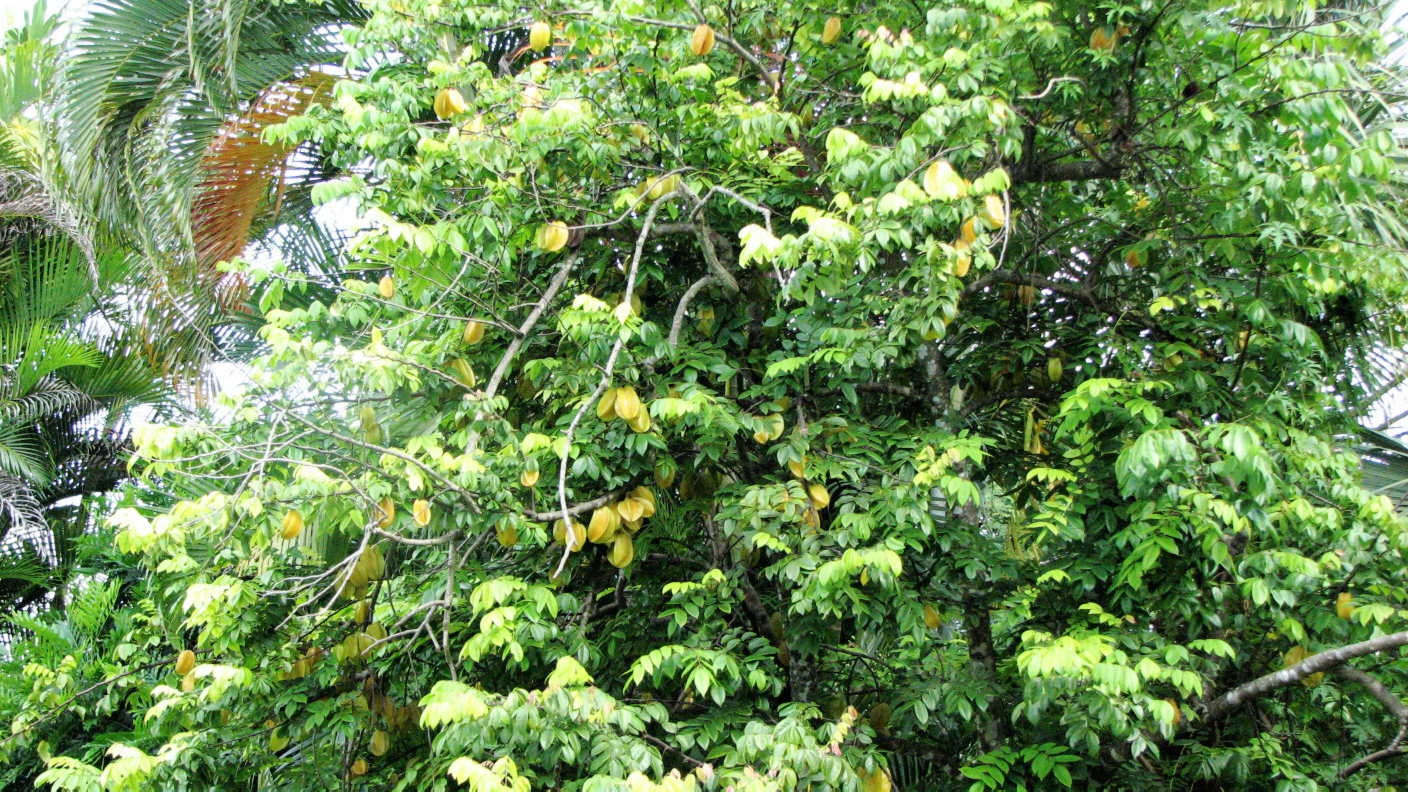
This beautiful small tree is full of this curious, attractive fruit of the Oxalidaceae family: the carambola which is believed to have originated in Ceylon and the Moluccas has been cultivated in southeast Asia and Malaysia for many centuries. It was introduced into southern Florida before 1887, and here it is, thriving in Miami.

Averrhoa carambola L., has traveled sufficiently to have acquired a number of regional names in addition to the popular Spanish name of Carambola. In the Orient, it is usually called balimbing, belimbing, or belimbing manis ("sweet belimbing"), to distinguish it from the bilimbi or belimbing asam, A. bilimbi L. In Ceylon and India, the carambola has the alternate names of kamaranga, kamruk, or other variants of the native kamrakh. In Vietnam, it is called khe. Other names: In Kampuchea, spu; in Laos, nak fuang, or the French name, carambolier; in Thailand, ma fueang. Malayans may refer to it as belimbing batu, belimbing besi, belimbing pessegi, belimbing sayur, belimbing saji, kambola, caramba, or as "star fruit". Australians use the descriptive term, five corner; in Guam, it is bilimbines; to the Chinese, it is yang-táo. Early English travelers called it Chinese, or Coromandel gooseberry, or cucumber tree. In Guyana, it is five fingers; in the Dominican Republic, it is vinagrillo; in Haiti, zibline; in some of the French Antilles, cornichon; in El Salvador, pepino de la India; in Surinam, blimbing legi or fransman-birambi; Costa Rica, tiriguro; in Brazil, camerunga or caramboleiro, or limas de Cayena; in Mexico, carambolera or caramboler or árbol de pepino; in Trinidad, it may be called coolie tamarind. Venezuelans call it tamarindo chino or tamarindo dulce.

This star fruit can be eaten out of hand, or used in salad. The carambolas from this tree is very sweet and its fruits are well sought after. I don't like this much and do not care for it at all.

Carambola

Monday, September 1, 2008

Sisters

Founded in 1981 by the Miami-Dade Board of County Commission, the Sister Cities Program is currently administered by the Jay Malina International Trade Consortium. The program has established sister cities relationships with twenty-three cities in South America, Central America, the Caribbean, Europe, and Asia. Throughout these years, the program has developed innovative projects, which have furthered international cooperation and understanding between Miami-Dade County and the respective sister cities.

The Miami-Dade Sister Cities Program consists of the following cities:

Asti, Italy
Asuncion, Paraguay
Cayman Islands, British West Indies
Commonwealth of the Bahamas
Iquique, Chile
Kingston, Jamaica
Lamentin, Guadaloupe
Maldonado, Uruguay
Mendoza, Argentina
Monagas, Venezuela
Pereira, Colombia
Petit Goave, Haiti
Pucallpa, Peru
San Jose, Costa Rica
Santa Cruz, Bolivia
Santo Domingo, Dominican Republic
Sao Paulo, Brazil
St. Kitts & Nevis Islands
Stockholm, Sweden
Taipei County, Taiwan
Tenerife, Canary Islands, Spain
Turks & Caicos Islands
Veracruz, Mexico

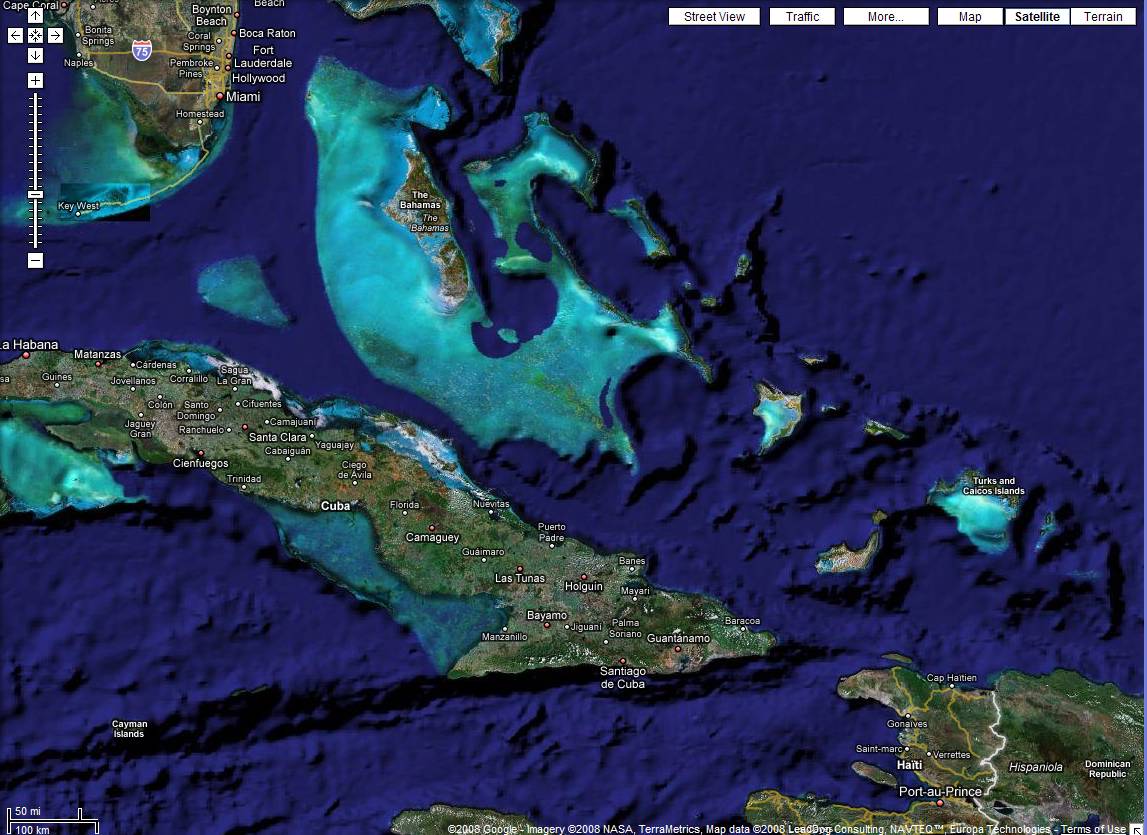
It's very hard for me to single out any one of our sister cities, because they are all equally our favorites. So, to remain impartial, I am using a "neutral" system to pick one out of the hat. The system I adopt is to take this opportunity to highlight to you our "Hurricane Alley." This is where most of the hot, steamy and stormy action takes place during our annual hurricane season from June 1 through November 30th, which is the area of the Atlantic basin in this satellite photograph. The actual birth place of many of our hurricanes is the area near Cape Verde island, off the western coast of Africa.

Our favorite sister city in question is the Turks & Caicos Islands, beautiful, but so vulnerable. Can you see where she is on this Google map? Hint: She's due East of the island of Cuba.

Emerald Sister City